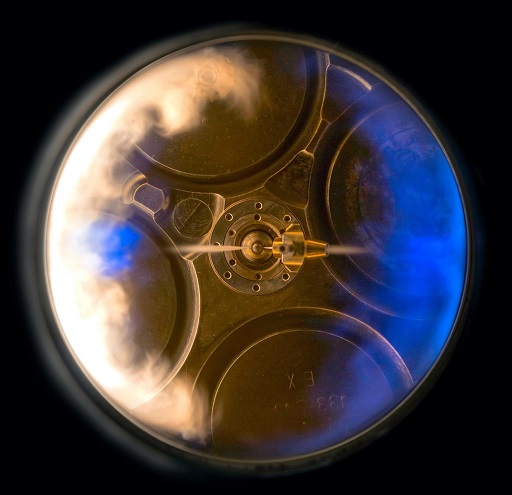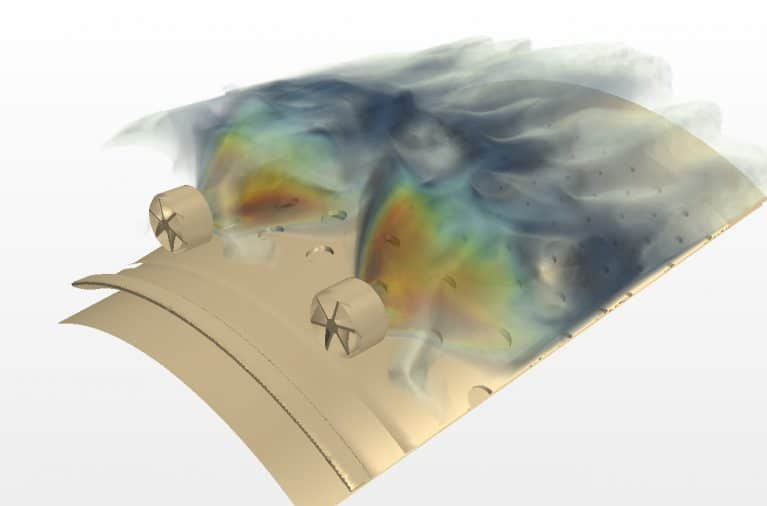
In order to accurately model combustion, it is important to account for the interactions between turbulence, mixing, and chemical reactions. Turbulence models are used to capture the turbulent flow behavior of the fuel and oxidizer mixture, while mixing models are used to predict the mixing of fuel and oxidizer. Chemical kinetics models are used to describe the chemical reactions that …
Read the full brief →
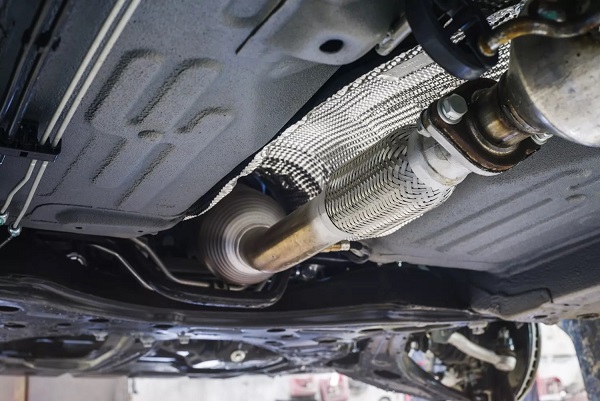
Engine exhaust aftertreatment systems are designed to reduce emissions of harmful pollutants such as NOx, CO, and particulate matter from the exhaust gases of engines and power generation equipment. These systems typically use a combination of physical and chemical processes, such as selective catalytic reduction (SCR), diesel particulate filters (DPF), and oxidation catalysts, to convert or remove pollutants from the …
Read the full brief →
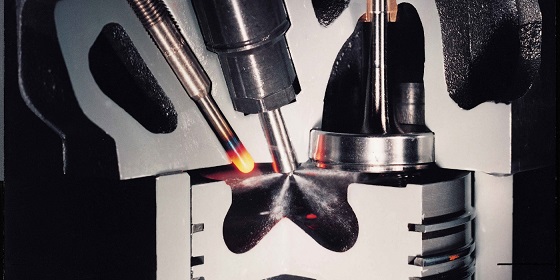
Fuel injectors and spray simulation are important aspects of the design and optimization of internal combustion engines. CFD software, such as AVL Fire, Siemens Star-ccm+, Ansys Fluent, and Converge, are well-equipped to simulate fuel injectors and spray processes, including liquid atomization, drop breakup, collision and coalescence, turbulent dispersion, spray cavitation, drop-wall interaction, and drop evaporation. The simulation of fuel injectors …
Read the full brief →
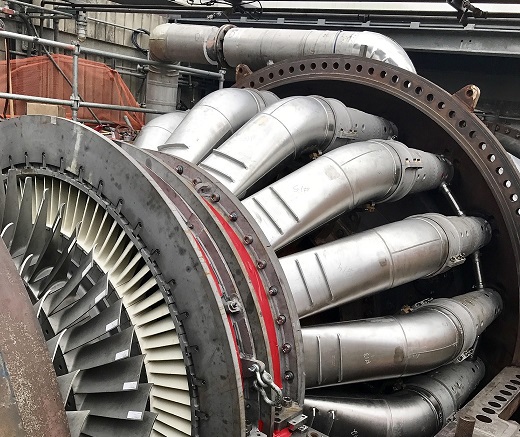
With using advanced and specialized CFD tools such as AVL Fire, Siemens Star-ccm+, Ansys Fluent and Converge, OLTRION engineers can accurately predict important kinetically limited gas turbine phenomena such as ignition, flashback, and lean blow off. In addition, we can investigate the combined effects of chemistry and turbulence and optimize combustor performance parameters.
Read the full brief →