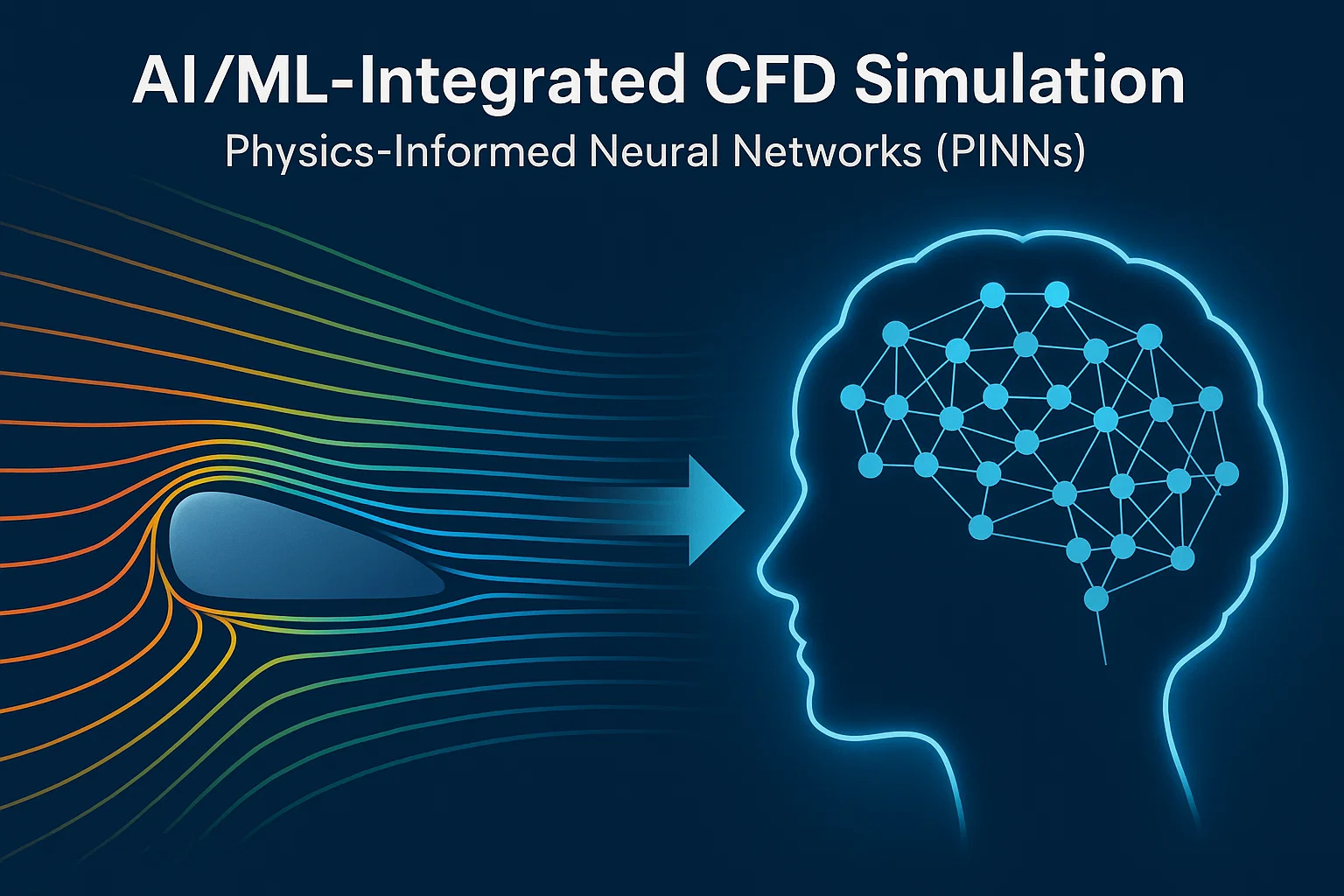
Our AI/ML-integrated CFD services accelerate fluid flow and heat transfer analysis by 8-12x while maintaining >99% correlation with high-fidelity simulations, enabling faster design cycles without compromising accuracy. Real-Time Flow Prediction: ▸ Fourier Neural Operators (FNOs) for millisecond-scale flow field predictions ▸ Digital twin integration with ≤2% error compared to experimental PIV data Turbulence Modeling: ▸ Neural network-enhanced LES models capturing …
Read the full brief →

Our AI/ML-integrated FEA services leverage machine learning to optimize structural simulations, automate design modifications, and predict stress/strain with high fidelity—reducing solve times by 40-70% while maintaining engineering accuracy. Automated Mesh Optimization: ▸ Reinforcement Learning (RL)-driven mesh adaptation based on geometric complexity and stress gradients ▸ Reduces element count by 30-50% while preserving solution accuracy in critical regions Stress/Strain Prediction: ▸ …
Read the full brief →
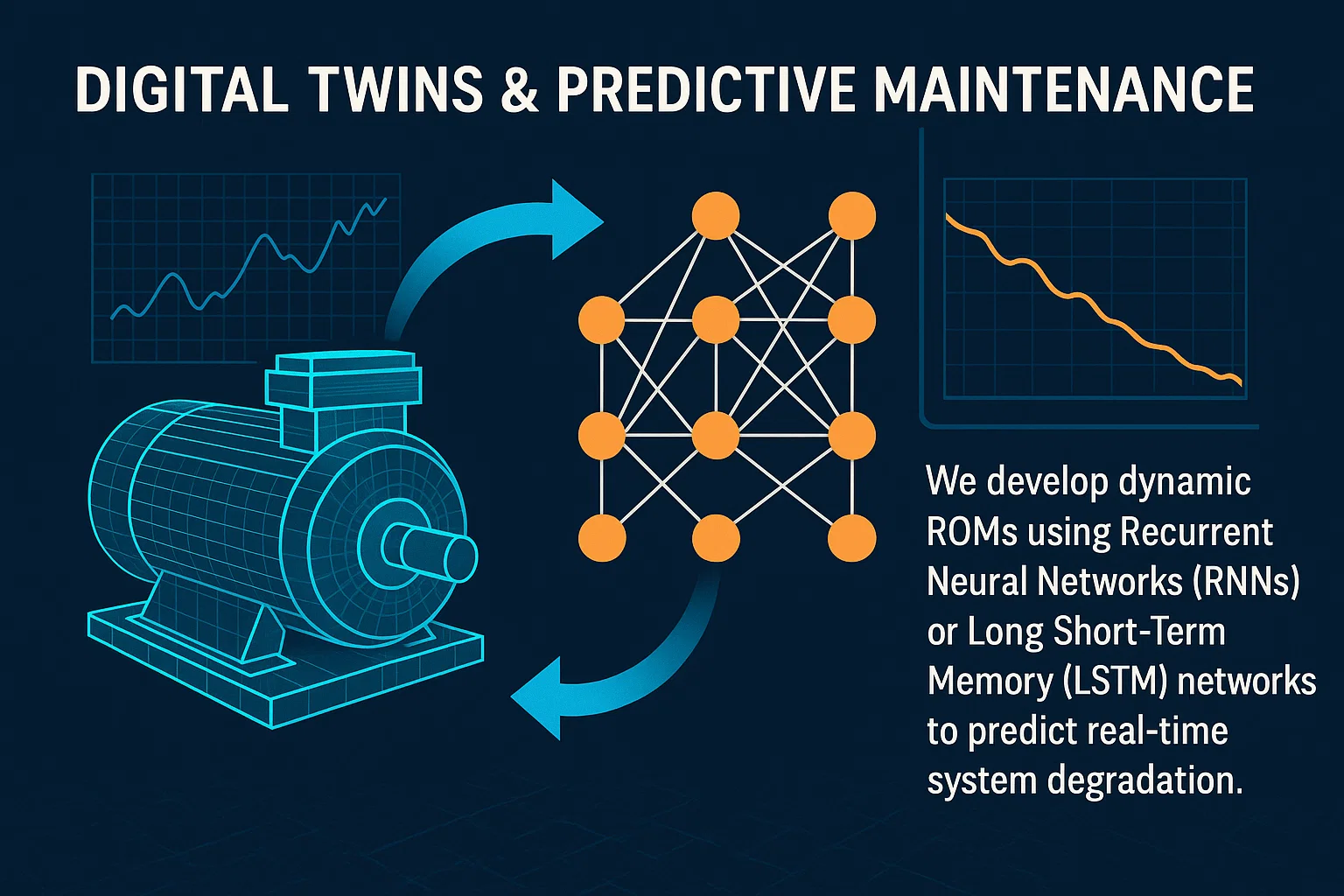
We develop dynamic ROMs using Recurrent Neural Networks (RNNs) or Long Short-Term Memory (LSTM) networks to predict real-time system degradation. Dynamic ROMs: ▸ Trained on transient FEA/CFD data to capture system evolution over time ▸ Incorporate temporal patterns via RNN/LSTM architectures for sequential prediction ▸ Applications: FEA: Predictive maintenance for rotating machinery (bearing wear, gear tooth fatigue) CFD: Real-time monitoring …
Read the full brief →
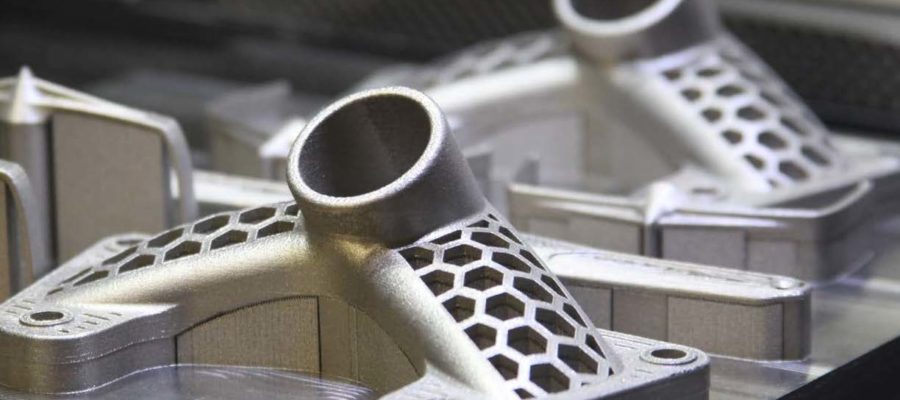
We use Generative Adversarial Networks (GANs), Variational Autoencoders (VAEs), and Bayesian Optimization to optimize designs and explore parameter spaces efficiently. Topology Optimization: ▸ GANs/VAEs generate structurally efficient geometries under constraints (stress, thermal, weight) ▸ Applications: FEA: Lightweight structural components for aerospace/automotive CFD: Aerodynamic shape optimization for drones and EVs Bayesian Optimization: ▸ ML-guided parameter space exploration for multi-objective functions ▸ …
Read the full brief →
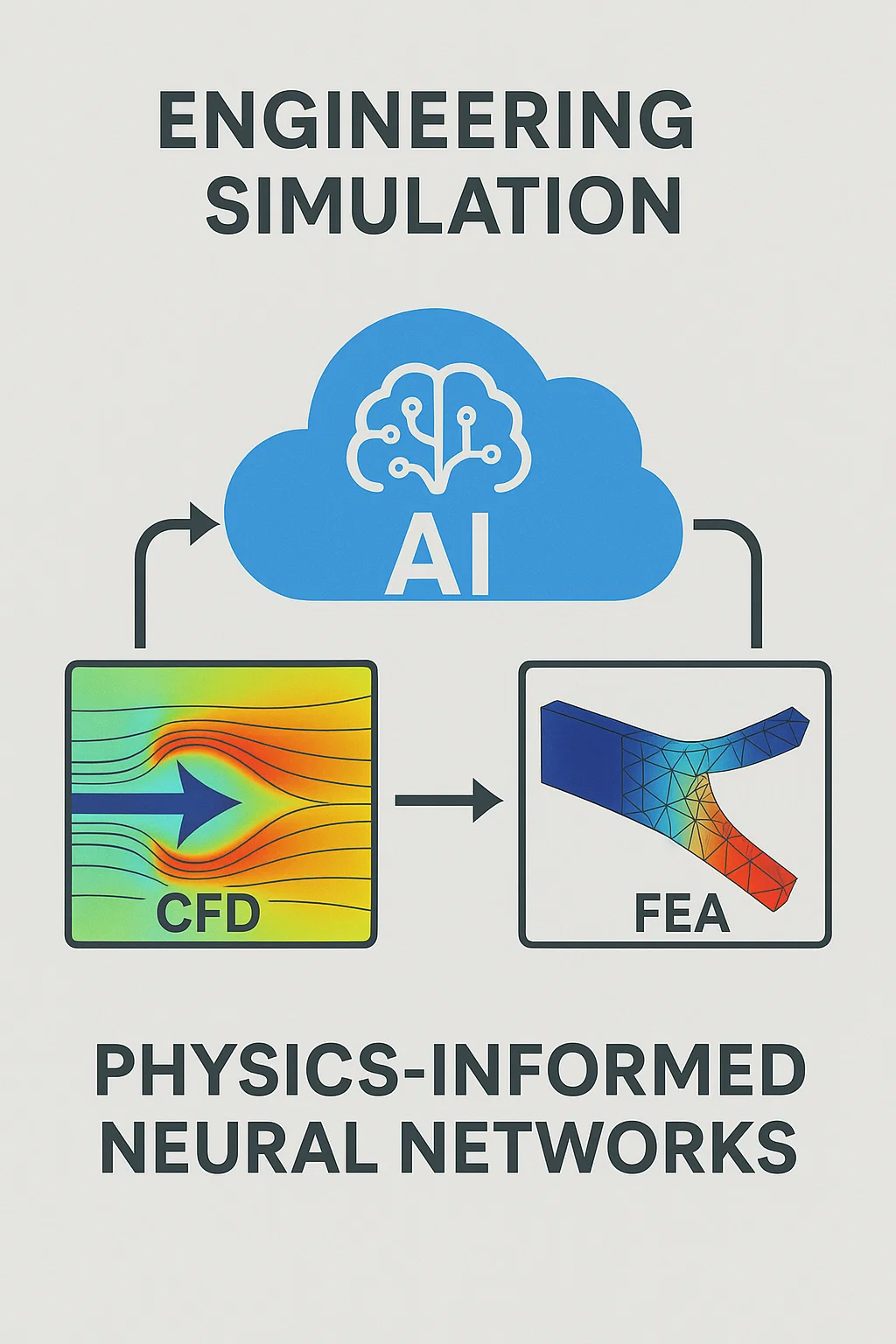
Physics-Informed Neural Networks (PINNs): ▸ Embed governing Partial Differential Equations (PDEs) as loss functions during ML training ▸ Ensures predictions respect physical laws (Navier-Stokes for CFD, elasticity for FEA) ▸ Applications: FEA: Nonlinear material response (hyperelasticity, plasticity) in structural components CFD: Turbulent flow closure modeling (Reynolds stresses, eddy viscosity) Operator Learning: ▸ Neural operators (Fourier Neural Operators, DeepONet) map inputs …
Read the full brief →
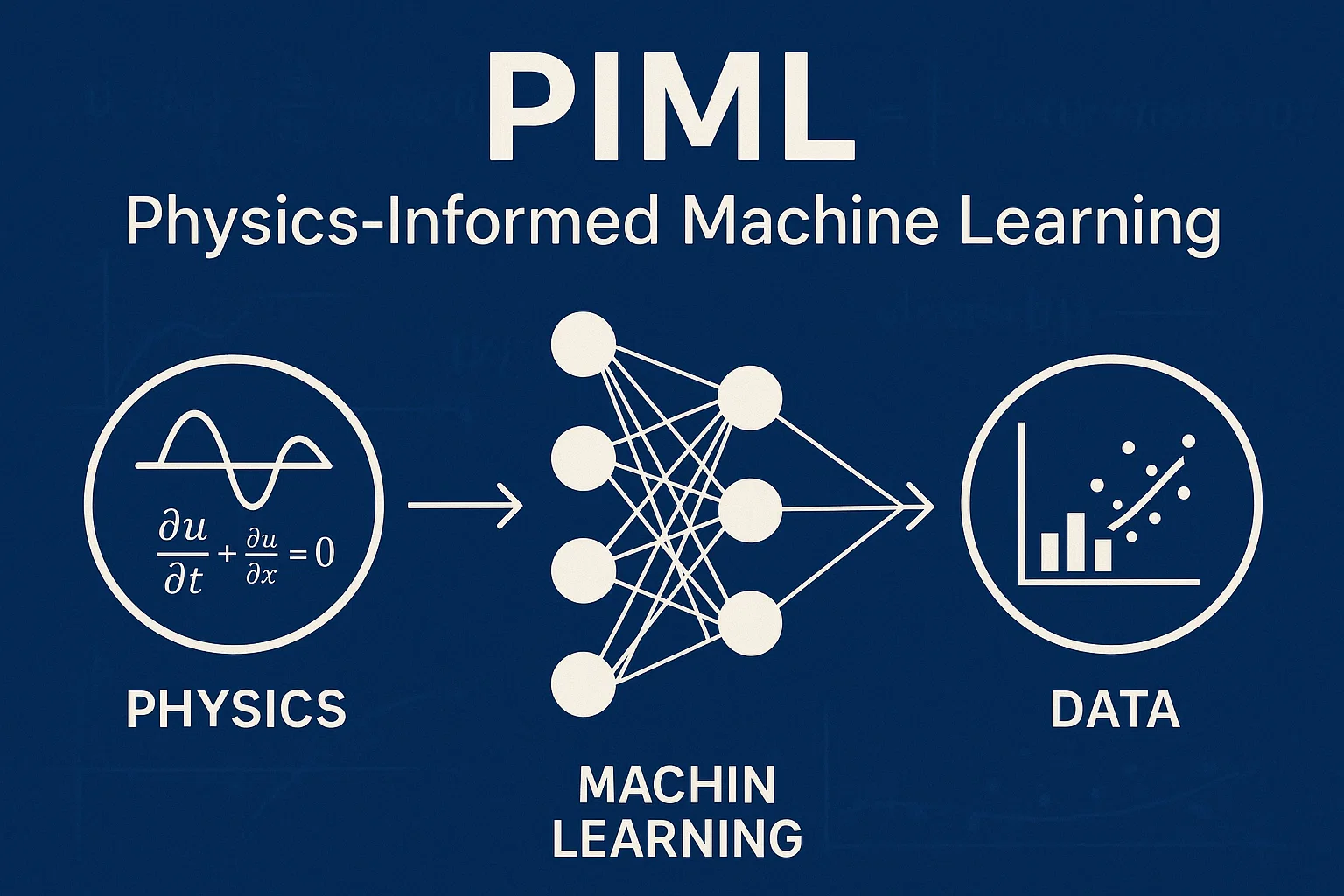
We hardwire fundamental physics into AI/ML models through governing PDEs, achieving <2% deviation from experimental benchmarks while accelerating simulations 10-50x compared to traditional methods. Navier-Stokes Solutions: ▸ Variational PINNs enforcing mass/momentum conservation with <1% continuity error ▸ Turbulence modeling via embedded LES filters (resolving 90% of eddy scales) ▸ Applications: Supersonic flow prediction, non-Newtonian fluid behavior Structural Mechanics: ▸ Constitutive …
Read the full brief →
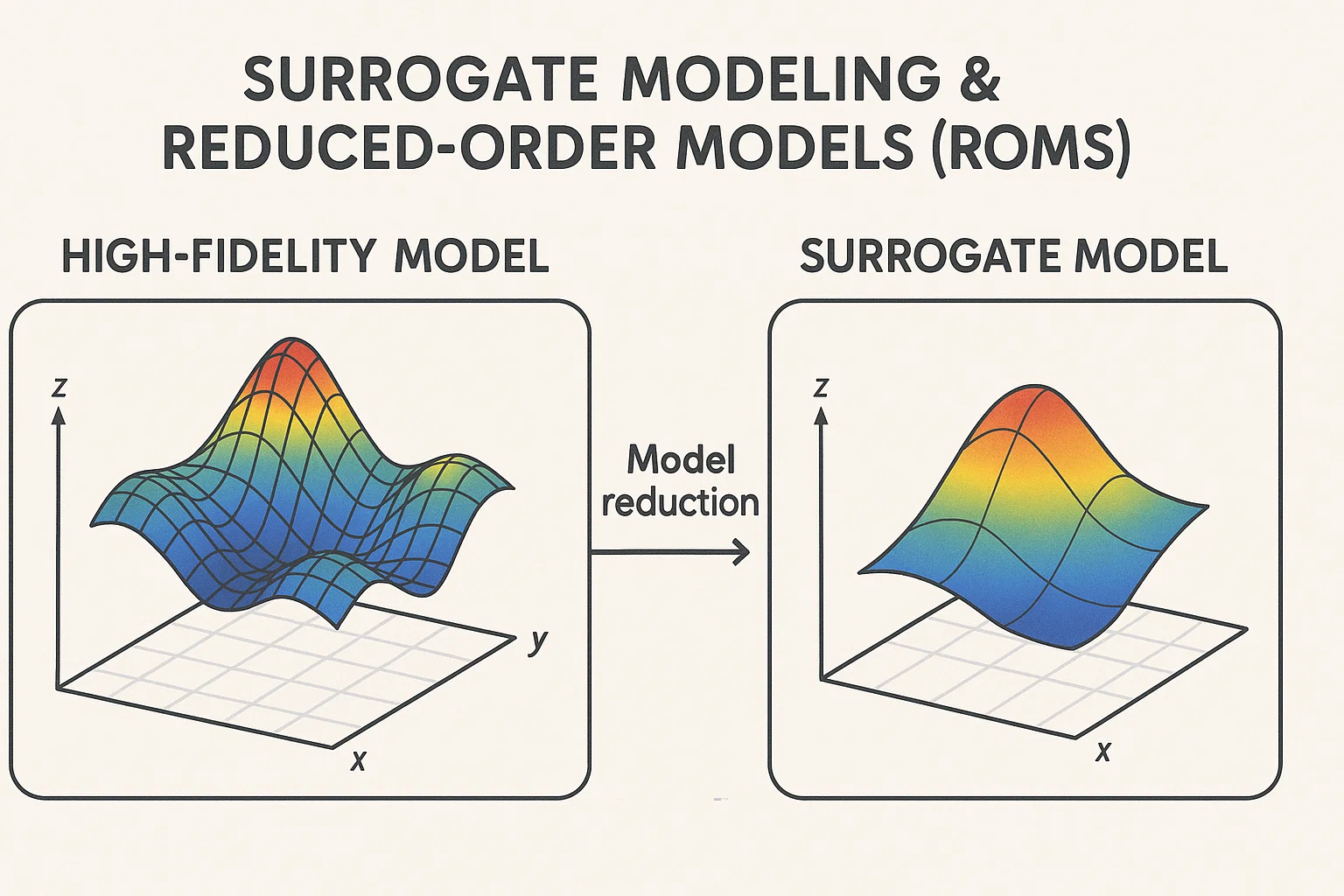
We leverage Reduced-Order Models (ROMs) and Multi-Fidelity Fusion to simplify high-fidelity FEA/CFD simulations, enabling real-time predictions and design exploration. Reduced-Order Models (ROMs): ▸ Use Proper Orthogonal Decomposition (POD) or Autoencoders to project high-fidelity datasets ▸ ML-driven interpolation (Gaussian Processes, Neural Networks) enables real-time predictions ▸ Applications: FEA: Real-time fatigue crack propagation prediction CFD: Real-time flow field prediction for HVAC systems …
Read the full brief →
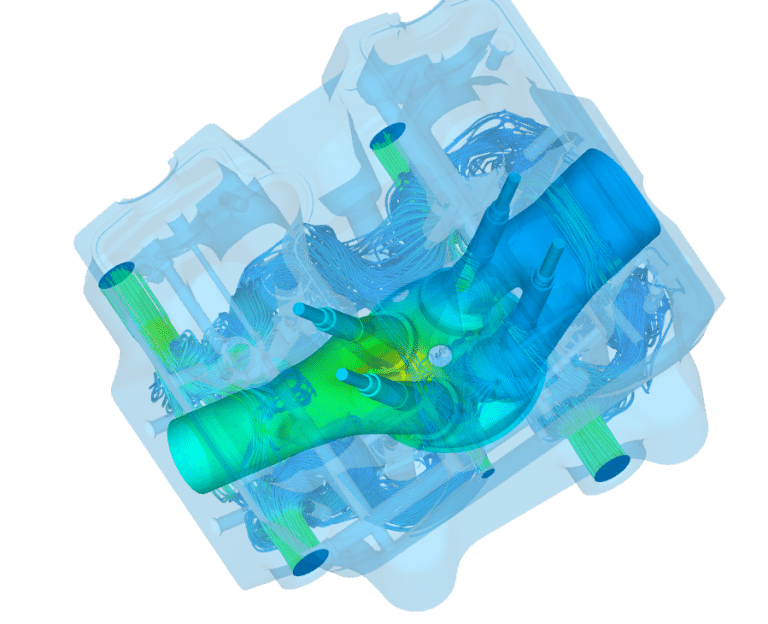
We propagate uncertainties in material properties, boundary conditions, and operational parameters through ML models to quantify confidence intervals for FEA/CFD outputs. Stochastic PINNs: ▸ Extend Physics-Informed Neural Networks to handle stochastic inputs (material variability, turbulent conditions) ▸ Quantify uncertainties in simulation results through probabilistic modeling ▸ Applications: FEA: Fatigue life prediction under material variability CFD: Uncertainty quantification in turbulent flow …
Read the full brief →

We validate ML predictions against experimental data and benchmark results to ensure accuracy and reliability. Residual Learning: ▸ ML models trained on solver residuals correct discretization errors in coarse-mesh simulations ▸ Applications: FEA: High-accuracy strain prediction in experimental setups CFD: Velocity field validation using PIV (Particle Image Velocimetry) Experimental Synergy: ▸ Rigorous validation against DIC (Digital Image Correlation), PIV, and …
Read the full brief →
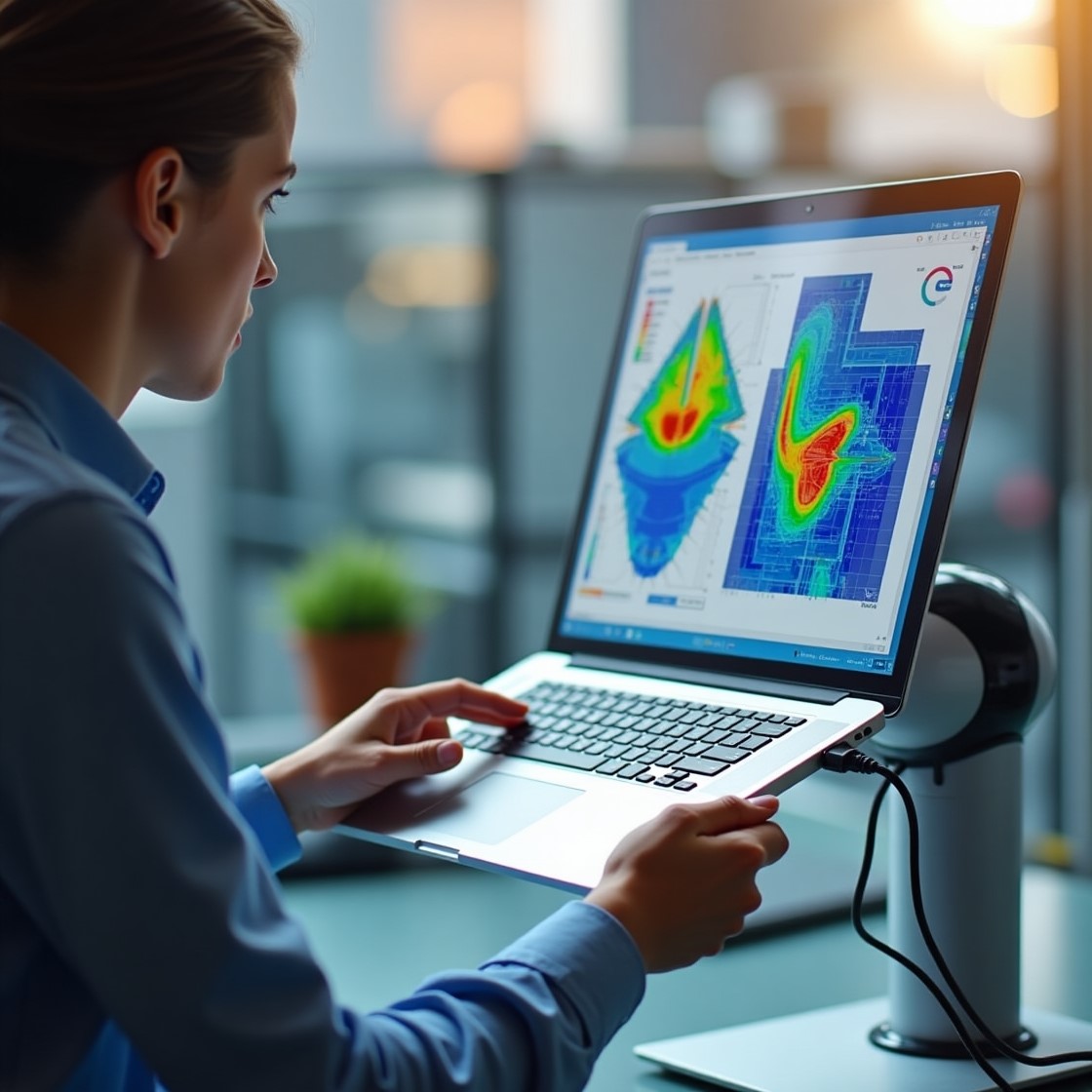
• Rigorous ML Architectures: Prioritize interpretability via attention mechanisms, explainable AI (XAI), and embedded conservation laws. • HPC Scalability: Deploy distributed training (Horovod, Ray) for large-scale datasets across GPU clusters. • Regulatory Compliance: ML models align with ASME V&V; 40, ISO 9001, and industry-specific certification requirements. At OLTRION, we empower engineers with AI/ML-integrated FEA and CFD solutions that combine: • …
Read the full brief →

