

Finite Element Acoustics and Vibration
Acoustics in Aerospace Engineering
Acoustics and Vibration Simulation: FEA & CFD for AeroAcoustics, VibroAcoustics and NVH Analysis

Aero-acoustics is becoming increasingly important in the aerospace industry due to the growing concern over the noise generated by various engineering applications, such as propellers, rotors, aircraft engines, and nozzles. This is particularly important in urban and suburban areas where aircraft noise can be a significant source of disturbance and can negatively impact the quality of life for people living near airports.
Aero-acoustics involves the study of the generation, propagation, and radiation of sound in the context of aerodynamic flows. It is used to analyze and optimize the design of aerospace vehicles to reduce noise levels and improve their acoustic performance.
Aero-acoustic simulations can be used to predict the noise generated by different components of an aircraft, such as engines and propellers, and to evaluate the effectiveness of different noise reduction strategies. These simulations can also help engineers to identify potential noise problems early in the design process and make changes to reduce noise levels before a physical prototype is built.
At the same time, aero-acoustics is essential for ensuring that aerospace vehicles meet regulatory noise standards and regulations. For example, the Federal Aviation Administration (FAA) in the United States sets noise standards for aircraft operations, and aero-acoustics simulations can be used to demonstrate compliance with these standards.
The wider discipline
Acoustics and Vibration
Here, at OLTRION, our engineers have deep knowledge and expertise in FEA, CFD, and acoustic simulation, which enables them to solve complex acoustic, vibro-acoustic, and aero-acoustic problems. By leveraging advanced numerical simulation softwares such as Ansys Fluent and Siemens Star-CCM+ for flows simulation and FEA based Codes such as ABAQUS, Ansys, Nastran and LS-Dyna and acoustic solvers such as Actran, we can accurately predict noise and vibration levels and design products that meet regulatory requirements while delivering optimal performance and reliability.
More in Acoustics and Vibration
View the section →
Capabilities that sit beside this one
 Acoustics in Automotive Industry
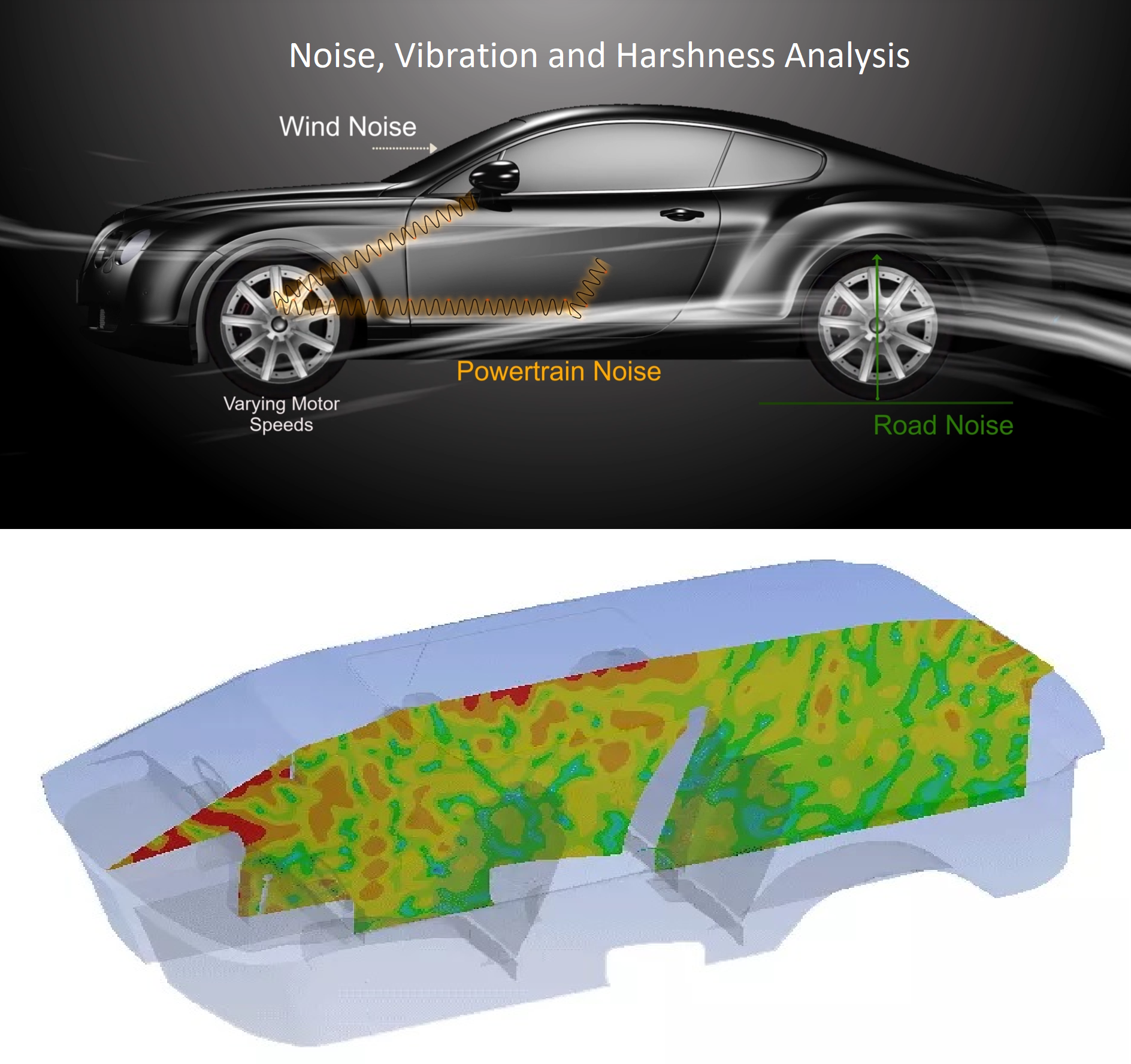
The noise generated by turbulent flows can come from various sources, including air conditioning systems, rotating fans, and other devices that create …
Open capability
 NVH for Hybrid & Electric Vehicles
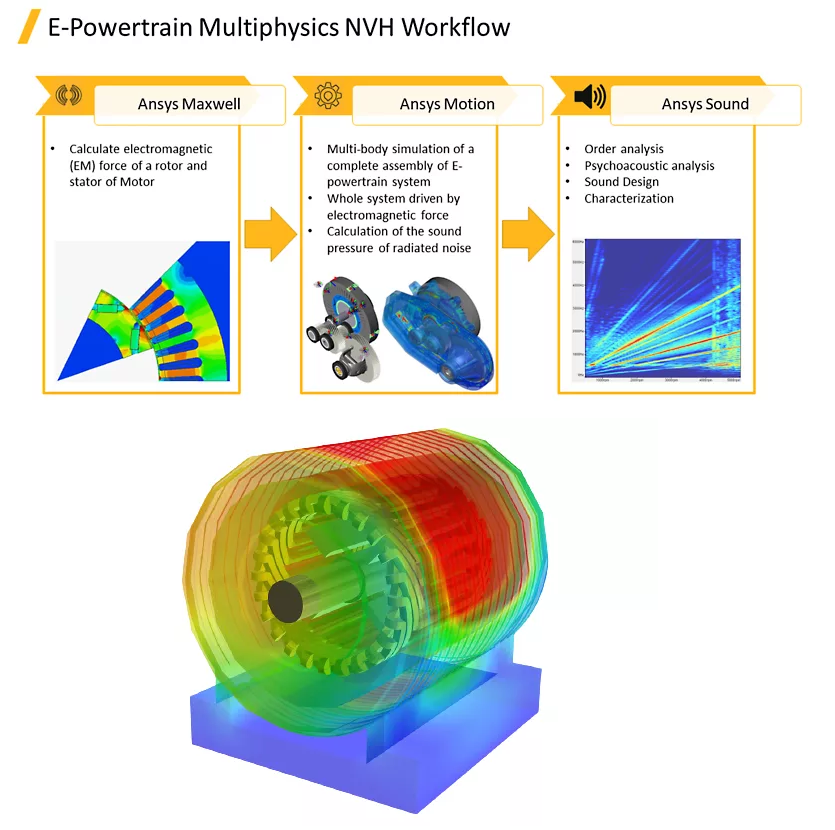
Our engineers provide solutions to optimize electric motor noise behavior while leaving electromagnetic performance unchanged. This involves analyzing the acoustic and vibration …
Open capability
 Shipbuilding Noise Engineering
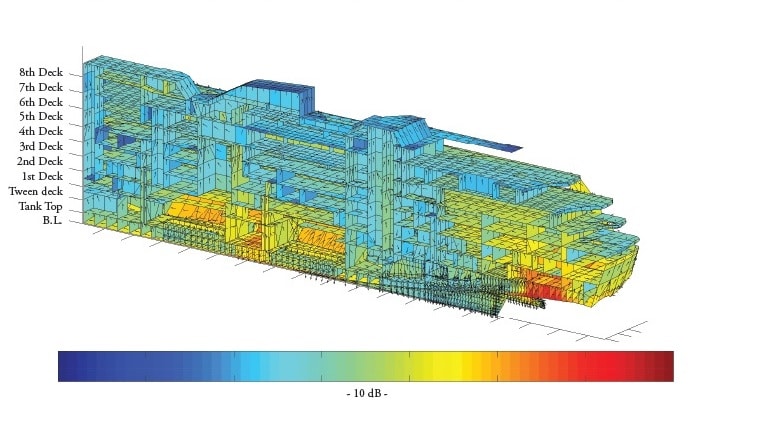
Accurate noise prediction models are crucial for designing marine applications that meet customer expectations for on-board noise levels. Whether it's a large …
Open capability
 Audio & Consumer Electronic Device Design
The engineering process of audio devices is unique because the complete audio system must be tested, taking into account various factors such …
Open capability
 NVH ( Noise, Vibration, and Harshness ) simulation services
Advanced NVH experimental and virtual tools are prerequisites for cost and time effective development minimizing pre-production troubleshooting effort and shortening time-to-market. Our …
Open capability
Across Finite Element
Other Simulation Area
Additive Manufacturing
Directed Energy & Laser Metal Deposition
By using advanced FEA software and high-performance computing (HPC) hardware, it is possible to simulate the thermal and …
Blast, Explosion & Fire
Applications of blast and explosion FEA & CFD simulation in the Chemical, Petrochemical, Oil & Gas industry
Applications of blast and explosion simulation: ▶ Explosion Modeling: Numerical simulation can be used to model the behavior …
Composite Materials
High-rate loading conditions: Impact, Crash, Blast and Explosion
Composite materials can exhibit complex behavior under high-rate loading conditions, including fracture, damage, and delamination. High-rate loading conditions …
Crash Test Simulation
Airbag Effectiveness in Crash Test and crashworthiness
Airbags are an important safety feature in automobiles that can help reduce the risk of injury or death …
Durability & Fatigue Life
Creep & Creep-Fatigue Interactions
To evaluate the durability of components subjected to both mechanical and thermal loads, it is important to consider …
Metal Forming Simulation
Hot Forging
Hot forging is a manufacturing process that involves shaping metals above their recrystallization temperature. During hot forging, the …
Multibody Dynamics
Control Systems
Control systems play a critical role in the performance and safety of many engineering systems, including machinery and …
Thermal Analysis
Heat Exchangers
Heat exchangers are involved in a variety of application areas, such as water treatment, resource refinery, nuclear power, …
Welding Simulation
Finite Element Simulation of Brazing
Brazing is a thermal joining process that uses a melted filler material to connect metal components. The filler …
VTOL, eVTOL & UAM
eVTOLs and UAM Crashworthiness Certification
Occupant safety is integral to the design, development, and operation of urban air mobility (UAM) systems. Emergency landing …
Working on acoustics in aerospace engineering?
Tell us the geometry, the physics and the decision it has to support.
Talk to an engineer