

Finite Element Composite Materials
Braided Composites
FEA Based Composite Material Design and Optimization: Fatigue, Fracture, Impact, Crash, Acoustics and Vibration with Abaqus, Ansys and LS-DYNA
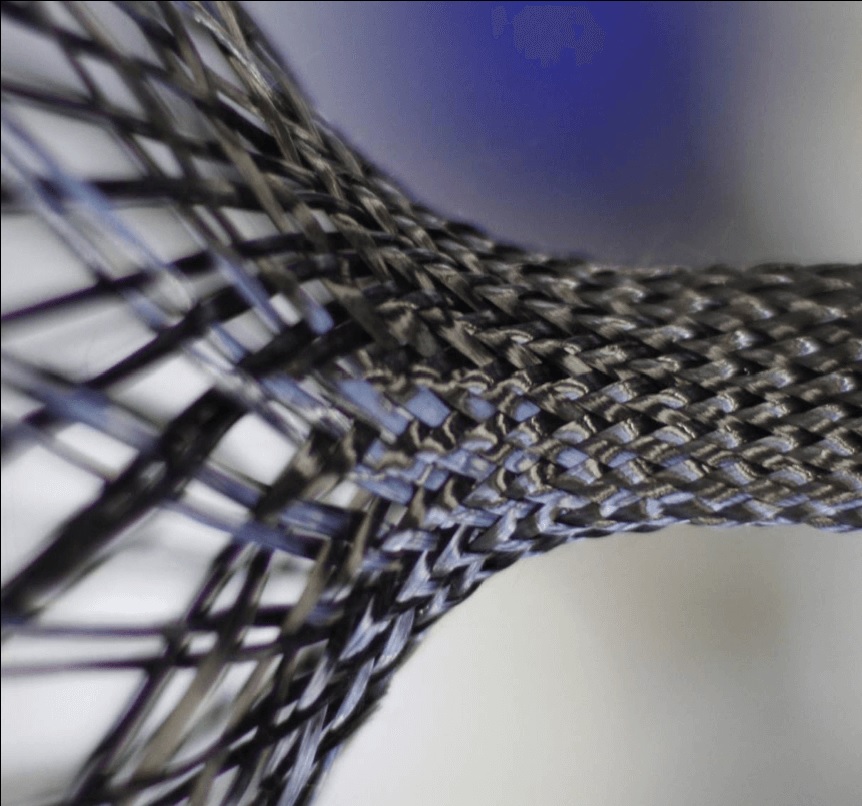
Braided composites are a type of composite material that is made by braiding continuous fibers around a mandrel to create a preform, which is then impregnated with a resin matrix to create a final composite part. This process is different from other composite manufacturing processes like hand layup or filament winding, which involve cutting and placing pre-cut fibers onto a mold.
The main advantage of braided composites is their ability to create more complex parts with higher fiber volume fractions and better mechanical properties. This is because the braiding process allows for more precise fiber placement and tighter weaving of the fibers, which results in a more uniform and stronger material.
However, the downside of the braiding process is that it requires specialized equipment and tooling, which can be expensive and time-consuming to set up. Additionally, the process is limited to convex shapes and hollow profiles, which means that it may not be suitable for all types of parts.
The wider discipline
Composite Materials
Composite material modeling Consultant, Training and Simulation services of OLTRION cover wide range of industry using advanced FEA Technology for design, ultimate failure, fatigue, fracture, impact, crash, environmental degradation, acoustics and multiphysics simulations with sophisticated FEA solvers such as Abaqus, Ansys, LS-DYNA, RADIOSS and COMSOL.
More in Composite Materials
View the section →
Capabilities that sit beside this one
 Discontinuous Fiber Composites
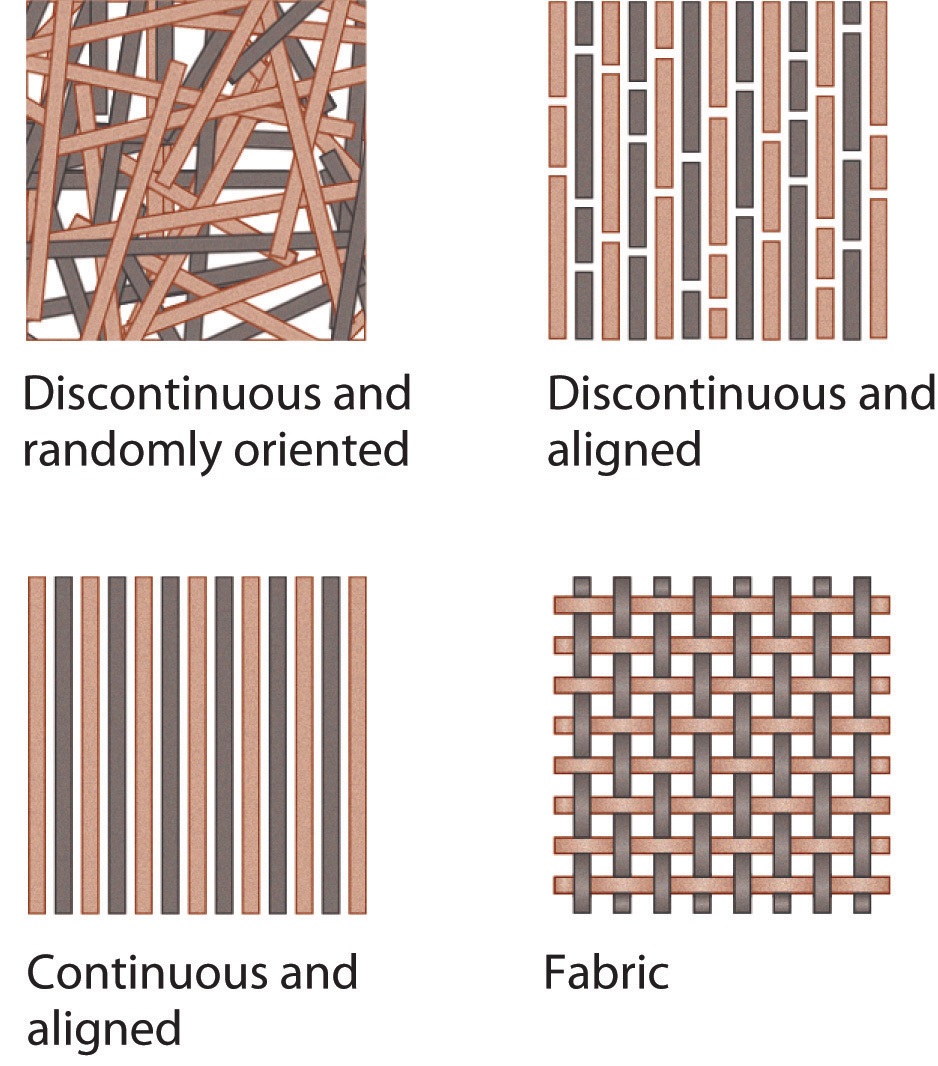
Discontinuous fiber composites (DFC) are a type of composite material that are made by compressing pre-impregnated fiber chips, or prepreg chips, which …
Open capability
 Hard Metal
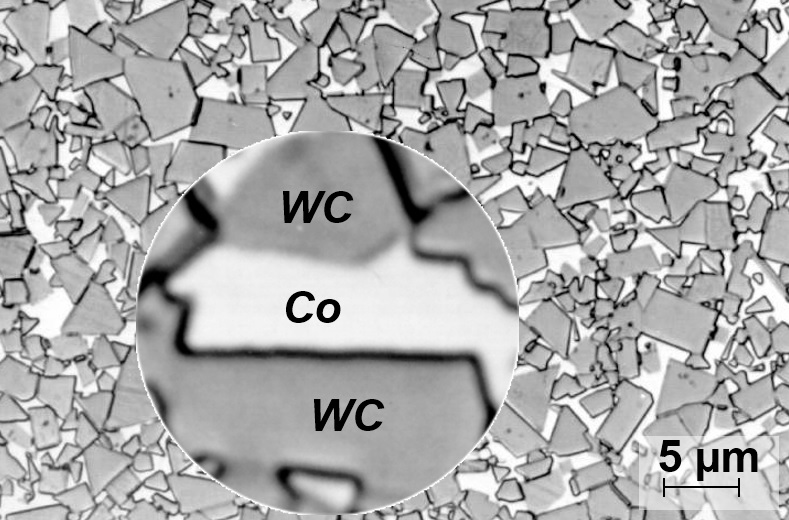
Hard metals, also known as cemented carbides, are composite materials that are made up of a metal matrix and a hard ceramic …
Open capability
 Plastic materials
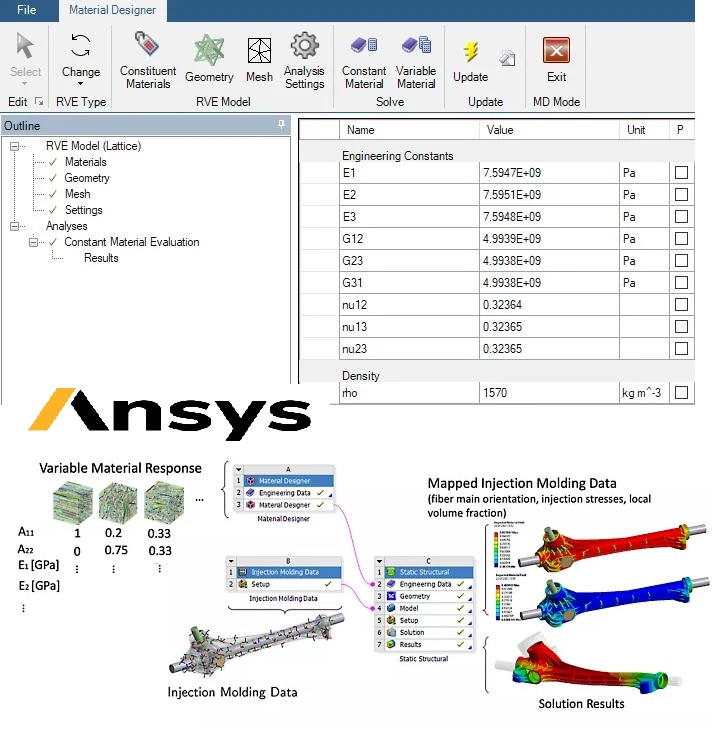
Designing plastic materials reinforced with glass and/or carbon fibers is a complex process that requires consideration of many factors, including the properties …
Open capability
 Rubber Matrix Composite
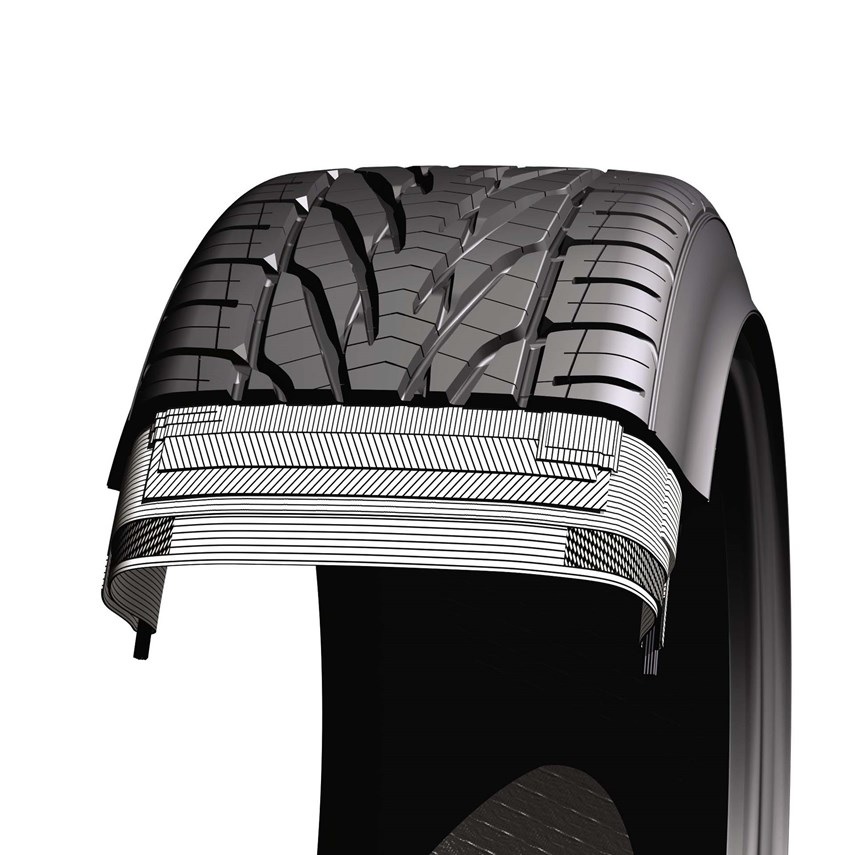
Rubber-based components, such as tires, anti-vibration systems, seals, and hoses, rely on the properties of the rubber matrix to perform their intended …
Open capability
 Unidirectional composites (UD)
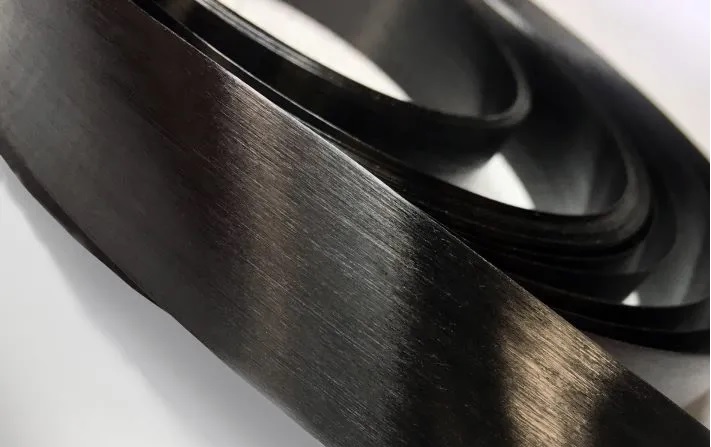
 are a type of composite material that consist of fibers arranged in a single direction within a matrix material. …
Open capability
 Woven fabric composites
Advanced FEA tools are essential for material investigations and are used to simulate the behavior of materials under various loading conditions. An …
Open capability
 Composite modeling approach in numerical computation
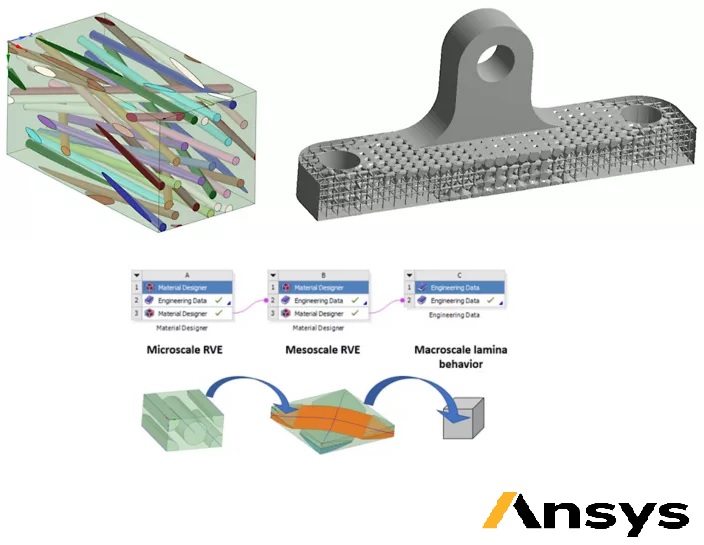
Key composite modeling approaches: ▶ Cohesive zone models (CZMs): CZMs are commonly used to model the initiation and propagation of cracks and …
Open capability
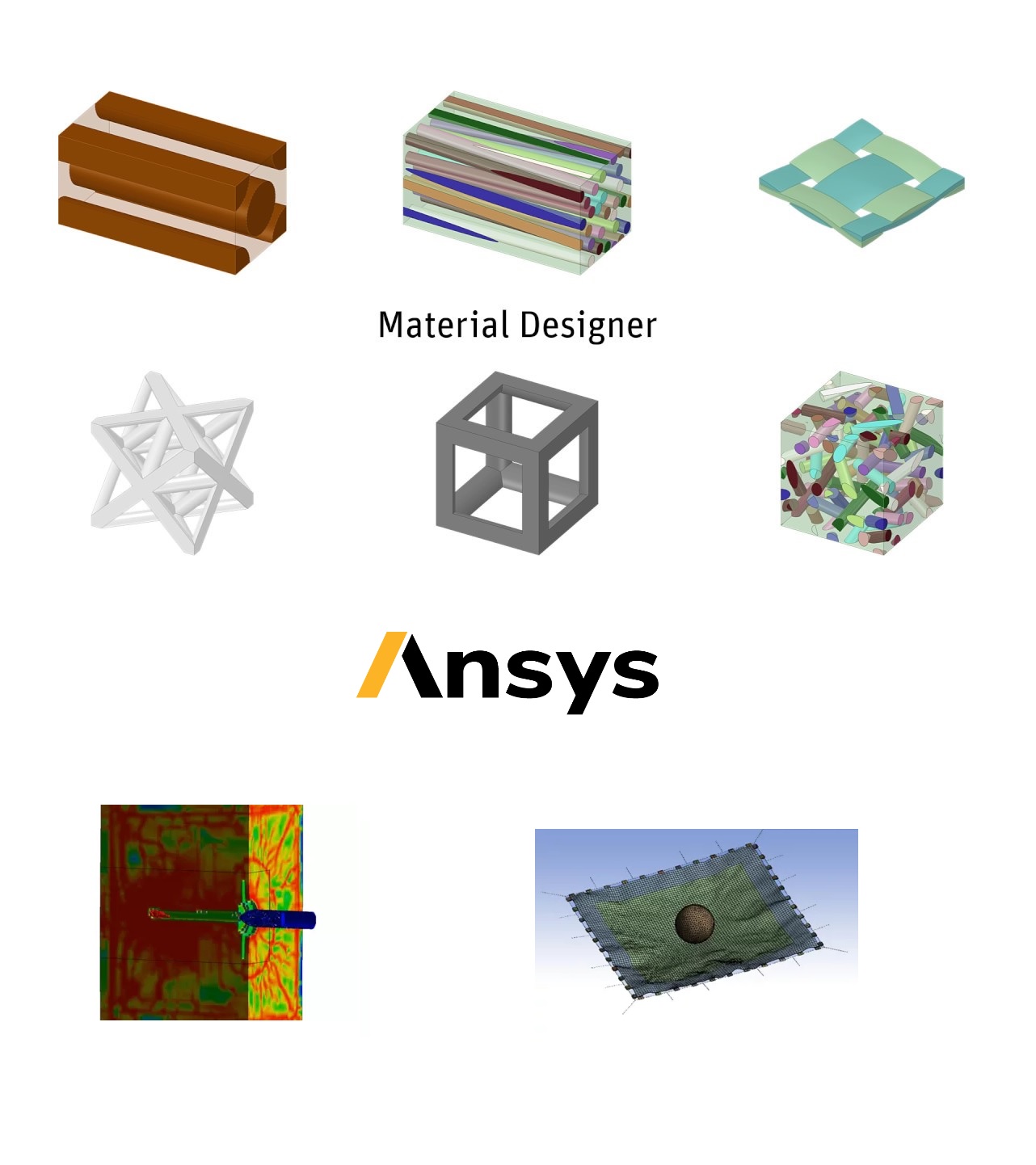 High-rate loading conditions: Impact, Crash, Blast and Explosion
Composite materials can exhibit complex behavior under high-rate loading conditions, including fracture, damage, and delamination. High-rate loading conditions refer to situations where …
Open capability
Across Finite Element
Other Simulation Area
Acoustics and Vibration
Acoustics in Automotive Industry
The noise generated by turbulent flows can come from various sources, including air conditioning systems, rotating fans, and …
Additive Manufacturing
Metal Binder Jetting
Metal Binder Jetting (MBJ) is an emerging additive manufacturing technology that offers several key advantages over traditional Powder …
Blast, Explosion & Fire
Applications of blast and explosion simulation in the Defense and Military industry
Applications of blast and explosion simulation: ▶ Armor optimization: Blast and explosion simulation using FEA can be used …
Crash Test Simulation
Dummies for crash Test Simulation
Dummies, also known as anthropomorphic test devices (ATDs), are essential tools for conducting crash test Finite Element simulations …
Durability & Fatigue Life
Elastomer Materials Fatigue
Developers of rubber materials, components and systems increasingly rely on simulation as a routine means to address design …
Metal Forming Simulation
Open Die Forging
Open die forging is a forging process used for large and critical products that cannot be formed using …
Multibody Dynamics
Multibody Dynamics & NVH
By combining MBD simulation and NVH finite element simulation analysis, engineers can create comprehensive models that simulate the …
Thermal Analysis
Heat Transfer Simulations for Turbomachinery Systems
Most machines, especially those that operate under high-heat conditions such as turbines, boilers, and combustors, require strict control …
Welding Simulation
Laser and Electron Beam Welding FEA Simulation
Laser beam welding is a process that uses a high-energy laser beam to heat and weld metal components …
VTOL, eVTOL & UAM
Ground Vibration Testing (GVT)
Airworthiness & GVT Certification Ground Vibration Testing (GVT) is a critical FAA & EASA milestone, yielding experimental vibration …
Working on braided composites?
Tell us the geometry, the physics and the decision it has to support.
Talk to an engineer