

Finite Element Blast, Explosion & Fire
Design procedures for Blast and Explosion FEA & CFD analysis
Blast, Explosion & Fire: Finite Element & CFD Based Simulation
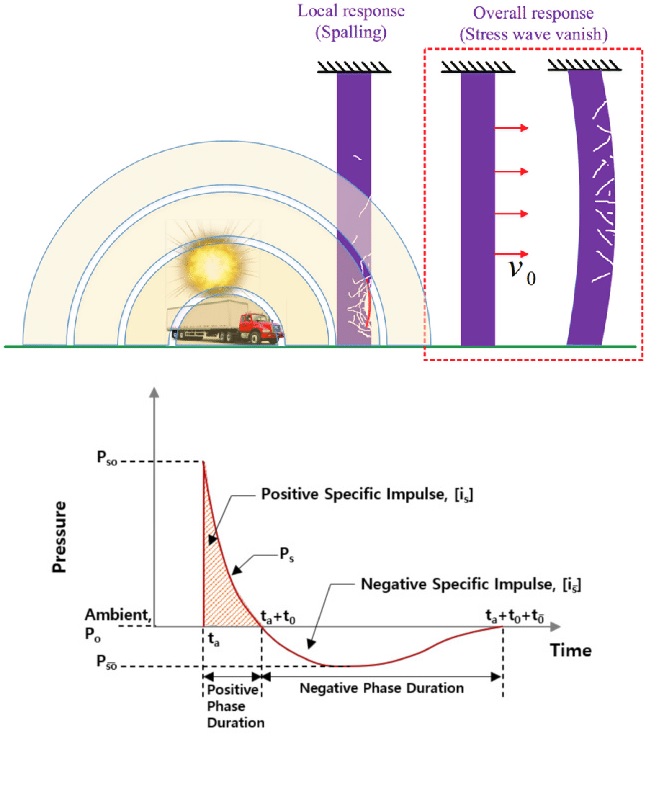
Designing structures to withstand blast and explosion loads requires a rigorous and systematic approach.
Key steps in the design procedure for blast and explosion analysis:
- Hazard analysis: This involves identifying the potential sources of blast and explosion loads and assessing the likelihood and consequences of these events. This analysis includes a review of historical data, analysis of the site-specific conditions, and identification of potential threat scenarios.
- Blast load modeling: Once the potential sources of blast and explosion loads have been identified, the next step is to model the loads using appropriate engineering software. This involves simulating the blast wave propagation and predicting the pressure, impulse, and other relevant parameters that will be experienced by the offshore structure.
- Structural analysis: The structural response of the offshore structure to the blast and explosion loads must be analyzed using appropriate engineering software. This includes analyzing the dynamic response of the structure, assessing the damage potential, and predicting the risk of progressive collapse.
- Mitigation measures: Based on the results of the hazard analysis and structural analysis, appropriate mitigation measures can be identified and implemented to reduce the risk of damage to the offshore structure. These measures may include designing blast-resistant structures, using protective coatings, or adding structural reinforcements.
- Verification and validation: The blast and explosion analysis must be verified and validated using appropriate methods. This may involve comparing the results of the simulation with experimental data, conducting sensitivity analyses, or using other methods to ensure that the results are reliable and accurate.
The wider discipline
Blast, Explosion & Fire
OLTRION engineers simulate the Blast and Explosion with innovative CAE and virtual prototyping available in the non-linear structural codes LS-DYNA, Ansys Autodyn, and ABAQUS. OLTRION Engineers can simulate any type of Blast and Explosion such as air blast, Underwater explosion (UNDEX) and Fragmentation due to blast to survey structural integrity in High Rate Loading Condition. Some key aspects of these numerical simulation for blast, explosion, and fire include:
Material modeling: Accurately modeling the behavior of materials under extreme loading conditions is crucial for blast, explosion, and fire simulation. Advanced material …
Material modeling: Accurately modeling the behavior of materials under extreme loading conditions is crucial for blast, explosion, and fire simulation. Advanced material …
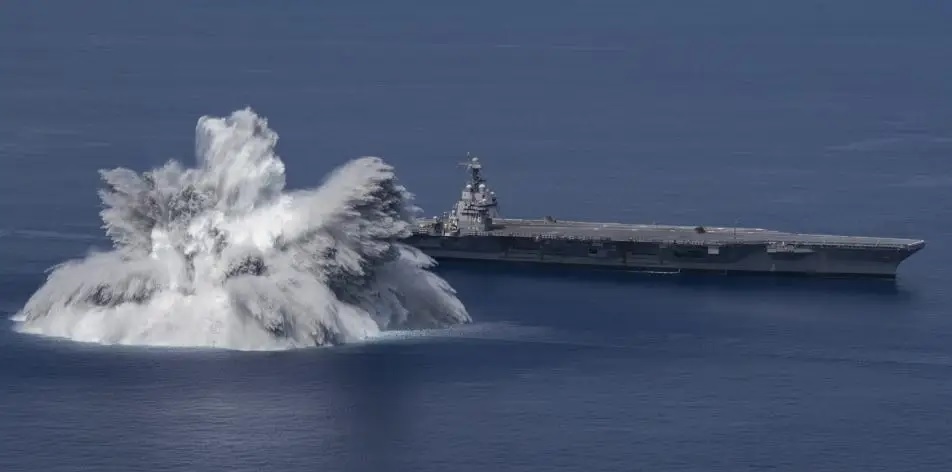
More in Blast, Explosion & Fire
View the section →
Capabilities that sit beside this one
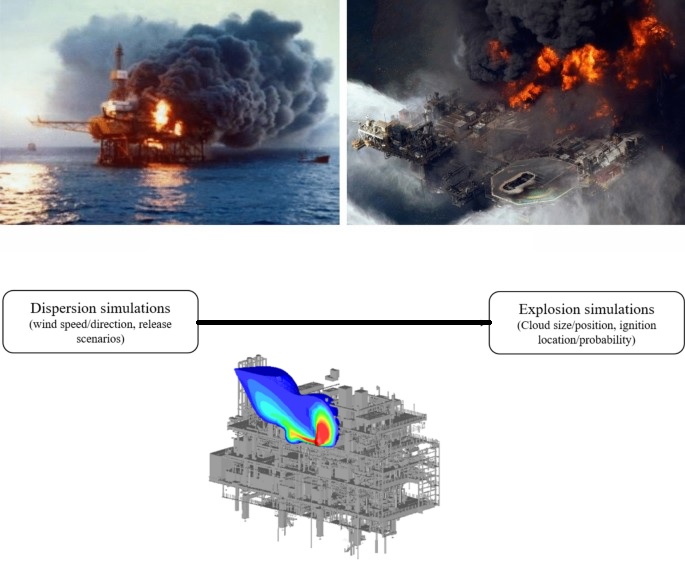 Applications of blast and explosion FEA & CFD simulation in the Chemical, Petrochemical, Oil & Gas industry
Applications of blast and explosion simulation: ▶ Explosion Modeling: Numerical simulation can be used to model the behavior of explosions in chemical …
Open capability
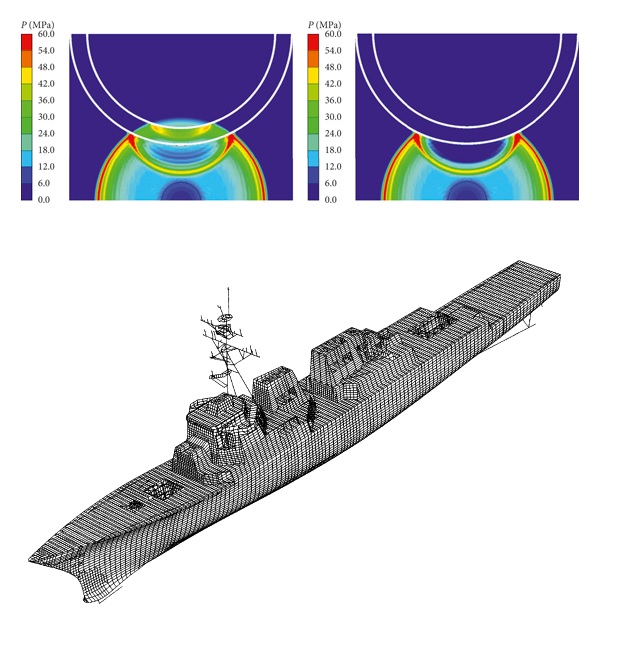 Applications of blast and explosion simulation in the Defense and Military industry
Applications of blast and explosion simulation: ▶ Armor optimization: Blast and explosion simulation using FEA can be used to optimize the design …
Open capability
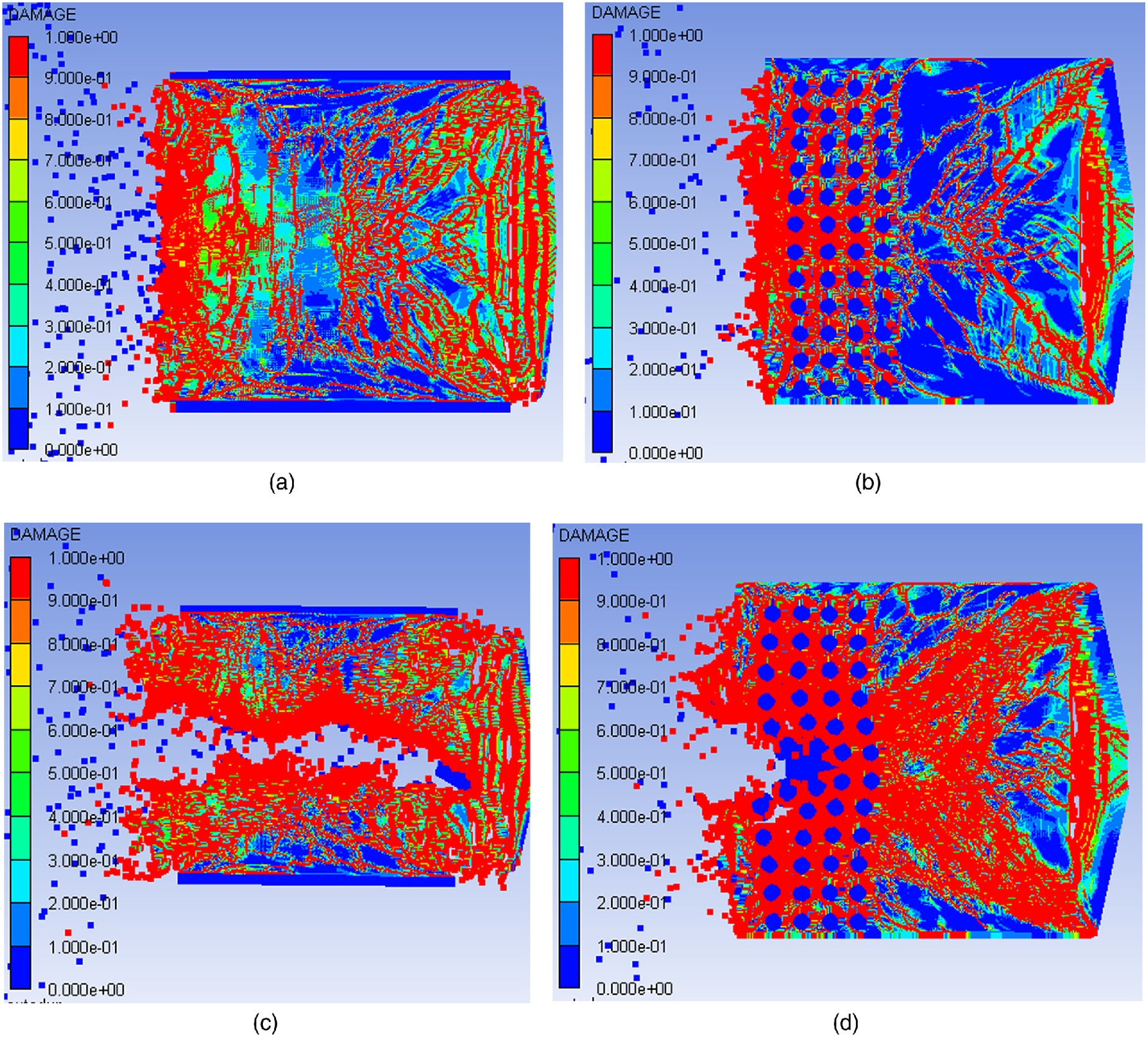 What is the best numerical method for blast, explosion and fire simulation?
The choice of the best numerical model for blast, explosion and fire simulation depends on various factors such as the type of …
Open capability
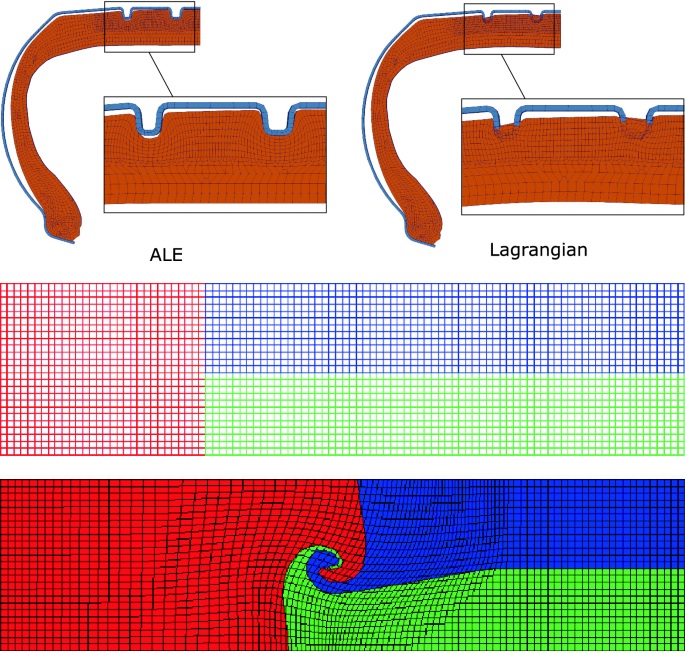 Arbitrary Lagrangian-Eulerian (ALE)
The Arbitrary Lagrangian-Eulerian (ALE) method is a numerical technique that combines the advantages of both the Lagrangian and Eulerian methods to solve …
Open capability
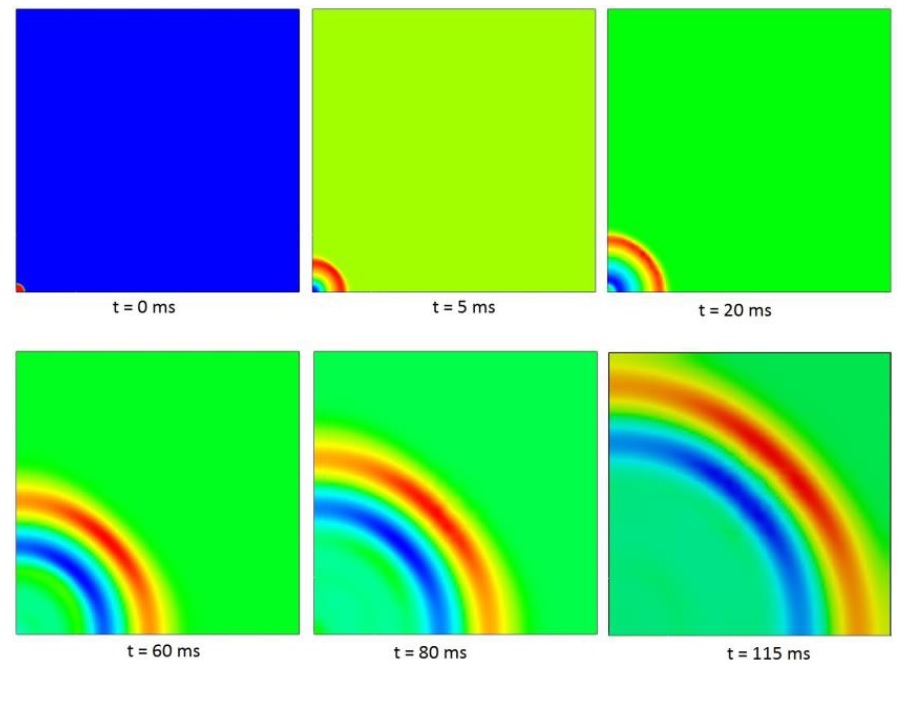 Engineering simulation FEA & CFD software packages for Blast, Explosion and Fire Simulation
There are several engineering simulation software packages that can be used for blast and explosion simulations. These packages can capture high-speed impact …
Open capability
Across Finite Element
Other Simulation Area
Acoustics and Vibration
NVH ( Noise, Vibration, and Harshness ) simulation services
Advanced NVH experimental and virtual tools are prerequisites for cost and time effective development minimizing pre-production troubleshooting effort …
Additive Manufacturing
Generative Design & Lattice Structures: Topology, Shape and Bead Optimization
Generative Design is an innovative approach to product design that leverages topology optimization, artificial intelligence, and advanced simulation …
Composite Materials
Composite modeling approach in numerical computation
Key composite modeling approaches: ▶ Cohesive zone models (CZMs): CZMs are commonly used to model the initiation and …
Crash Test Simulation
The main scenarios of crash tests
Key crash test scenarios: ▶ Frontal Impact: In this type of crash test, a car is propelled into …
Durability & Fatigue Life
Composites Fatigue Simulation
The Composite Analysis allows us to evaluate the strength of a structure against industry standard composite failure criteria. …
Metal Forming Simulation
Cold Forming
Regarding cold forming, it is true that it is restricted to easily formable materials, or materials that can …
Multibody Dynamics
Complicated Machinery & Mechanical Drive Systems
MBD simulation, or multi-body dynamics simulation, is a powerful tool used by engineers to simulate and analyze the …
Thermal Analysis
Electronic Systems Cooling & Heating
In the design phase of electronic devices, CFD and FEA based heat transfer software can be used to …
Welding Simulation
Arc Welding
Arc welding processes, such as SMAW, GMAW (MIG), GTAW (TIG), SAW, and others, are widely used in various …
VTOL, eVTOL & UAM
Vibroacoustics Performance Assessment
A true VTOL system design has complex challenges, particularly designing for a high thrust for hover while also …
Working on design procedures for blast and explosion fea & cfd analysis?
Tell us the geometry, the physics and the decision it has to support.
Talk to an engineer