

Finite Element Additive Manufacturing
Generative Design & Lattice Structures: Topology, Shape and Bead Optimization
Additive Manufacturing and 3D Printing : FEA Based Design and Optimization with Simufact, Abaqus, ANSYS
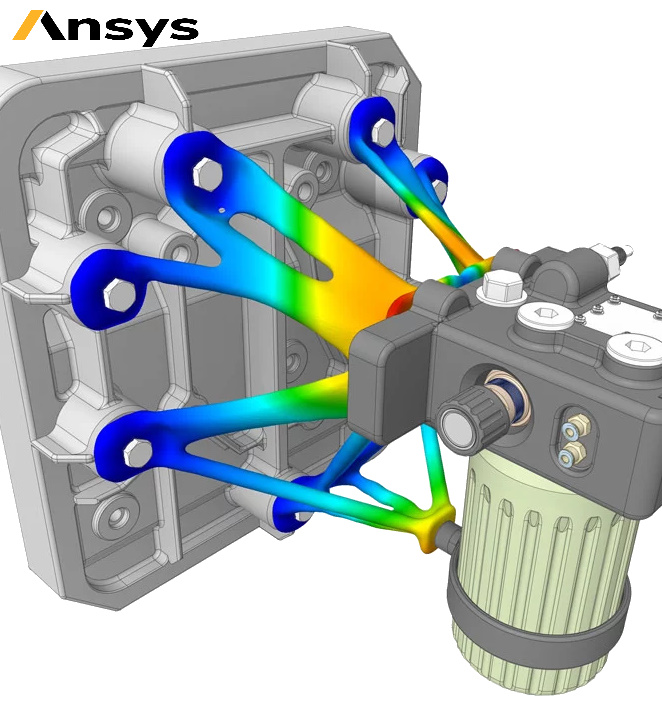
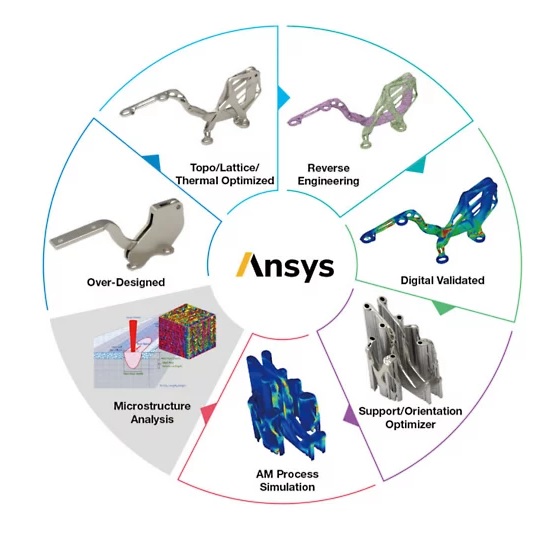
Generative Design is an innovative approach to product design that leverages topology optimization, artificial intelligence, and advanced simulation to create multiple viable design alternatives automatically, based on simple design criteria specified by the user.
Generative Design allows engineers and designers to explore a much wider range of design options than traditional methods, leading to increased creativity and innovation in the product design process. By generating multiple design alternatives, it also helps to optimize designs for efficiency, reduce weight, and minimize material usage, resulting in cost savings and improved sustainability.
Moreover, we use Generative Design to reduce the time-to-market for new products, as it enables our designers to quickly generate and evaluate multiple design alternatives, reducing the need for time-consuming manual design iterations.
The wider discipline
Additive Manufacturing
Nonparametric optimization techniques such as artificial intelligence (AI) can be used in conjunction with finite element analysis (FEA) to further optimize designs for AM. AI can help identify the most critical design parameters and their optimal values, while FEA can be used to simulate the performance of the design under various loading conditions. Together, these tools can help engineers create parts that are not only lighter and stronger, but also tailored to specific applications.
Furthermore, AM simulations with advanced package such as Ansys can be used to assess the quality …
Furthermore, AM simulations with advanced package such as Ansys can be used to assess the quality …
More in Additive Manufacturing
View the section →
Capabilities that sit beside this one
 Directed Energy & Laser Metal Deposition
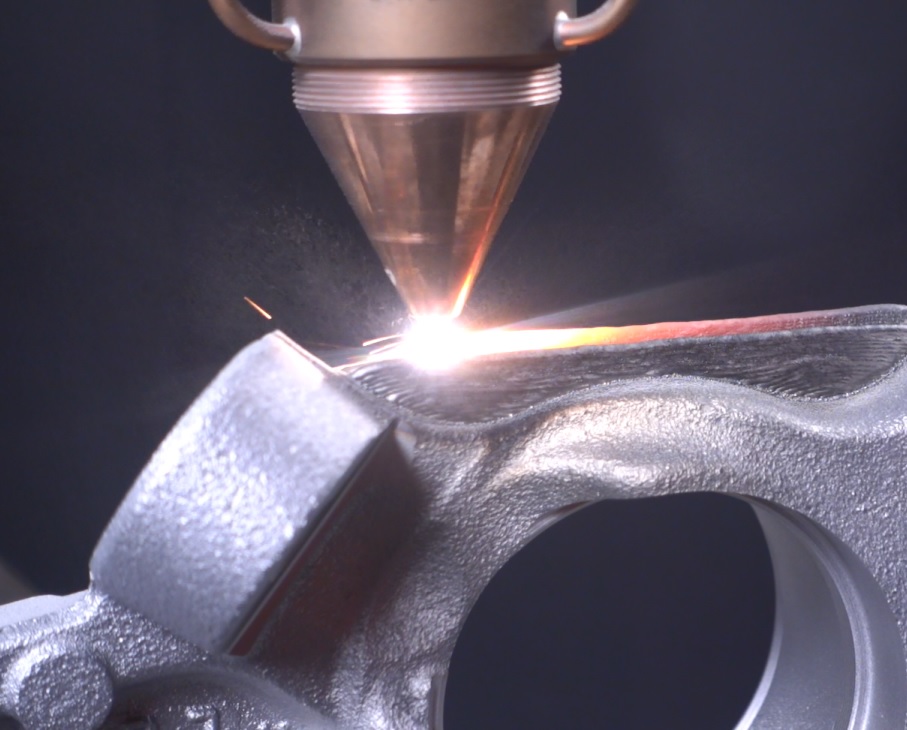
By using advanced FEA software and high-performance computing (HPC) hardware, it is possible to simulate the thermal and mechanical behavior of the …
Open capability
 Metal Binder Jetting
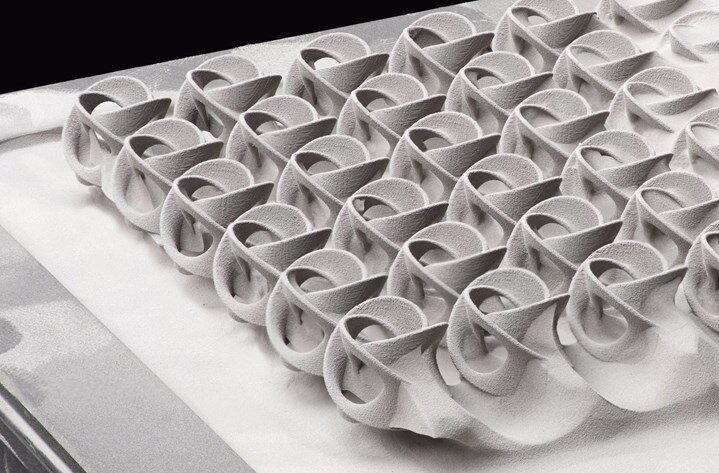
 (MBJ) is an emerging additive manufacturing technology that offers several key advantages over traditional Powder Bed Fusion processes. One …
Open capability
 Plastics & Reinforced Polymers
Advanced additive manufacturing simulation platforms such as MSC Digimat, Ansys, and Abaqus are powerful tools that can be used to simulate the …
Open capability
 Powder Bed Fusion
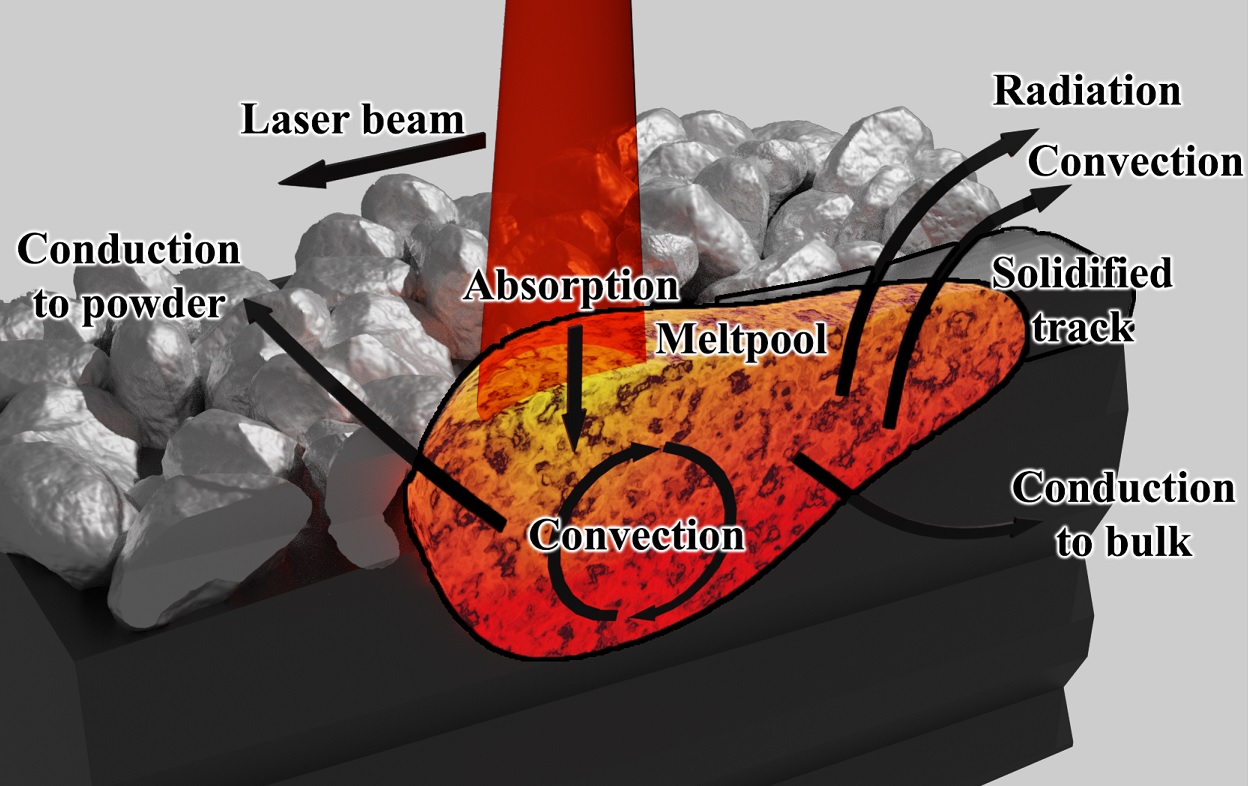
 (PBF) is an additive manufacturing technique that uses a heat source, typically a laser or electron beam, to fuse …
Open capability
Across Finite Element
Other Simulation Area
Acoustics and Vibration
NVH ( Noise, Vibration, and Harshness ) simulation services
Advanced NVH experimental and virtual tools are prerequisites for cost and time effective development minimizing pre-production troubleshooting effort …
Blast, Explosion & Fire
Design procedures for Blast and Explosion FEA & CFD analysis
Designing structures to withstand blast and explosion loads requires a rigorous and systematic approach. Key steps in the …
Composite Materials
Composite modeling approach in numerical computation
Key composite modeling approaches: ▶ Cohesive zone models (CZMs): CZMs are commonly used to model the initiation and …
Crash Test Simulation
The main scenarios of crash tests
Key crash test scenarios: ▶ Frontal Impact: In this type of crash test, a car is propelled into …
Durability & Fatigue Life
Composites Fatigue Simulation
The Composite Analysis allows us to evaluate the strength of a structure against industry standard composite failure criteria. …
Metal Forming Simulation
Cold Forming
Regarding cold forming, it is true that it is restricted to easily formable materials, or materials that can …
Multibody Dynamics
Complicated Machinery & Mechanical Drive Systems
MBD simulation, or multi-body dynamics simulation, is a powerful tool used by engineers to simulate and analyze the …
Thermal Analysis
Electronic Systems Cooling & Heating
In the design phase of electronic devices, CFD and FEA based heat transfer software can be used to …
Welding Simulation
Arc Welding
Arc welding processes, such as SMAW, GMAW (MIG), GTAW (TIG), SAW, and others, are widely used in various …
VTOL, eVTOL & UAM
Vibroacoustics Performance Assessment
A true VTOL system design has complex challenges, particularly designing for a high thrust for hover while also …
Working on generative design & lattice structures: topology, shape and bead optimization?
Tell us the geometry, the physics and the decision it has to support.
Talk to an engineer