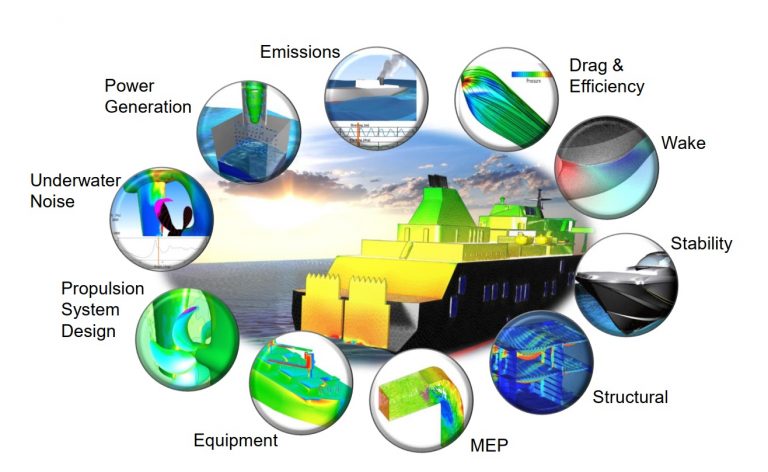
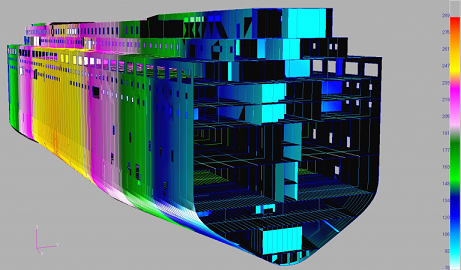
Finite Element Analysis (FEA) and Computational Fluid Dynamics (CFD) are widely used in the marine and shipbuilding industry to optimize the design of ships and boats.
One application of FEA in shipbuilding is to analyze the structural integrity of the vessel under various loading conditions. This can include analyzing the stresses and strains on the hull, the performance of the propulsion system, and the behavior of the vessel in waves and other environmental conditions.
CFD simulations, on the other hand, can be used to analyze the fluid dynamics around the hull and other components of the vessel, such as the propellers and rudders. By analyzing the flow of water around these components, engineers can optimize their design to reduce drag, increase efficiency, and improve maneuverability.
Multiphysics simulations, which combine FEA and CFD, can provide even more detailed and accurate analysis of complex systems. For example, a multiphysics simulation could be used to analyze the interaction between the hull and the water, taking into account the effects of both fluid dynamics and structural stresses.
OLTRION services and expertise in FEA and CFD-based simulation can help shipbuilders and boat designers to optimize their designs, reduce costs, and improve the safety and performance of their vessels. By leveraging the power of simulation technology, the marine and shipbuilding industry can develop more efficient and environmentally friendly vessels that can withstand the challenges of the open sea.
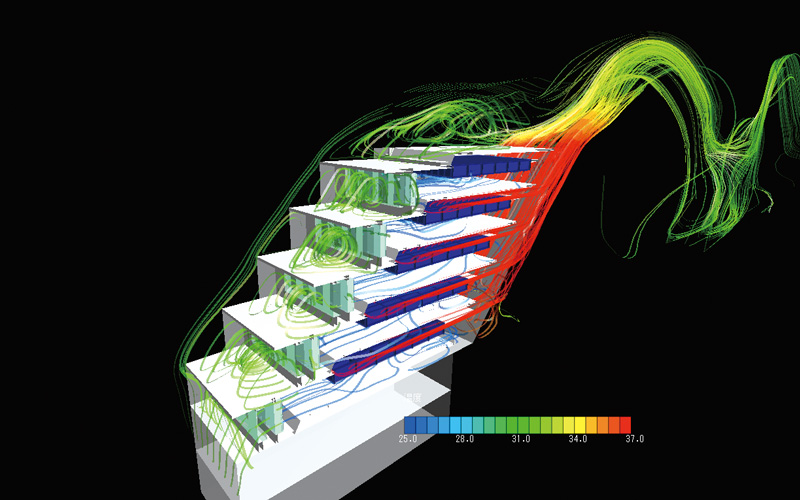
HVAC (Heating, Ventilation, and Air Conditioning) systems are an essential component of marine and shipbuilding projects, providing climate control and ventilation for crew and passengers. These systems must be designed to withstand the harsh marine environment, which includes exposure to saltwater, high humidity, and extreme temperatures. One of the main challenges in HVAC design for marine and shipbuilding is the …
The hull design can significantly impact a vessel's speed, stability, fuel consumption, and overall operating costs. Traditionally, vessels have been optimized for a single operating condition, such as the contract speed at design draft. However, with the help of advanced computational fluid dynamics (CFD) tools and modern computers, it is now possible to optimize a vessel's hull design for a …
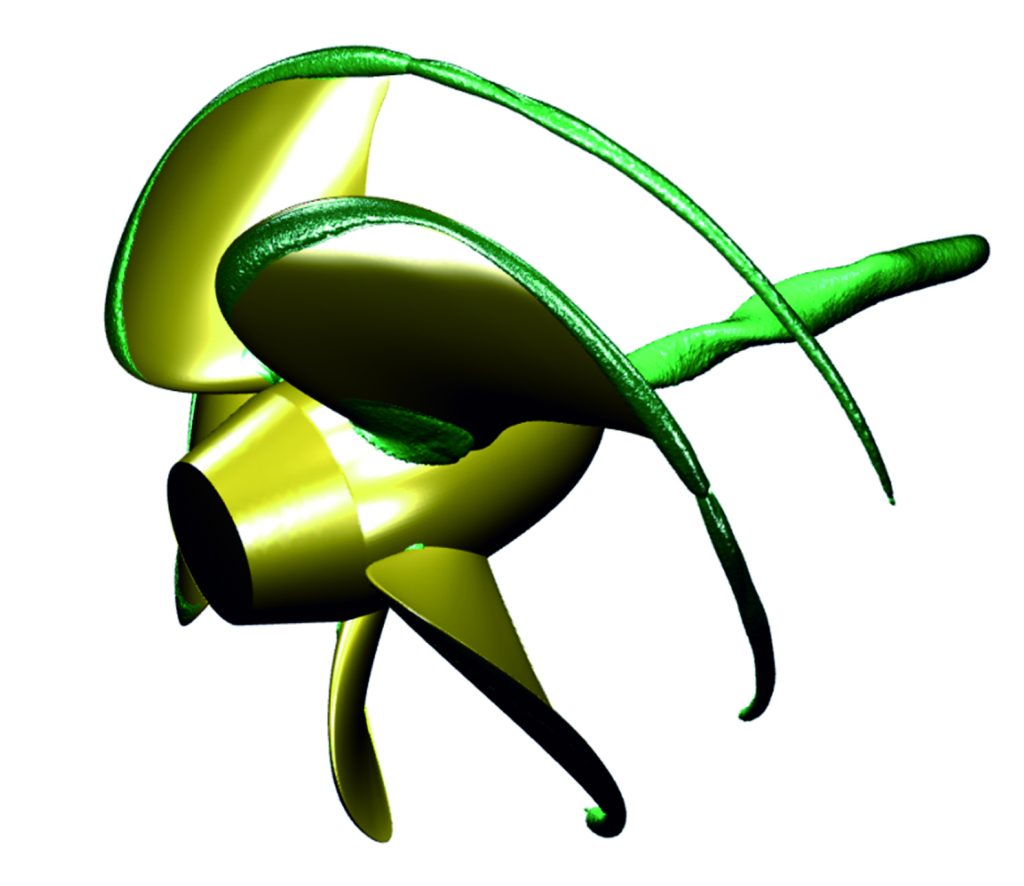
Propulsion systems are a critical component of marine and shipbuilding industry. The propulsion system is responsible for providing the necessary power to move the vessel through water, and it can significantly impact the vessel's overall performance and fuel consumption. One of the challenges in designing propulsion systems is the phenomenon of cavitation. Cavitation occurs when the pressure in a fluid …
Structural-borne noise and vibration need to be minimized for passenger comfort and reduced environmental impact. Our full suite of vibro-acoustics simulation, and optimization tools ensures that we can minimize the structural dynamic impact of your vessel and its components early in the design phase. From large cruise ships to yachts, from frigates to submarines, many design challenges shall be addressed …