

Finite Element Composite Materials
Composite modeling approach in numerical computation
FEA Based Composite Material Design and Optimization: Fatigue, Fracture, Impact, Crash, Acoustics and Vibration with Abaqus, Ansys and LS-DYNA
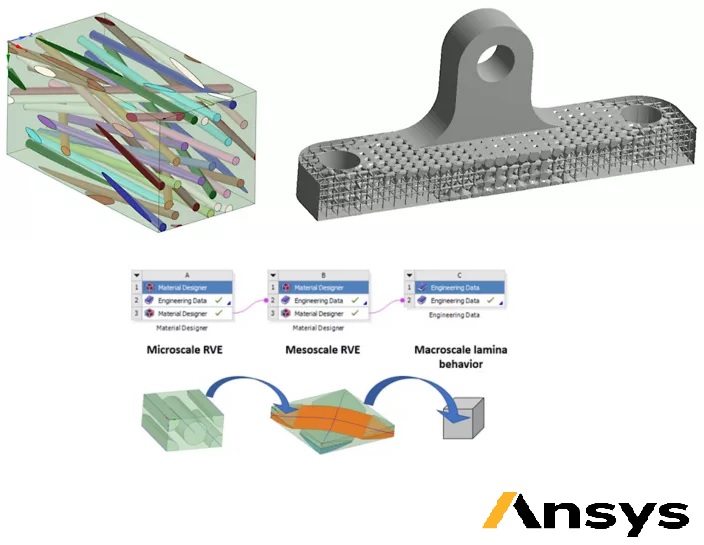
Key composite modeling approaches:
- Cohesive zone models (CZMs): CZMs are commonly used to model the initiation and propagation of cracks and delamination in composite materials. These models simulate the behavior of the material at the crack tip by representing the material as a series of cohesive elements that connect the two sides of the crack. The CZM parameters are usually calibrated from experimental tests or from higher fidelity simulations, and can be used to predict the critical load required to initiate and propagate cracks and delamination in composite structures.
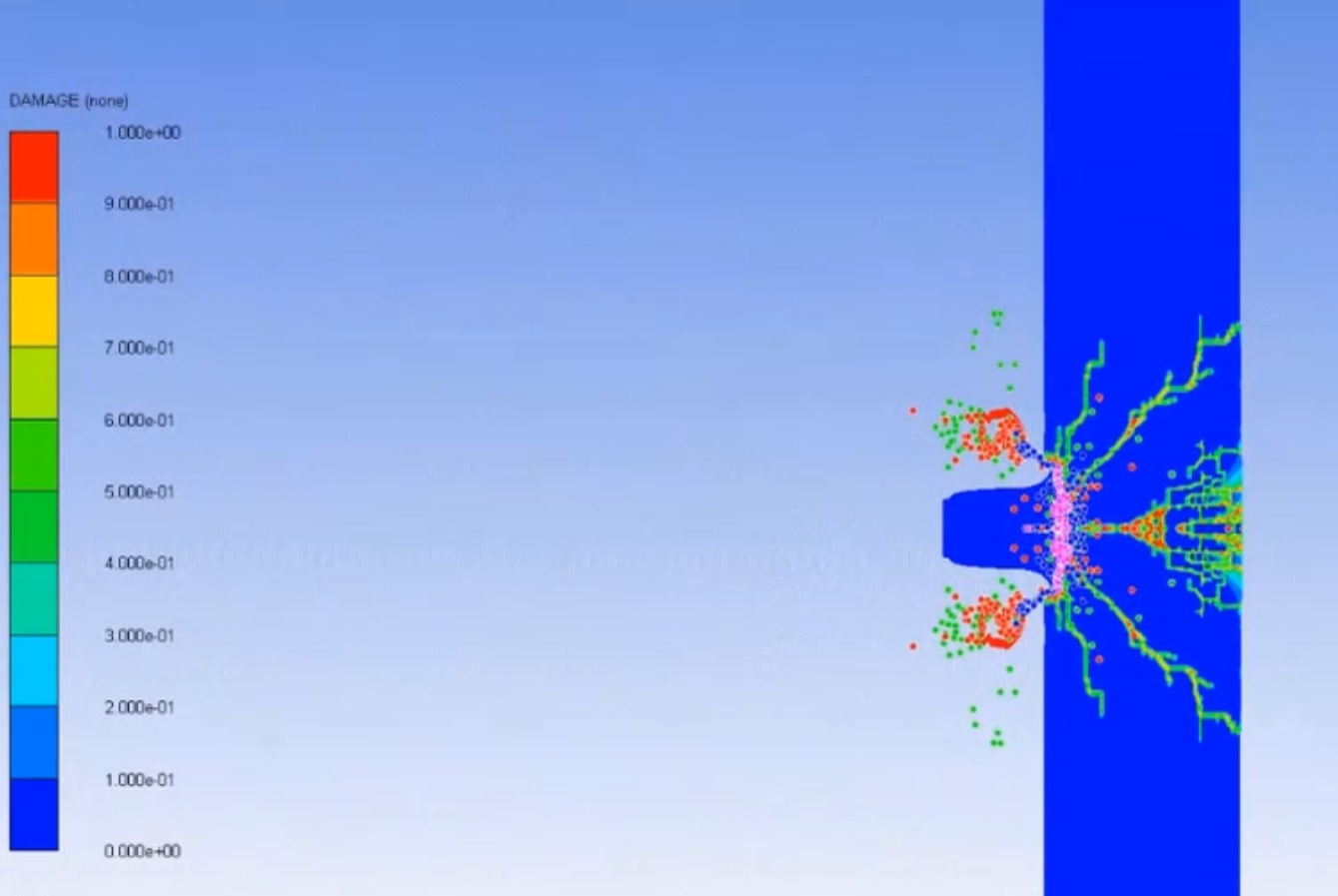
- Damage models: Damage models are commonly used to simulate the progressive degradation of the composite material due to fatigue loading or other internal or external factors. These models simulate the accumulation of damage in the material, such as matrix cracking or fiber breakage, by using damage evolution laws.
- Continuum damage mechanics models (CDMs): CDMs simulate the degradation of the material by considering the evolution of damage at the continuum scale. These models are typically used to simulate the behavior of composite materials under various loading conditions, including static and dynamic loading. The damage parameters are usually calibrated from experimental tests or from higher fidelity simulations.
- Failure criteria models: Failure criteria are commonly used to predict the onset of failure in composite materials. These models are based on stress or strain-based criteria and are calibrated from experimental tests or from higher fidelity simulations.
- Micromechanical models: Micromechanical models simulate the behavior of composite materials at the microscale, taking into account the interactions between the constituent materials, such as fibers and matrix. These models are typically used to predict the mechanical properties of the composite material, such as stiffness and strength, and to optimize the composite material design.
- XFEM: XFEM is a technique that allows for the simulation of crack propagation without the need for remeshing the material. This is particularly useful for simulating the behavior of composites, which have a complex microstructure that can be difficult to mesh. XFEM has been used to simulate the fracture behavior of composites under different loading conditions, such as tension and bending.
The wider discipline
Composite Materials
Composite material modeling Consultant, Training and Simulation services of OLTRION cover wide range of industry using advanced FEA Technology for design, ultimate failure, fatigue, fracture, impact, crash, environmental degradation, acoustics and multiphysics simulations with sophisticated FEA solvers such as Abaqus, Ansys, LS-DYNA, RADIOSS and COMSOL.
More in Composite Materials
View the section →
Capabilities that sit beside this one
 High-rate loading conditions: Impact, Crash, Blast and Explosion
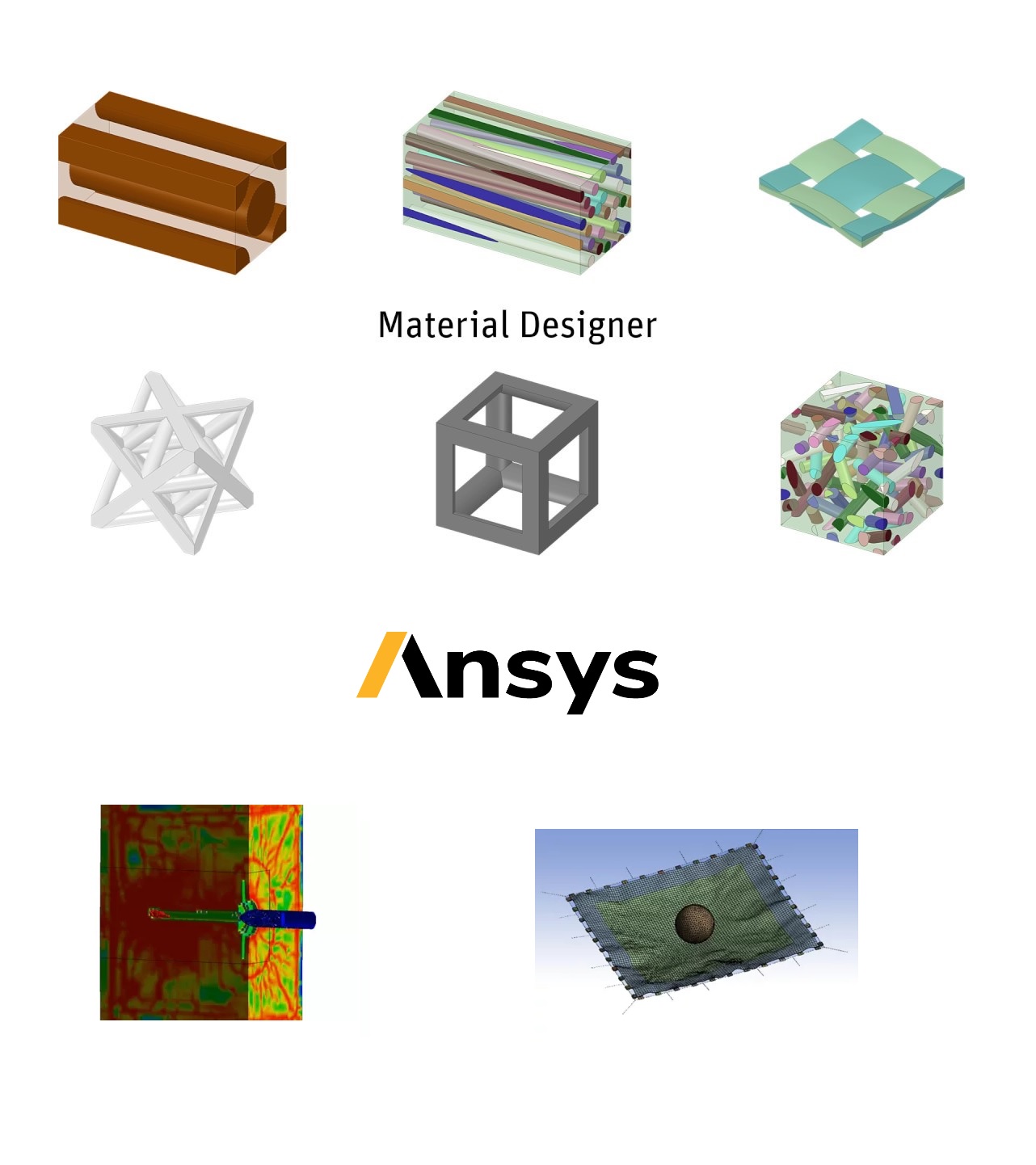
Composite materials can exhibit complex behavior under high-rate loading conditions, including fracture, damage, and delamination. High-rate loading conditions refer to situations where …
Open capability
 Braided Composites
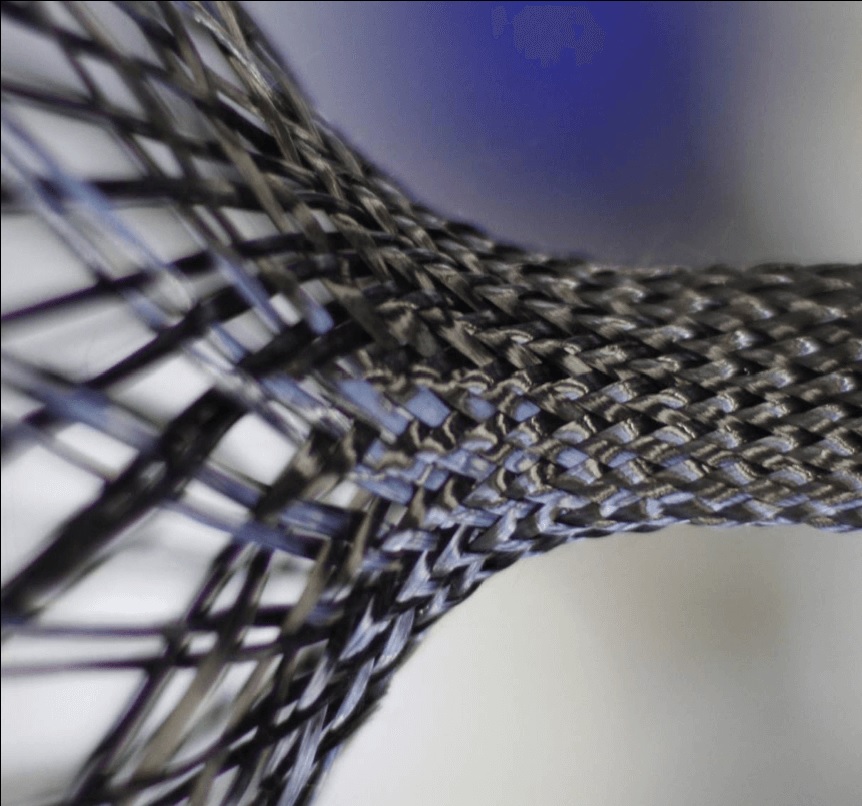
Braided composites are a type of composite material that is made by braiding continuous fibers around a mandrel to create a preform, …
Open capability
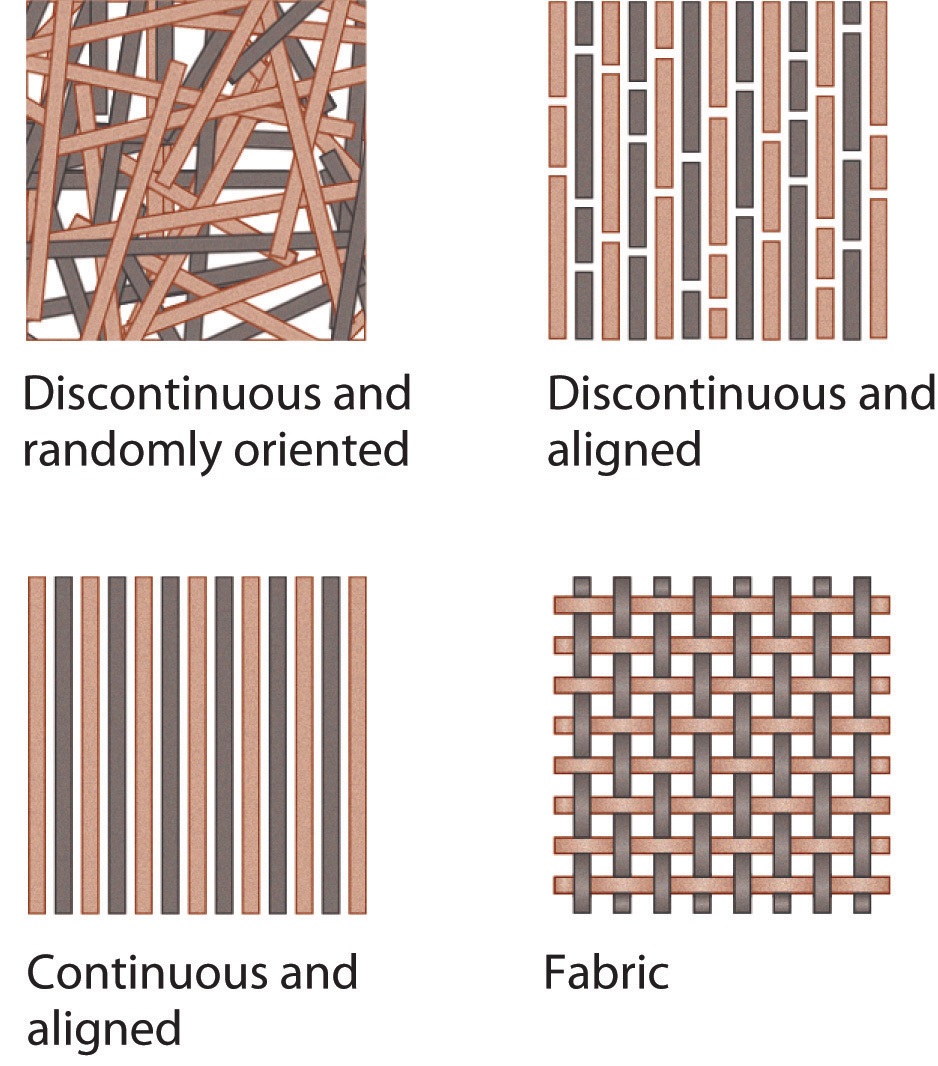 Discontinuous Fiber Composites
Discontinuous fiber composites (DFC) are a type of composite material that are made by compressing pre-impregnated fiber chips, or prepreg chips, which …
Open capability
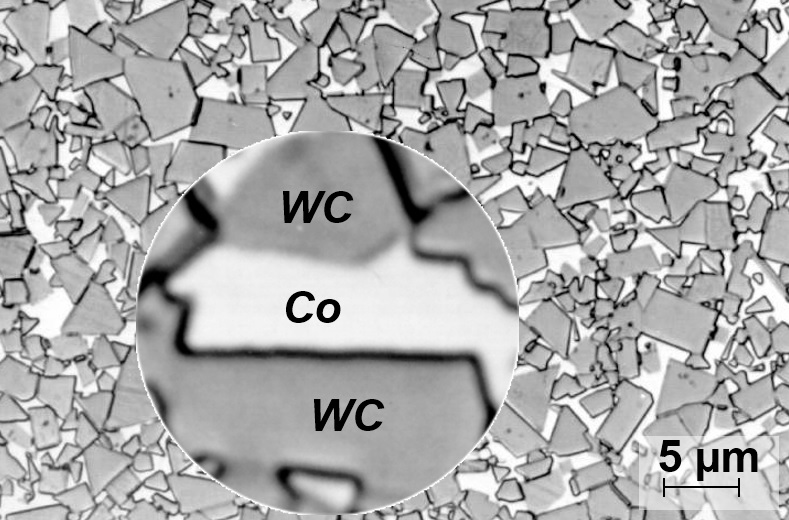 Hard Metal
Hard metals, also known as cemented carbides, are composite materials that are made up of a metal matrix and a hard ceramic …
Open capability
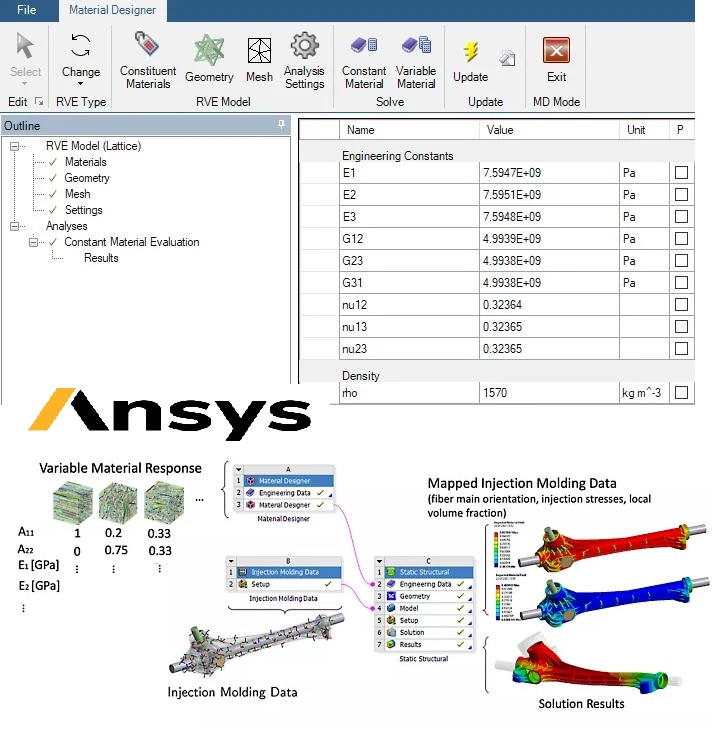 Plastic materials
Designing plastic materials reinforced with glass and/or carbon fibers is a complex process that requires consideration of many factors, including the properties …
Open capability
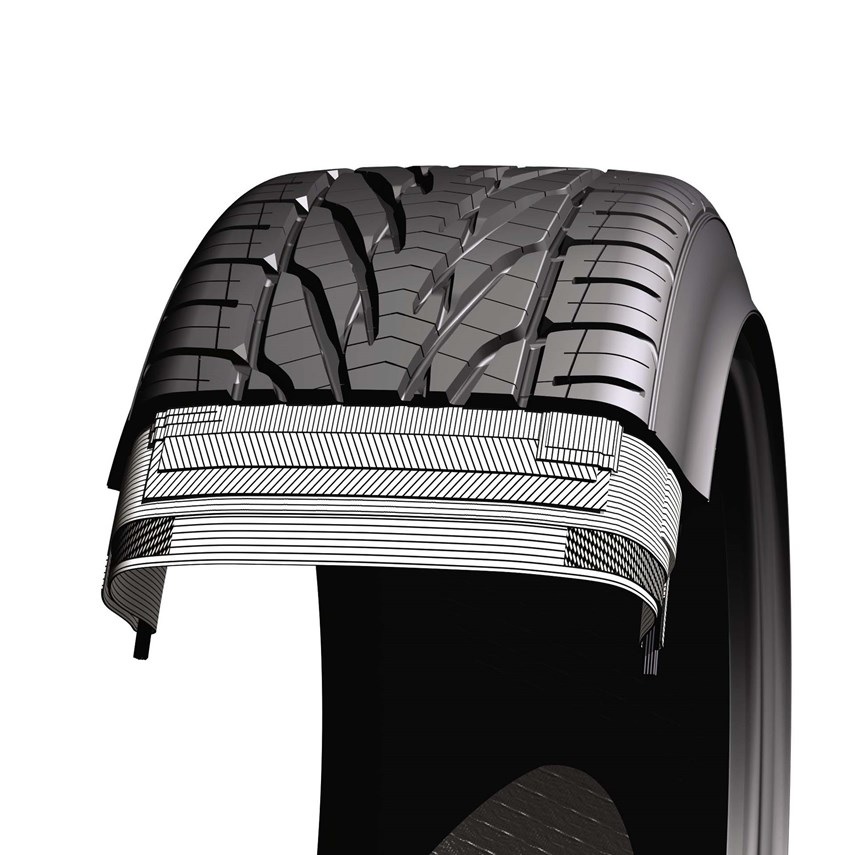 Rubber Matrix Composite
Rubber-based components, such as tires, anti-vibration systems, seals, and hoses, rely on the properties of the rubber matrix to perform their intended …
Open capability
 Unidirectional composites (UD)
 are a type of composite material that consist of fibers arranged in a single direction within a matrix material. …
Open capability
 Woven fabric composites
Advanced FEA tools are essential for material investigations and are used to simulate the behavior of materials under various loading conditions. An …
Open capability
Across Finite Element
Other Simulation Area
Acoustics and Vibration
NVH ( Noise, Vibration, and Harshness ) simulation services
Advanced NVH experimental and virtual tools are prerequisites for cost and time effective development minimizing pre-production troubleshooting effort …
Additive Manufacturing
Generative Design & Lattice Structures: Topology, Shape and Bead Optimization
Generative Design is an innovative approach to product design that leverages topology optimization, artificial intelligence, and advanced simulation …
Blast, Explosion & Fire
Design procedures for Blast and Explosion FEA & CFD analysis
Designing structures to withstand blast and explosion loads requires a rigorous and systematic approach. Key steps in the …
Crash Test Simulation
The main scenarios of crash tests
Key crash test scenarios: ▶ Frontal Impact: In this type of crash test, a car is propelled into …
Durability & Fatigue Life
Composites Fatigue Simulation
The Composite Analysis allows us to evaluate the strength of a structure against industry standard composite failure criteria. …
Metal Forming Simulation
Cold Forming
Regarding cold forming, it is true that it is restricted to easily formable materials, or materials that can …
Multibody Dynamics
Complicated Machinery & Mechanical Drive Systems
MBD simulation, or multi-body dynamics simulation, is a powerful tool used by engineers to simulate and analyze the …
Thermal Analysis
Electronic Systems Cooling & Heating
In the design phase of electronic devices, CFD and FEA based heat transfer software can be used to …
Welding Simulation
Arc Welding
Arc welding processes, such as SMAW, GMAW (MIG), GTAW (TIG), SAW, and others, are widely used in various …
VTOL, eVTOL & UAM
Vibroacoustics Performance Assessment
A true VTOL system design has complex challenges, particularly designing for a high thrust for hover while also …
Working on composite modeling approach in numerical computation?
Tell us the geometry, the physics and the decision it has to support.
Talk to an engineer