

Electromagnetics Electromagnetic Multiphysics
Electrical Motor Design
Electromagnetic Multiphysics FEA & CFD Based Simulation Including Thermal Stress, Fatigue, and Noise, Vibration & Harshness – NVH for Electric Motors
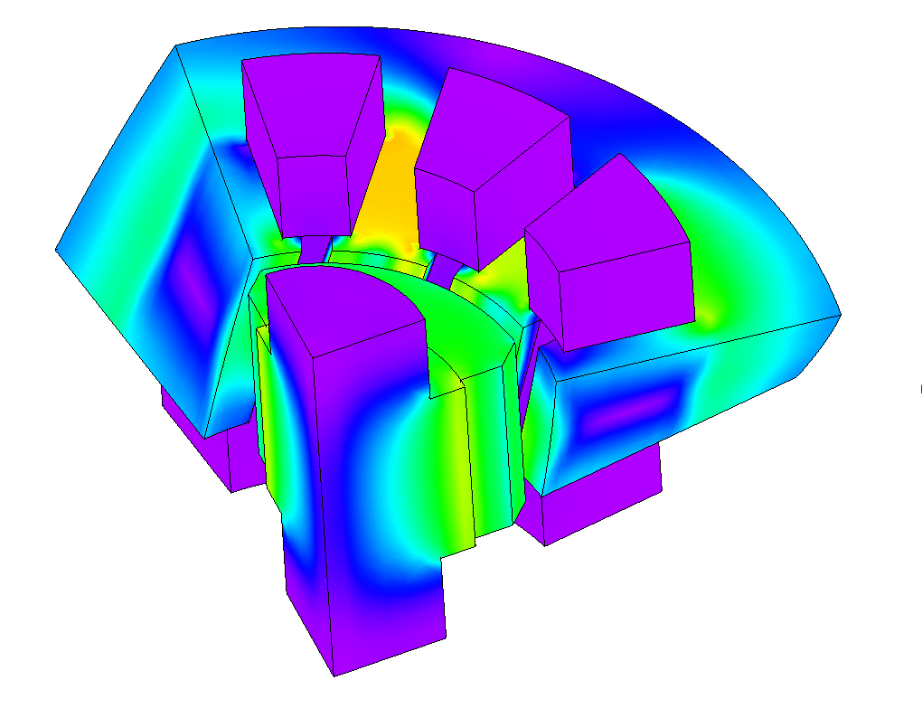
Electrical motor design is a complex process that requires a deep understanding of electromagnetic theory, materials science, and mechanical engineering. Multiphysics simulation technologies such as FEA, CFD, and electromagnetic simulation software can greatly aid in the design and analysis of electric motors.
These simulation tools can be used to evaluate the basic characteristics of electric motors such as induced voltage, torque, and inductance, as well as more complex phenomena such as thermal demagnetization and vibration. By using these tools, our engineers can optimize the motor design for performance, efficiency, and reliability.
Induced voltage, load torque, cogging torque, inductance, flux linkage, iron losses, coil losses, magnet loss, permeance, parameter sensitivity, and equivalent circuit model extraction are all key parameters that can be analyzed and optimized using multiphysics simulation technologies. These parameters are crucial for designing motors that meet specific performance requirements and operate efficiently over a wide range of operating conditions.
In addition to basic motor characteristics, multiphysics simulation technologies can also be used to analyze the effects of various design parameters such as rotor/stator geometry, magnet placement, and winding configuration on motor performance. By analyzing these parameters, our designers can optimize the motor design to meet specific performance requirements, such as high torque, high efficiency, or low noise.
The wider discipline
Electromagnetic Multiphysics
The objective of Electromagnetic Multiphysics is to provide engineers and designers with the ability to accurately model and simulate electromagnetic phenomena in various industrial applications, including automotive, aerospace, energy, and medical devices. Electromagnetic Multiphysics has numerous applications, including the design and optimization of electric motors, transformers, generators, antennas, microwave circuits, power electronics, and other electromechanical devices.
Our Finite Element Electromagnetic Field simulation solution which uses the highly accurate finite element solvers and methods such as Ansys Maxwell/HFSS, Simulia Opera/CST, JMAG, Cedrat FLUX, Siemens MAGNET and COMSOL to solve static, frequency-domain, …
Our Finite Element Electromagnetic Field simulation solution which uses the highly accurate finite element solvers and methods such as Ansys Maxwell/HFSS, Simulia Opera/CST, JMAG, Cedrat FLUX, Siemens MAGNET and COMSOL to solve static, frequency-domain, …
More in Electromagnetic Multiphysics
View the section →
Capabilities that sit beside this one
 Induction Heating
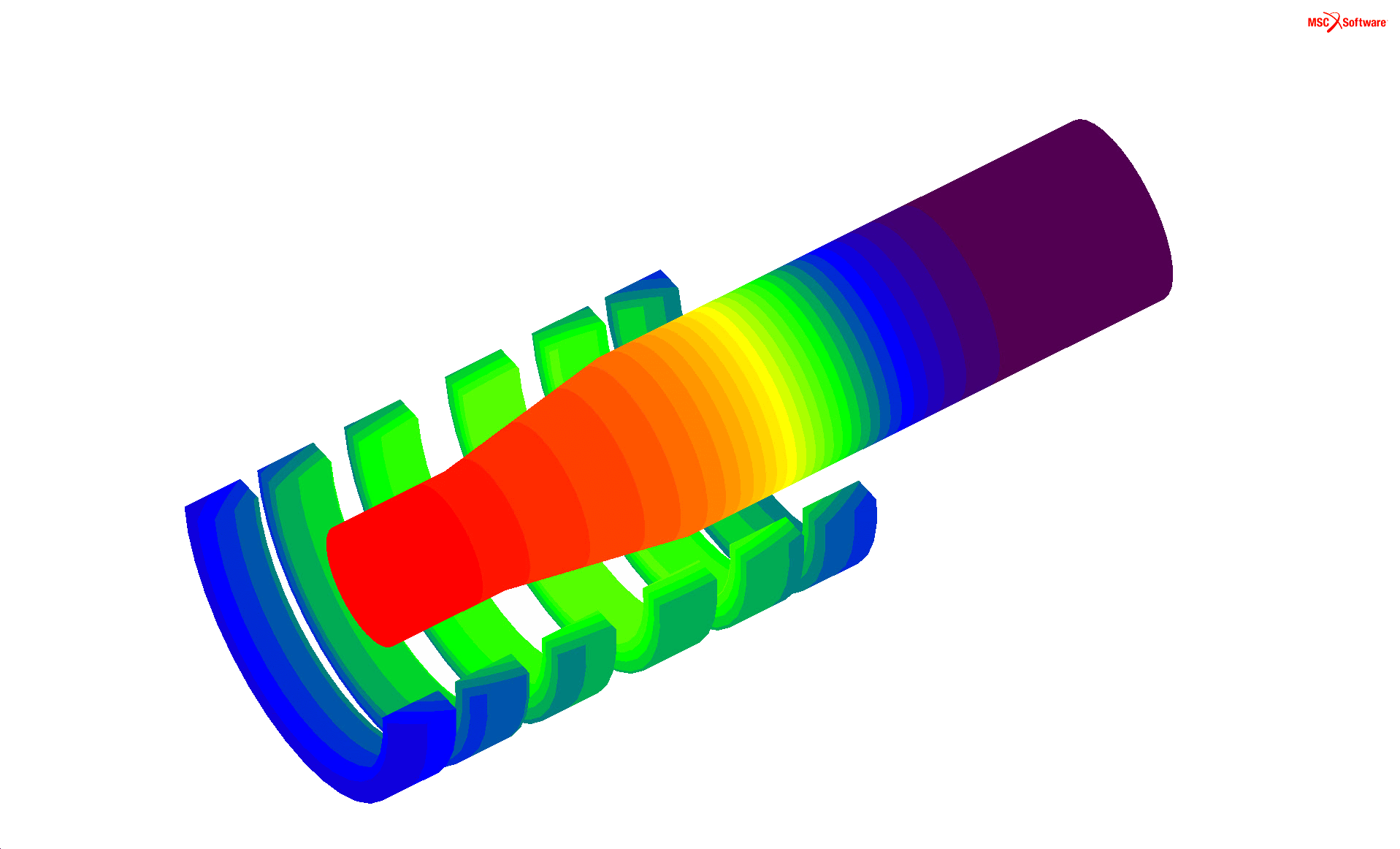
The principle behind induction heating is based on eddy currents induced in the material being heated by a varying magnetic field. This …
Open capability
 NVH for Electric Motors
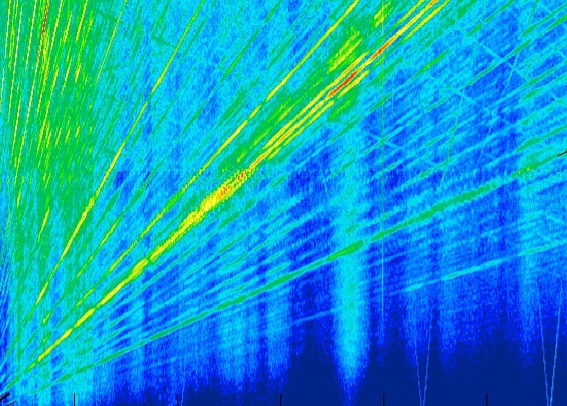
NVH (noise, vibration, and harshness) analysis is a critical aspect of electric motor design, particularly in applications where quiet operation is an …
Open capability
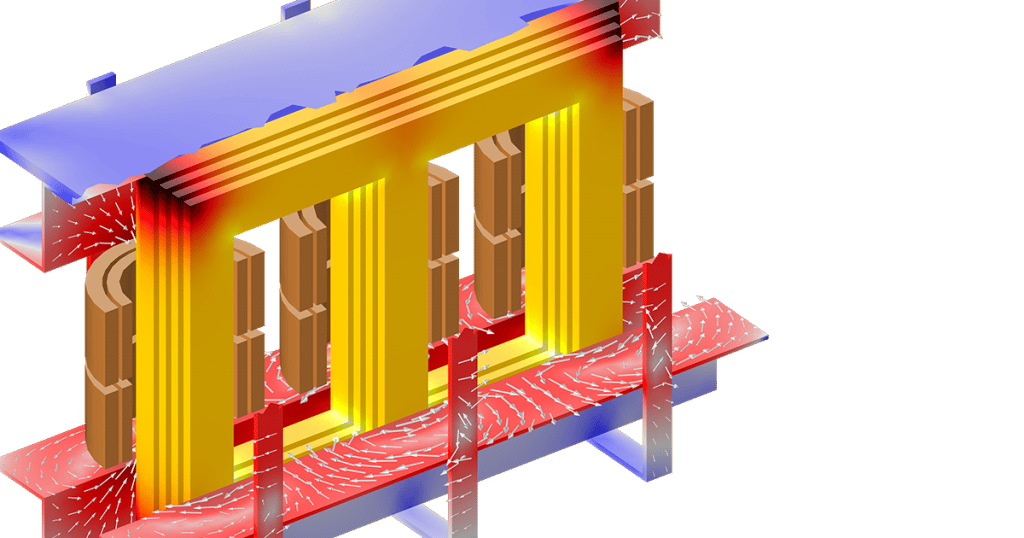 Power Transformers
One of the main design challenges for power transformers is ensuring that the transformer meets the required performance specifications, including basic characteristics …
Open capability
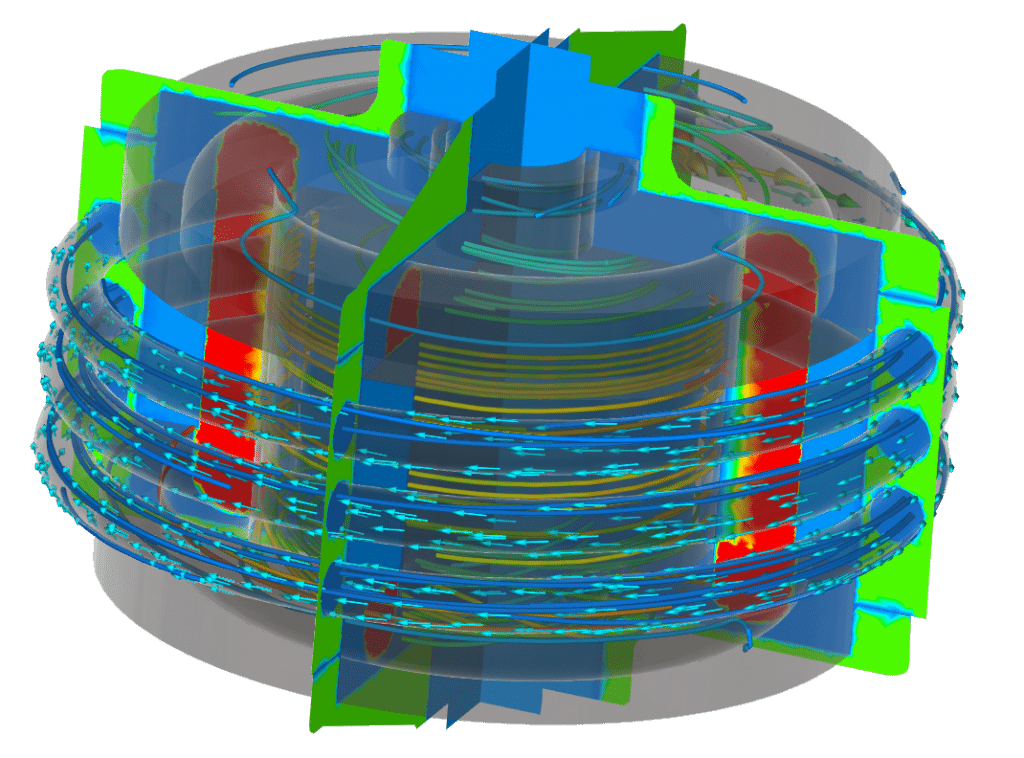 Electric Motors Cooling
Electric motor cooling is an essential aspect of designing high-performance electric motors that operate efficiently and reliably. Excessive heat generated during the …
Open capability
Across Electromagnetics
Other Simulation Area
Working on electrical motor design?
Tell us the geometry, the physics and the decision it has to support.
Talk to an engineer