

Industries Civil Engineering
Earthquake Engineering & Seismic Design
CFD and FEA in Civil Engineering: Seismic Design, Earthquake, Tunnel, Bridge, Dam, Concrete Structures and Geotechnical Multiphysics Simulation
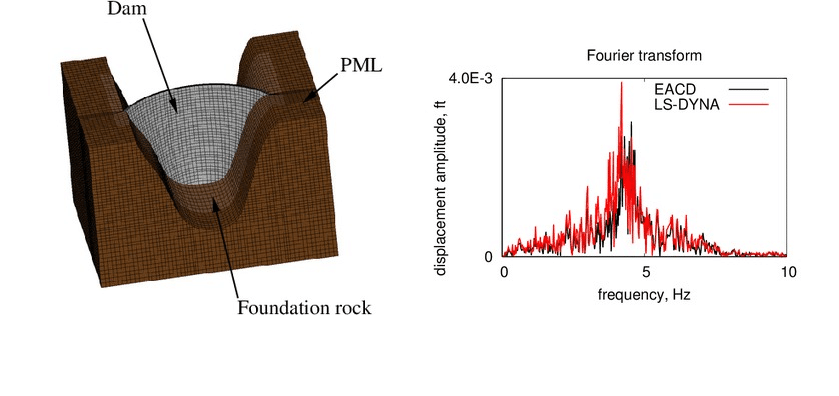
Advanced analysis techniques are required to accurately assess the behavior of structures under seismic loading conditions. Dynamic time-domain finite element analysis is necessary to simulate the behavior of structures under seismic loads, particularly for non-standard structures with complex geometries or load paths. A linear analysis in the frequency domain may be sufficient for simple assessment, but for more complex applications, the full nonlinear characteristics of possible failure mechanisms and the interaction of the structure with the ground and environment need to be considered in a nonlinear time-stepping analysis.
Nonlinear time-stepping analysis is essential to accurately simulate the behavior of structures under extreme loading conditions, such as earthquakes. This type of analysis takes into account the nonlinear behavior of materials and the structure, as well as the interaction between the structure and the ground and environment.
In earthquake engineering and seismic design, it is essential to understand the seismic hazard of the region and the expected ground motion characteristics. This information is used to determine the seismic design criteria for the structure, including the seismic design forces, response spectrum, and ground motion time history.
Advanced seismic design techniques are also used to enhance the seismic performance of structures, including base isolation, energy dissipation, and damping systems. These techniques are designed to reduce the seismic forces on the structure and minimize damage during an earthquake.
The wider discipline
Civil Engineering
OLTRION, offer a wide range of consulting services based on many years of experience using FEA and CFD softwares in Civil Engineering: Earthquake, Tunnel, Dam and Geotechnical. The Company is involved in analyses projects with advanced applications that focus on aspects of computational mechanics. In addition, we carry out research projects that lead to future extensions or enhancements to FEA and CFD package, or result in special software with C++, Python, Matlab and other high-end programming languages.
More in Civil Engineering
View the section →
Capabilities that sit beside this one
 Fire, Smoke Movement and Explosions
Fire, smoke movement, and explosions pose significant risks to public safety in buildings, tunnels, and underground rail systems. Effective fire protection and …
Open capability
 Geotechnical Simulation: Soil and Rock Mechanics
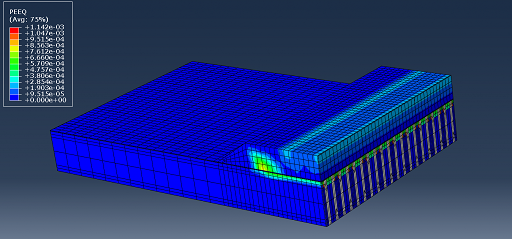
Geotechnical simulation using finite element method (FEM) is a powerful tool for analyzing soil and rock mechanics in various applications. FEM software …
Open capability
 Reinforced Concrete
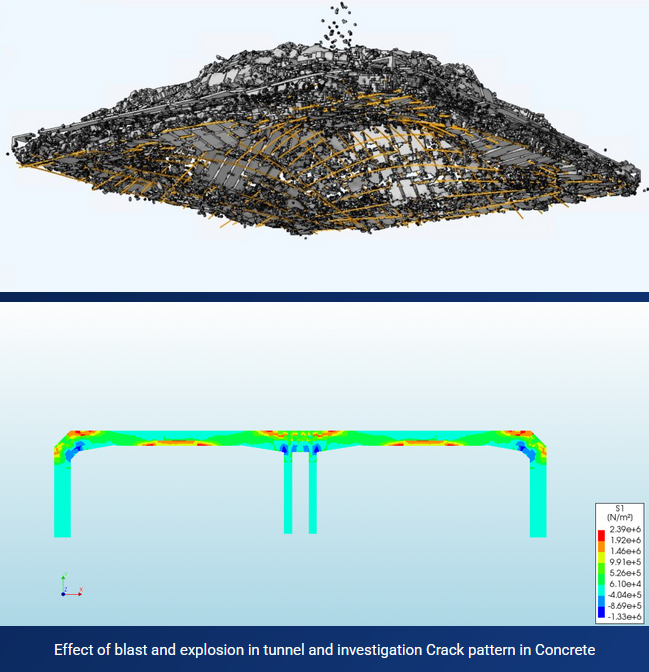
Reinforced concrete is widely used in construction due to its durability and strength. The simulation involves modeling the damage initiation and propagation …
Open capability
 Tunnel Design
Tunnel design involves a complex interaction between the structure, the ground, and the surrounding environment. Finite Element Method (FEM) and special purpose …
Open capability
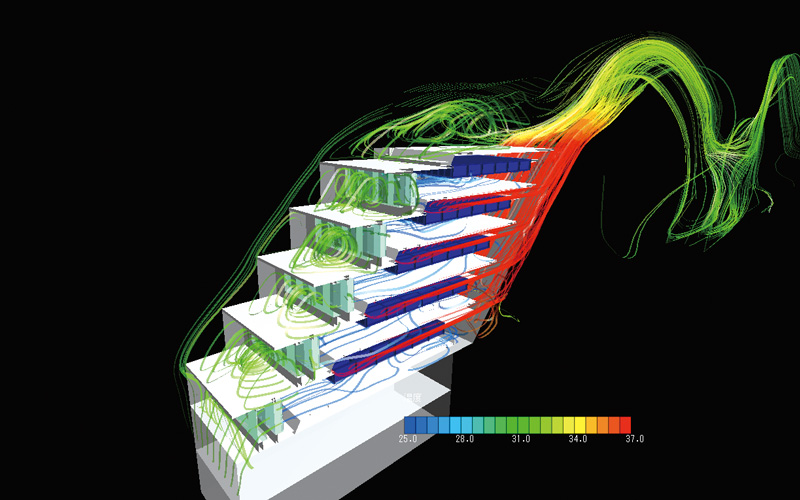 Ventilation and Comfort
Maintaining occupant thermal comfort and indoor air quality in buildings requirs advanced HVAC (Heating, Ventilation, and Air Conditioning) design. Proper ventilation plays …
Open capability
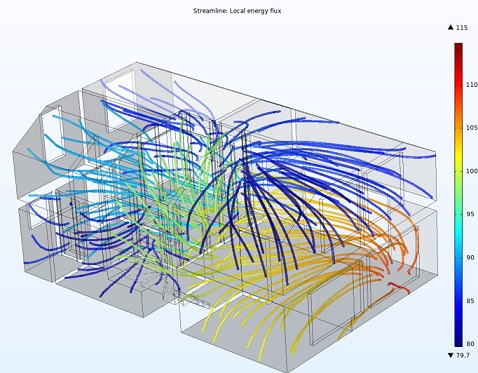 Architectural Acoustic Consulting
Our Architectural acoustic consulting involves the design and implementation of acoustic solutions for buildings and spaces to achieve optimal sound quality and …
Open capability
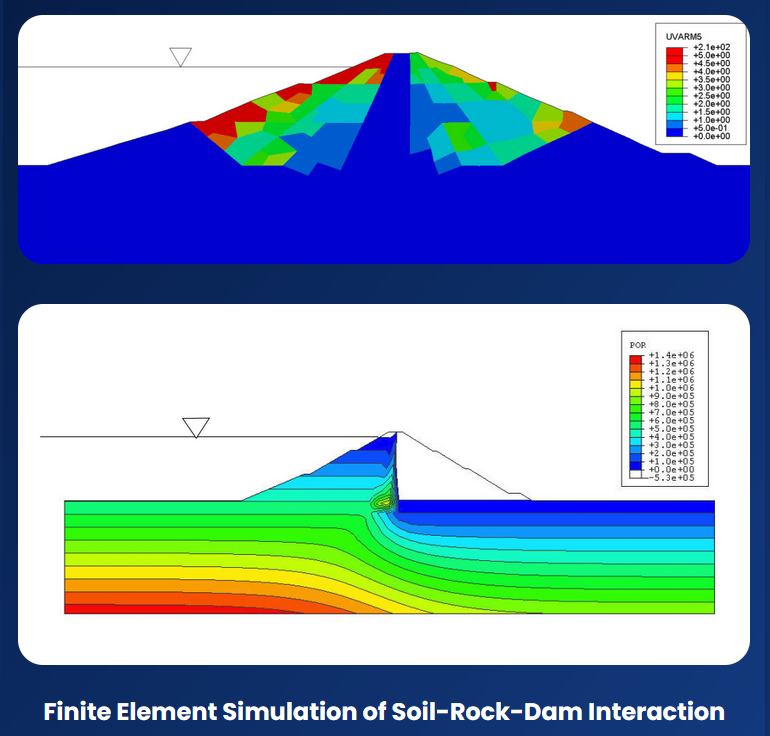 Dam Analysis
Dam analysis is a critical area of expertise within civil engineering, as the stability and safety of dams are essential for the …
Open capability
Across Industries
Other Simulation Area
Aerospace & Defense
CFD Simulations for Drone Design and Analysis
CFD simulations are an essential tool in the design and analysis of drones in the Aerospace and Defense …
Automotive Engineering
Injection Nozzle Development and Optimization
To develop and optimize injection nozzles, a combination of advanced CFD tools such as Ansys Fluent, Siemens Star-ccm+ …
Chemical Processing
Mixer Design
Mixing is a crucial step in many chemical processes, and reactor design is a key factor in ensuring …
Energy & Power Industry
Finite Element and CFD Simulation in Oil & Gas Industry
Key areas where FEA and CFD simulation is used: ▶ Reservoir simulation: Reservoir simulation involves modeling the behavior …
Industrial Equipment & Rotating Machinery
Consulting services for fluid flow-thermal engineering challenges
OLTRION provides expert consulting services for fluid flow and thermal engineering challenges using computational fluid dynamics (CFD). Our …
Marine & Shipbuilding
Propulsion Systems and Cavitation
Propulsion systems are a critical component of marine and shipbuilding industry. The propulsion system is responsible for providing …
Medical & Biomedical Devices
Orthopedic and Dental Implants
Orthopedic implants are commonly used to restore function in patients suffering from bone fractures, degenerative joint diseases, and …
Seat Design
Lumbar support for Car Seat
Lumbar support is an important feature in automotive seating, as it can help reduce lower back pain and …
Working on earthquake engineering & seismic design?
Tell us the geometry, the physics and the decision it has to support.
Talk to an engineer