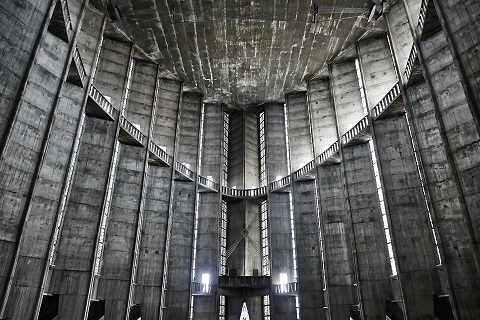
Our Architectural acoustic consulting involves the design and implementation of acoustic solutions for buildings and spaces to achieve optimal sound quality and noise control. This includes the analysis of the acoustic properties of a space and the selection of appropriate materials and techniques to improve sound quality, reduce noise levels, and control echo and reverberation. We work with architects, engineers, …
Read the full brief →
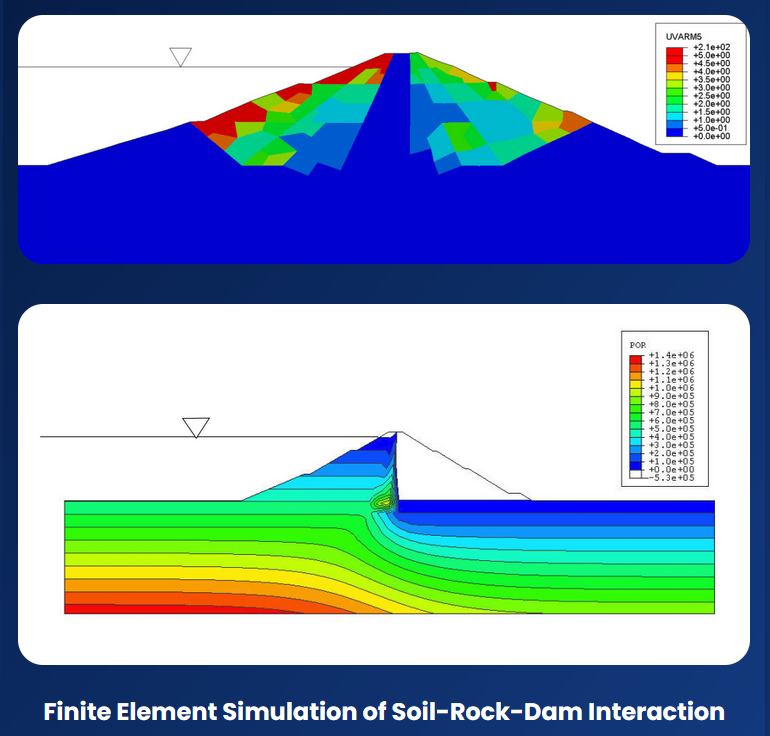
Dam analysis is a critical area of expertise within civil engineering, as the stability and safety of dams are essential for the protection of life and property. Advanced material models and analysis capabilities are required to accurately simulate the complex behavior of dams and assess their safety and performance. Phased or staged construction analysis is necessary to simulate the construction …
Read the full brief →
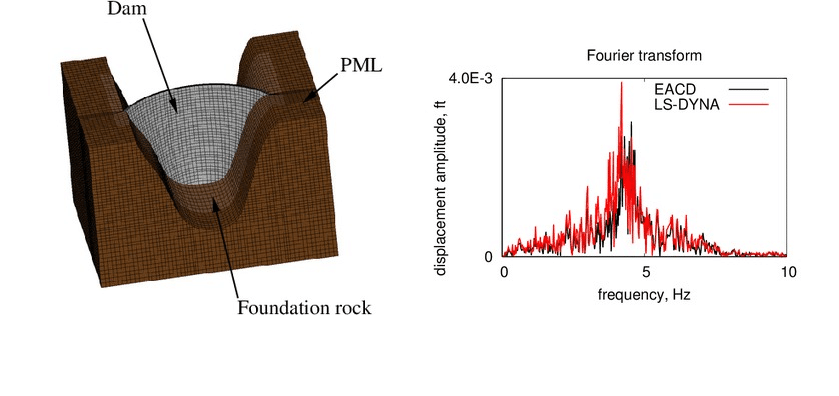
Advanced analysis techniques are required to accurately assess the behavior of structures under seismic loading conditions. Dynamic time-domain finite element analysis is necessary to simulate the behavior of structures under seismic loads, particularly for non-standard structures with complex geometries or load paths. A linear analysis in the frequency domain may be sufficient for simple assessment, but for more complex applications, …
Read the full brief →

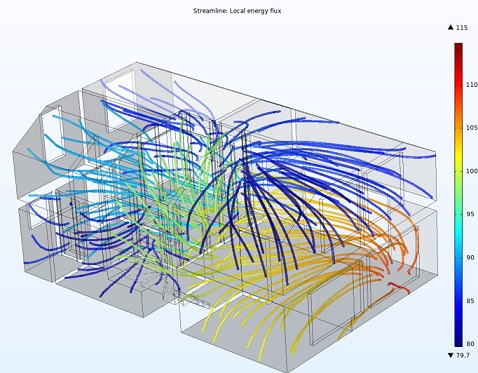
Fire, smoke movement, and explosions pose significant risks to public safety in buildings, tunnels, and underground rail systems. Effective fire protection and smoke management systems are essential to minimize these risks and protect occupants. Fire and smoke propagation can be modeled using computational fluid dynamics (CFD) analysis, which simulates the flow of air and smoke in a building or tunnel. …
Read the full brief →
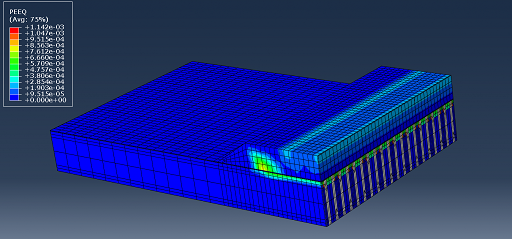
Geotechnical simulation using finite element method (FEM) is a powerful tool for analyzing soil and rock mechanics in various applications. FEM software provides a wide range of state-of-the-art constitutive models for tackling soil and rock materials in foundations, embankments, tunnels, excavations, slope stability, mines, and dams. In geotechnical applications, the interaction between the ground and the structure is critical. FEM …
Read the full brief →
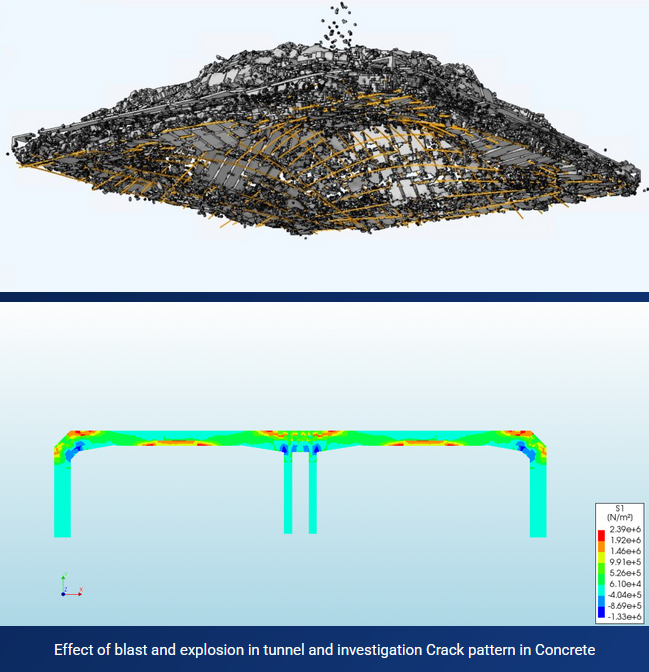
Reinforced concrete is widely used in construction due to its durability and strength. The simulation involves modeling the damage initiation and propagation until structural failure occurs. This can be achieved by realistically modeling the geometry and material behavior of concrete and individual reinforcement and defining their complete interconnection. Finite element method (FEM) software provides advanced special purpose user-defined and general-purpose …
Read the full brief →

Tunnel design involves a complex interaction between the structure, the ground, and the surrounding environment. Finite Element Method (FEM) and special purpose software are crucial tools in creating detailed 2D and 3D analyses of this interaction. FEM can be used to analyze the behavior of tunnel linings under various loading conditions, including events that may cause structural damage, freezing, fire, …
Read the full brief →
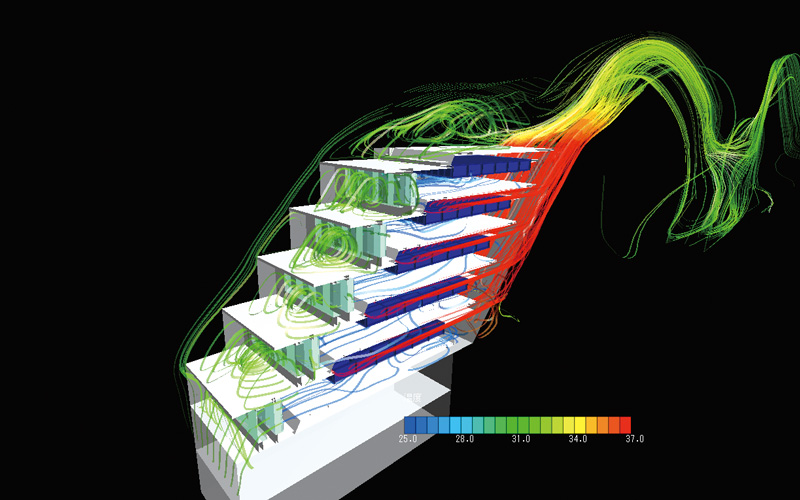
Maintaining occupant thermal comfort and indoor air quality in buildings requirs advanced HVAC (Heating, Ventilation, and Air Conditioning) design. Proper ventilation plays a key role in achieving these objectives. The amount of fresh air required for ventilation depends on the size and usage of the space, as well as the number of occupants. ASHRAE Standard 62.1 provides guidelines for minimum …
Read the full brief →