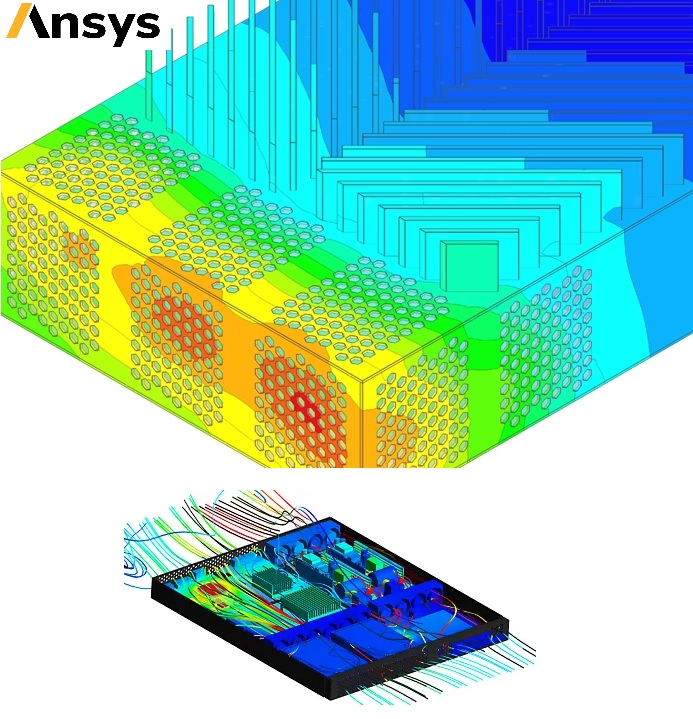
In the design phase of electronic devices, CFD and FEA based heat transfer software can be used to analyze the cooling capacity of components such as electronic chips and power systems. This helps to ensure that the components do not overheat, which can cause damage or degrade their performance. CFD simulations can be used to model the flow of air …
Read the full brief →
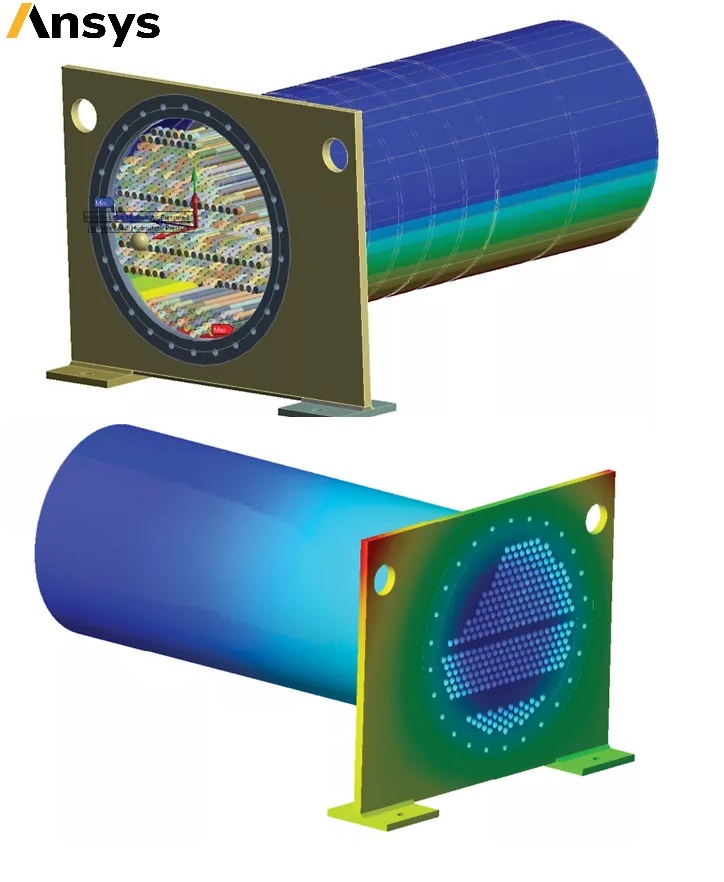
Heat exchangers are involved in a variety of application areas, such as water treatment, resource refinery, nuclear power, food and beverage production, refrigeration, and more. Heat exchanger analysis involves the transfer of heat between fluids and solids, where the fluids carry energy over large distances and the solids separate the fluids so that they can exchange energy without mixing. Heat …
Read the full brief →
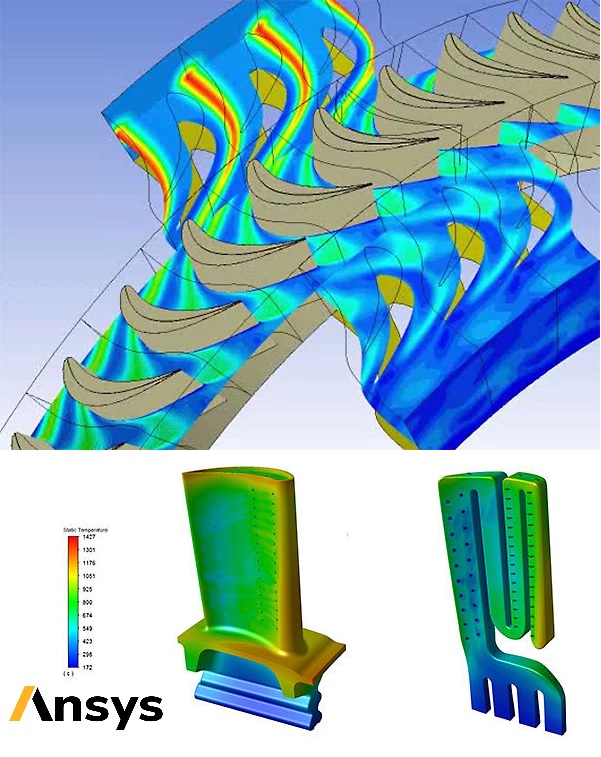
Most machines, especially those that operate under high-heat conditions such as turbines, boilers, and combustors, require strict control of thermal stresses and expansions. These machines are subject to thermal cycling, which can cause differential expansion and contraction between components and lead to premature failure if not properly controlled. To control thermal stresses and expansions, engineers use CFD and FEA tools …
Read the full brief →

The thermal and acoustic comfort of passengers is a critical design criterion for the air-conditioning and customization of a cabin. Engineers must ensure that the cabin provides a comfortable environment for passengers, which includes maintaining appropriate temperatures, humidity levels, and noise levels. To achieve this, engineers typically conduct costly and time-consuming test series with specifically built cabin mock-ups to obtain …
Read the full brief →
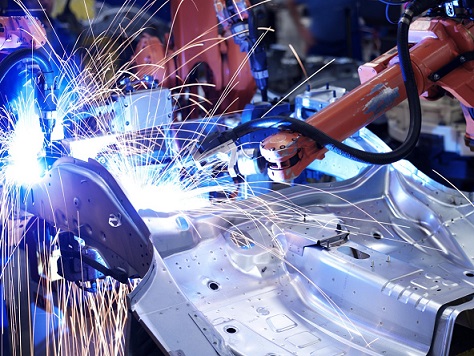
Stress relieving is a heat treatment process that reduces residual stresses in an assembly after welding. This process is important because residual stresses can cause distortion, cracking, and premature failure of the welded structure. The stress relief heat treatment involves heating the welded assembly to a specific temperature, holding it at that temperature for a specified amount of time, and …
Read the full brief →
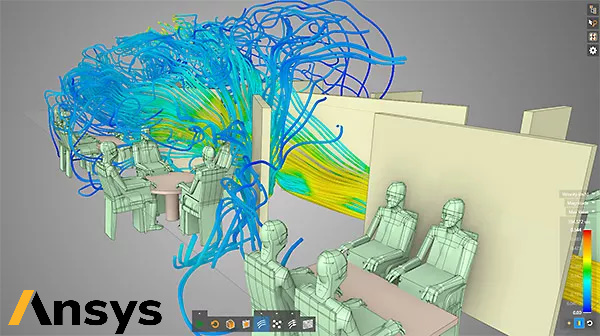
Thermal management is crucial in the design of buildings, as it affects the comfort of occupants and the energy efficiency of the building. Building designers need to consider heat and moisture variations in building components to ensure that the building performs optimally in terms of energy consumption and occupant comfort. Heat transfer analysis is an important tool used by engineers …
Read the full brief →
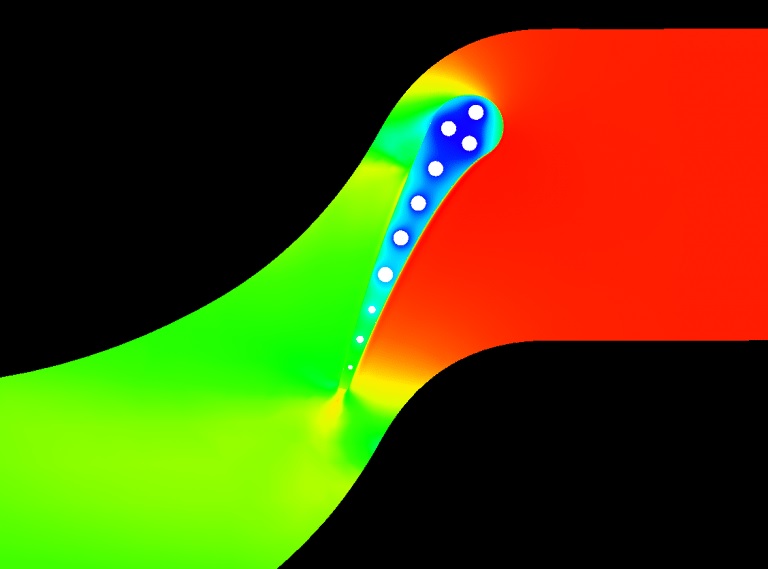
Thermal expansion is a common phenomenon that can lead to high levels of thermal stress, which can have both positive and negative effects on the performance of components and structures. In some cases, thermal expansion can be beneficial, such as in shrink fit and bimetallic temperature sensor applications, where thermal stress can be used to improve the fit and accuracy …
Read the full brief →
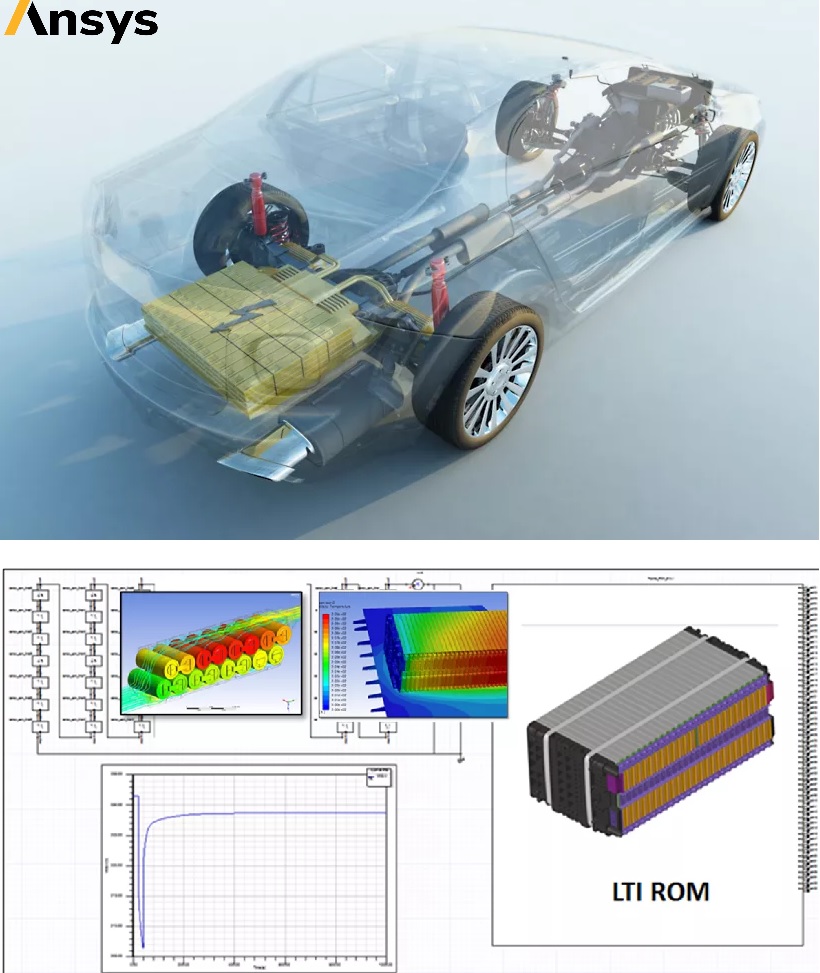
Extending from steady-state to transient simulation is essential in investigating the real conditions of vehicle driving cycles. This enables engineers to accurately simulate the thermal behavior of vehicle components and systems under real-world operating conditions, including dynamic changes in temperature, pressure, and airflow. At OLTRION, we use advanced simulation processes that are efficient and accurate in modeling real-world transient conditions. …
Read the full brief →