

CFD Reacting Flows & Combustion
Detailed Chemistry
CFD Simulation of Reacting Flows and Combustion: Engine & Gas Turbine, Fuel Injector & Spray, Exhaust Aftertreatment with Detailed Chemistry
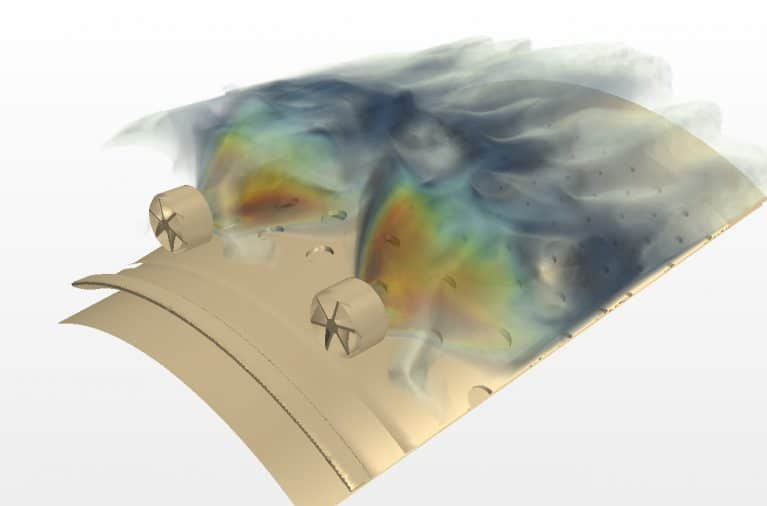
In order to accurately model combustion, it is important to account for the interactions between turbulence, mixing, and chemical reactions. Turbulence models are used to capture the turbulent flow behavior of the fuel and oxidizer mixture, while mixing models are used to predict the mixing of fuel and oxidizer. Chemical kinetics models are used to describe the chemical reactions that take place during combustion, including the rate at which reactants are consumed and products are formed.
The use of detailed chemistry in combustion simulations allows for the prediction of species concentrations and temperature profiles throughout the combustion process. This can help to optimize combustion systems for improved energy efficiency and reduced emissions. For example, detailed chemistry simulations can be used to predict the formation of pollutants and other undesirable combustion byproducts, and to evaluate the effectiveness of different combustion control strategies. We use advantage of CFD solvers detailed chemistry, multiphase flow modeling, and other powerful features of CFD softwares(Siemens Star-ccm+, AVL Fire, Ansys Fluent, Converge).
The use of detailed chemistry in combustion simulations allows for the prediction of species concentrations and temperature profiles throughout the combustion process. This can help to optimize combustion systems for improved energy efficiency and reduced emissions. For example, detailed chemistry simulations can be used to predict the formation of pollutants and other undesirable combustion byproducts, and to evaluate the effectiveness of different combustion control strategies. We use advantage of CFD solvers detailed chemistry, multiphase flow modeling, and other powerful features of CFD softwares(Siemens Star-ccm+, AVL Fire, Ansys Fluent, Converge).
The wider discipline
Reacting Flows & Combustion
Combustion is a complex process that involves the interaction of fluid dynamics, thermodynamics, and chemical kinetics. In order to design efficient combustion systems, it is important to understand the underlying physics and chemistry of the process. Reacting flows and combustion simulations can be used to model and predict the behavior of combustion systems under different conditions.
Reacting flows refer to fluid flows that involve chemical reactions. Combustion is a typical example of a reacting flow, where fuel and oxidizer are mixed together and ignite to release heat energy. Combustion simulations …
Reacting flows refer to fluid flows that involve chemical reactions. Combustion is a typical example of a reacting flow, where fuel and oxidizer are mixed together and ignite to release heat energy. Combustion simulations …
More in Reacting Flows & Combustion
View the section →
Capabilities that sit beside this one
 Engine Exhaust Aftertreatment
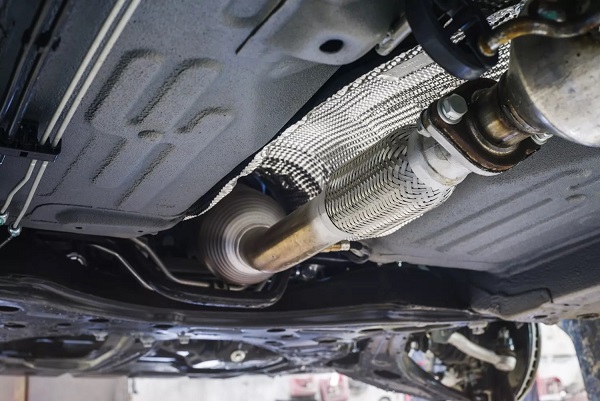
Engine exhaust aftertreatment systems are designed to reduce emissions of harmful pollutants such as NOx, CO, and particulate matter from the exhaust …
Open capability
 Fuel Injectors & Spray Simulation
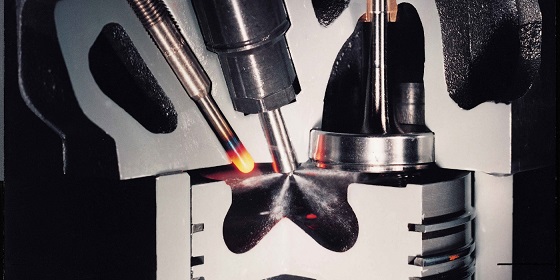
Fuel injectors and spray simulation are important aspects of the design and optimization of internal combustion engines. CFD software, such as AVL …
Open capability
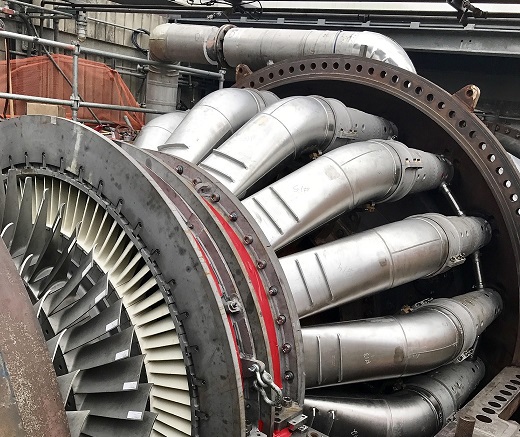 Gas Turbine Combustion
With using advanced and specialized CFD tools such as AVL Fire, Siemens Star-ccm+, Ansys Fluent and Converge, OLTRION engineers can accurately predict …
Open capability
Across CFD
Other Simulation Area
Aerodynamics Simulation
Aerodynamic Noise Simulation
Aerodynamic noise is a type of noise that is generated by the motion of fluids, around objects. Examples …
Hydrodynamics CFD simulation
Hydrodynamics & HydroAcoustics simulation for AIV (Acoustic Induced Vibration)
Hydrodynamics and HydroAcoustics simulations can be used to analyze and predict the occurrence of AIV (Acoustic Induced Vibration) …
Multi-Phase Flows CFD Analysis
Industrial applications of Multi-Phase Flows CFD Analysis
The tools such as Ansys Fluent, Siemens Star-ccm+ and OpenFoam, can be used in combination with experienced engineers …
MultiObjective Design of Turbomachinery
Heat Transfer Simulations for Turbomachinery
Most machines, such as high-heat turbines (gas and steam), boilers, and combustors for example, require strict control of …
Fluid Structure Interaction (FSI)
Themal FSI Simulation
Simulating the thermal performance of a product early in the design phase can save large amounts of time …
Working on detailed chemistry?
Tell us the geometry, the physics and the decision it has to support.
Talk to an engineer