

CFD Reacting Flows & Combustion
Engine Exhaust Aftertreatment
CFD Simulation of Reacting Flows and Combustion: Engine & Gas Turbine, Fuel Injector & Spray, Exhaust Aftertreatment with Detailed Chemistry
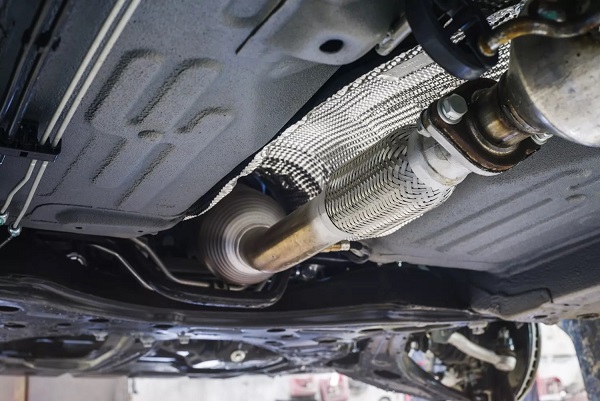
Engine exhaust aftertreatment systems are designed to reduce emissions of harmful pollutants such as NOx, CO, and particulate matter from the exhaust gases of engines and power generation equipment. These systems typically use a combination of physical and chemical processes, such as selective catalytic reduction (SCR), diesel particulate filters (DPF), and oxidation catalysts, to convert or remove pollutants from the exhaust gases.
CFD simulations can be used to design and optimize aftertreatment systems for improved performance and reduced costs. For example, CFD simulations can be used to evaluate the flow and mixing of exhaust gases within the aftertreatment system, which can affect the efficiency of the chemical reactions that take place. CFD simulations can also be used to optimize the placement and configuration of catalysts and filters within the system, to ensure that exhaust gases are effectively treated.
In addition, CFD simulations can be used to evaluate the thermal performance of aftertreatment systems, which is critical for maintaining the durability and effectiveness of the components. Thermal stresses and temperature gradients within the system can cause damage to components and affect their performance over time. CFD simulations can be used to evaluate these factors and to optimize the design of the aftertreatment system for improved durability and reliability.
The wider discipline
Reacting Flows & Combustion
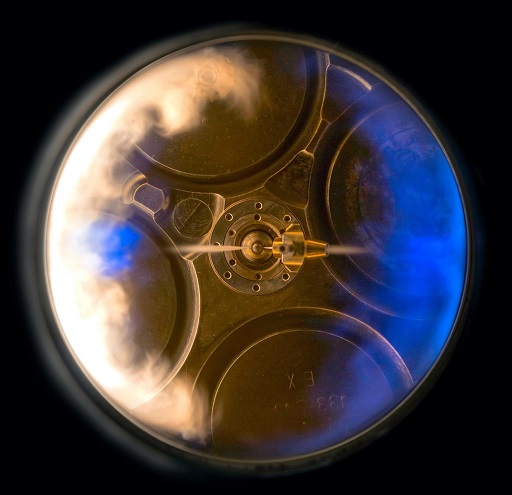
Combustion is a complex process that involves the interaction of fluid dynamics, thermodynamics, and chemical kinetics. In order to design efficient combustion systems, it is important to understand the underlying physics and chemistry of the process. Reacting flows and combustion simulations can be used to model and predict the behavior of combustion systems under different conditions.
Reacting flows refer to fluid flows that involve chemical reactions. Combustion is a typical example of a reacting flow, where fuel and oxidizer are mixed together and ignite to release heat energy. Combustion simulations …
Reacting flows refer to fluid flows that involve chemical reactions. Combustion is a typical example of a reacting flow, where fuel and oxidizer are mixed together and ignite to release heat energy. Combustion simulations …
More in Reacting Flows & Combustion
View the section →
Capabilities that sit beside this one
 Fuel Injectors & Spray Simulation
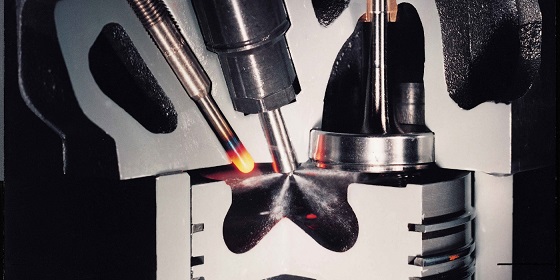
Fuel injectors and spray simulation are important aspects of the design and optimization of internal combustion engines. CFD software, such as AVL …
Open capability
 Gas Turbine Combustion
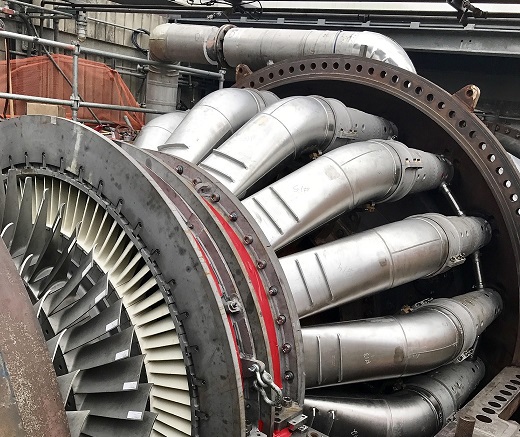
With using advanced and specialized CFD tools such as AVL Fire, Siemens Star-ccm+, Ansys Fluent and Converge, OLTRION engineers can accurately predict …
Open capability
 Detailed Chemistry
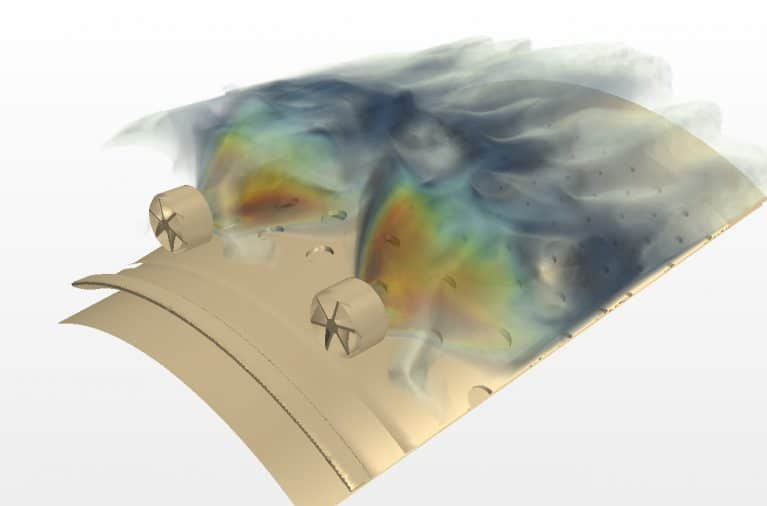
In order to accurately model combustion, it is important to account for the interactions between turbulence, mixing, and chemical reactions. Turbulence models …
Open capability
Across CFD
Other Simulation Area
Aerodynamics Simulation
Drone Aerodynamics
Aerodynamic simulation is a crucial tool in the design and optimization of drones. By simulating the flow around …
Hydrodynamics CFD simulation
Hydroplaning (Aquaplaning) Simulation
Hydroplaning, also known as aquaplaning, can be a serious safety hazard for drivers, as it can cause a …
Multi-Phase Flows CFD Analysis
Multiphase flow types and related numerical methods
There are several types of multiphase flows, each with its own characteristics and modeling requirements. Common types of …
MultiObjective Design of Turbomachinery
Turbine, Pump & Compressor
Designing turbomachinery components such as axial turbines, axial pumps, centrifugal compressors, centrifugal pumps, and mixed flow compressor/turbine requires …
Fluid Structure Interaction (FSI)
One-Way FSI: Coupling CFD and FEA for Fatigue Simulation
Solving thermal problems with CHT limits the engineer to the physical models that are contained within the CFD …
Working on engine exhaust aftertreatment?
Tell us the geometry, the physics and the decision it has to support.
Talk to an engineer