

Electromagnetics Plasma Simulation
Numerical Simulation of Magnetron sputtering
Simulation of Plasma Based Devices: Microwave Plasma & RF Plasma with Coupling Particle in Cell (PIC), MHD, CFD and FEA Solvers
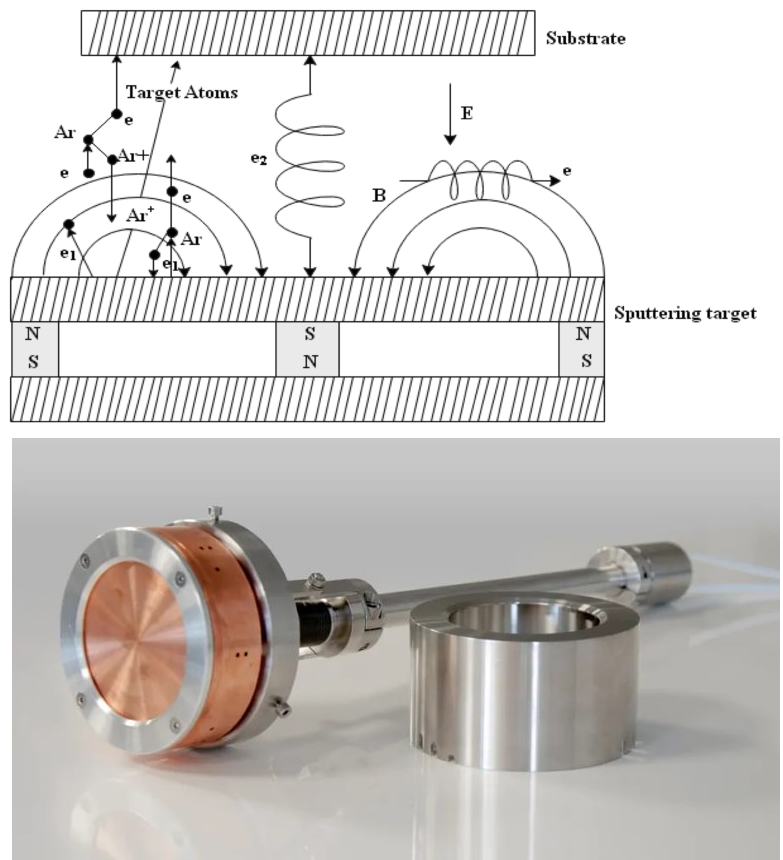
Magnetron sputtering deposition is a fast technique for applying a thin layer of inorganic materials on a substrate. Magnetron sputtering is the collision process between incident particles and targets. Since high-speed sputtering is performed at a low pressure, it is necessary to effectively increase the ionization rate of the gas. The incident particle undergoes a complex scattering process in the target, collides with the target atom, and transmits part of the momentum to the target atom, which in turn collides with other target atoms to form a cascade process.
The interaction between the magnetic field and the electric field causes the electrons to spiral in the vicinity of the target surface, thereby increasing the probability that electrons will strike the argon gas to generate ions. The generated ions collide with the target surface under the action of an electric field to sputter the target. The target source is divided into balanced and unbalanced types; the balanced target source is uniformly coated, and the unbalanced target coating layer and the substrate have strong bonding force.
Balanced target sources are mostly used in semiconductor optical films, and unbalanced are mostly used in wear decorative films. Sputtering metals and alloys with a magnetron target is easy, and it is convenient for ignition and sputtering. Magnetron reactive sputtering insulators appear to be easy, but it is difficult for practical operations.
Types of magnetron sputtering:
- Unbalanced magnetron sputtering
- Closed-field unbalanced magnetron sputtering
- Pulsed magnetron sputtering
Numerical simulation of sputtering process requires accurate models of nuclear stopping in materials, particle dynamics and self-consistent electromagnetic fields. Based on the problem details, Particle‐in‐Cell/Monte Carlo Collisions technique it includes techniques for the gas heating and the diffusion transport of the sputtered atoms. An external electric circuit is incorporated to achieve the calculation of the cathode voltage in a self‐consistent manner, as well as the simulation of the constant current regime.
Plasma Simulation
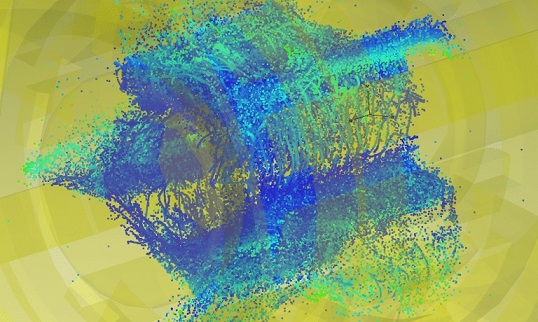
OLTRION uses advanced electromagnetic FEA, CFD and particle-in-cell (PIC) codes, designed for executing multi-scale, plasma physics simulations. Based on the problem and its detail, we use special commercial …
Capabilities that sit beside this one
 Spacecraft and Satellite charging effects Numerical Simulation
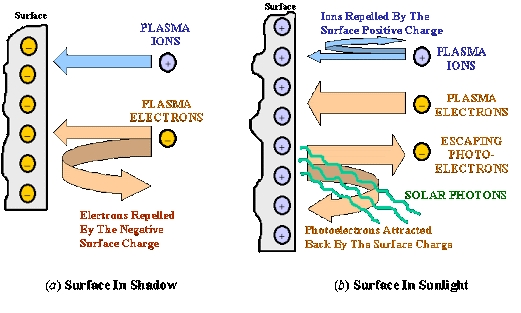
Spacecraft charging includes both surface charging and internal dielectric charging. The absolute charging of spacecraft surfaces is not generally detrimental; rather it …
Open capability
 Numerical Simulation of Dense Plasma Focus Devices
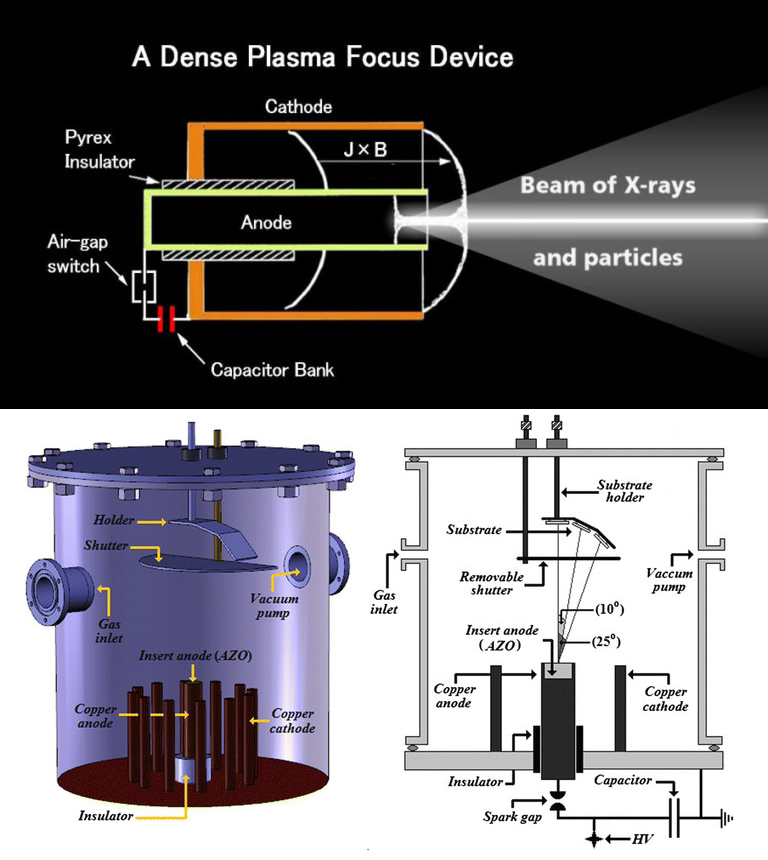
A dense plasma focus (DPF) is a plasma machine that produces, by electromagnetic acceleration and compression, short-lived plasma that is so hot …
Open capability
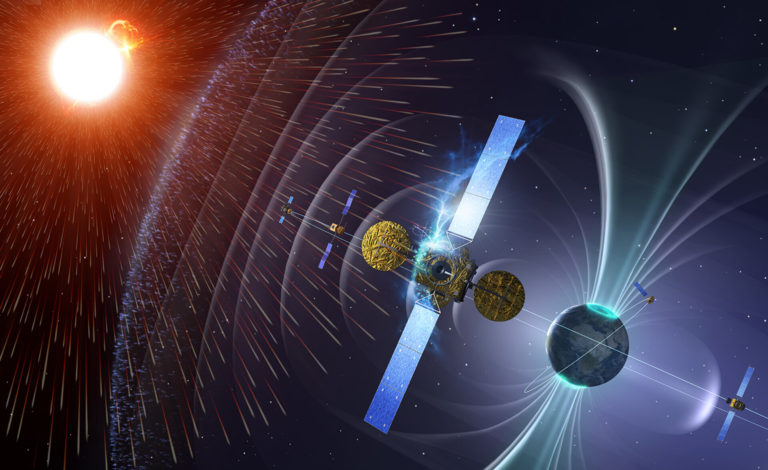 Spacecraft Shielding
Traditional methods for protecting spacecraft and occupants from harmful radiation in the form of energetic particles from solar and galatic sources involve …
Open capability
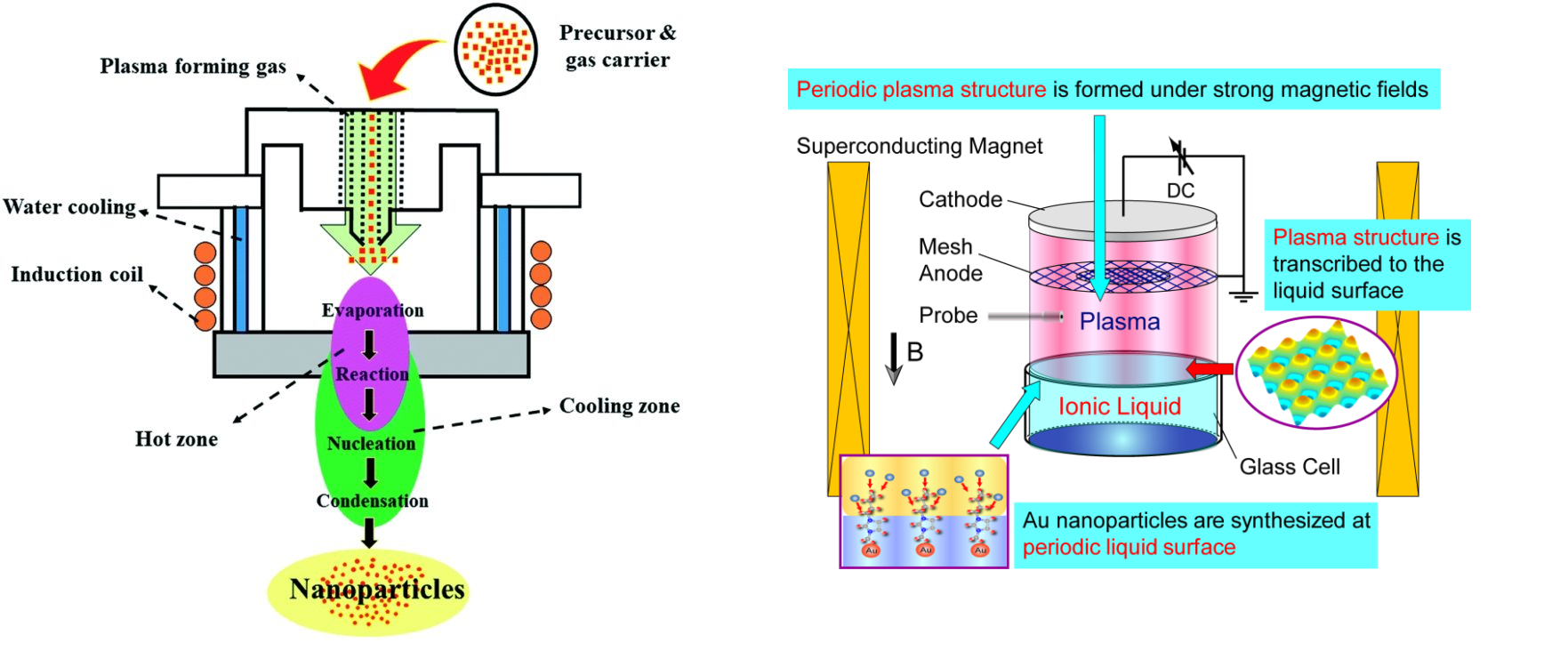 Nanoparticle Synthesis Simulation Based Design
Plasma-based chemical processes are characterized by solvent-less (dry), high-purity, and low-temperature conditions that enable damage-free device fabrication. plasma tools are now essential …
Open capability
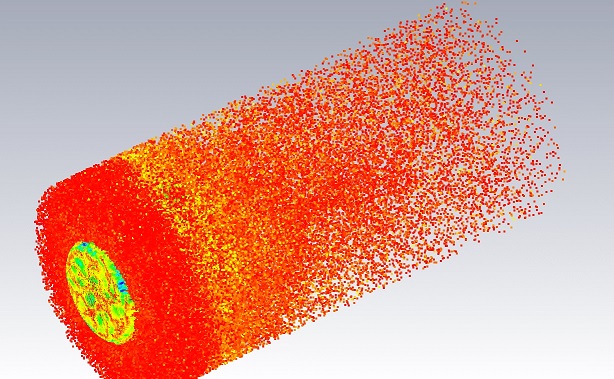 Simulation of Plasma Based Devices
We provide consulting services for the modeling and simulation of plasma and other flow systems. we combine expertise in physics, Numerical computing, …
Open capability
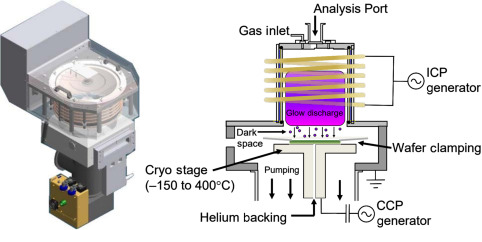 Plasma Etching Simulation
Plasma etching is an essential tool in today's world, enabling many of the technologies we take for granted. The chemical nature of …
Open capability
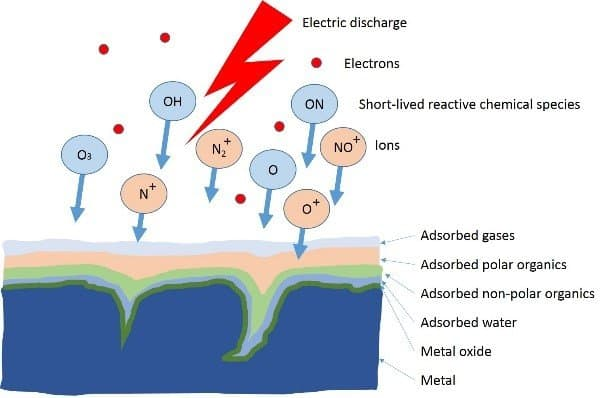 Plasma Cleaning
The operational cost of using plasma cleaning systems are low, while providing the highest quality in cleaning surfaces. Another benefit of using …
Open capability
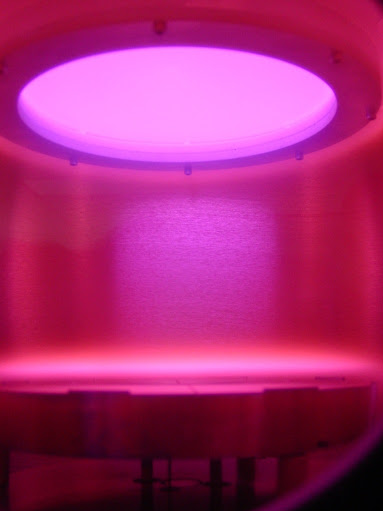 Plasma-enhanced chemical vapor deposition (PECVD)
Plasma-enhanced chemical vapor deposition coating: Plasma-enhanced chemical vapor deposition (PECVD) is a thin-film deposition technique that allows for tunable control over the …
Open capability
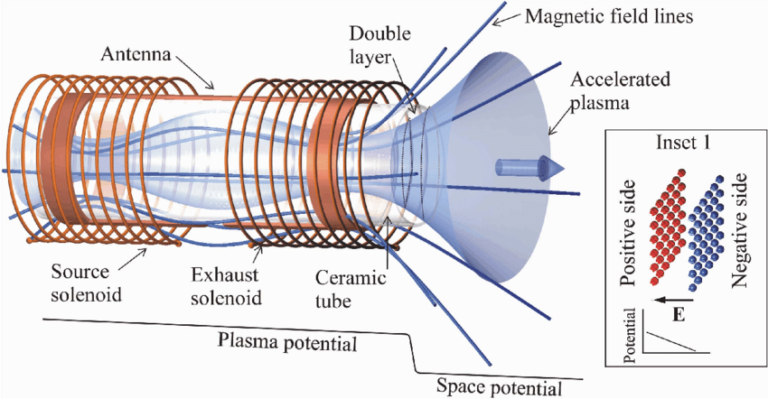 Simulation Based Design of Plasma Thrusters
Electric propulsion technology, called Hall effect or stationary plasma thrusters, offers a significant weight reduction compared with traditional chemical propulsion systems. In …
Open capability
Working on numerical simulation of magnetron sputtering?
Tell us the geometry, the physics and the decision it has to support.
Talk to an engineer