

Finite Element Acoustics and Vibration
Shipbuilding Noise Engineering
Acoustics and Vibration Simulation: FEA & CFD for AeroAcoustics, VibroAcoustics and NVH Analysis
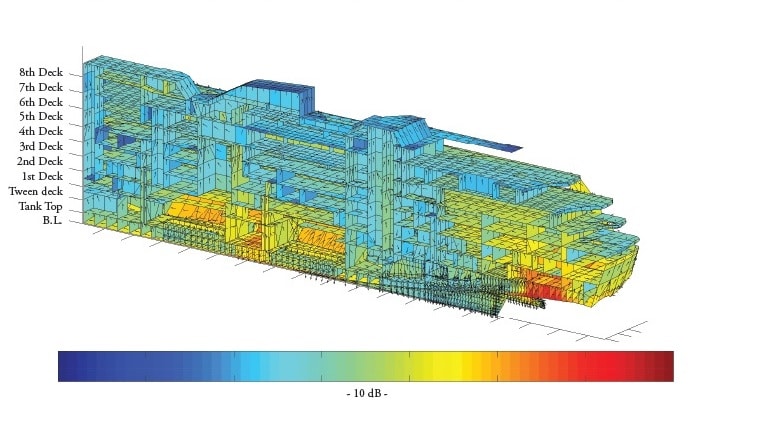
Accurate noise prediction models are crucial for designing marine applications that meet customer expectations for on-board noise levels. Whether it's a large cruise ship or a small yacht, noise is a critical factor that must be addressed during the design phase.
Exterior noise generated by propellers, hull radiation, or mufflers can be a major challenge for marine applications. This noise must be limited for discretion or environmental reasons. Designers must use advanced modeling and simulation tools to accurately predict the exterior noise levels and identify design modifications to reduce noise levels.
Interior noise is also a major concern for crew and passenger comfort. The interior noise is typically a result of engine and machinery noise, as well as noise from water and air flow around the hull. The interior noise levels must be controlled to ensure a comfortable environment for the crew and passengers.
We use advanced modeling and simulation tools to predict noise levels for different operating conditions and identify design modifications to reduce noise levels. Our engineers can also design noise control solutions to address interior noise challenges, including noise barriers, damping materials, and noise-cancelling technologies.
The wider discipline
Acoustics and Vibration
Here, at OLTRION, our engineers have deep knowledge and expertise in FEA, CFD, and acoustic simulation, which enables them to solve complex acoustic, vibro-acoustic, and aero-acoustic problems. By leveraging advanced numerical simulation softwares such as Ansys Fluent and Siemens Star-CCM+ for flows simulation and FEA based Codes such as ABAQUS, Ansys, Nastran and LS-Dyna and acoustic solvers such as Actran, we can accurately predict noise and vibration levels and design products that meet regulatory requirements while delivering optimal performance and reliability.
More in Acoustics and Vibration
View the section →
Capabilities that sit beside this one
 Audio & Consumer Electronic Device Design
The engineering process of audio devices is unique because the complete audio system must be tested, taking into account various factors such …
Open capability
 NVH ( Noise, Vibration, and Harshness ) simulation services
Advanced NVH experimental and virtual tools are prerequisites for cost and time effective development minimizing pre-production troubleshooting effort and shortening time-to-market. Our …
Open capability
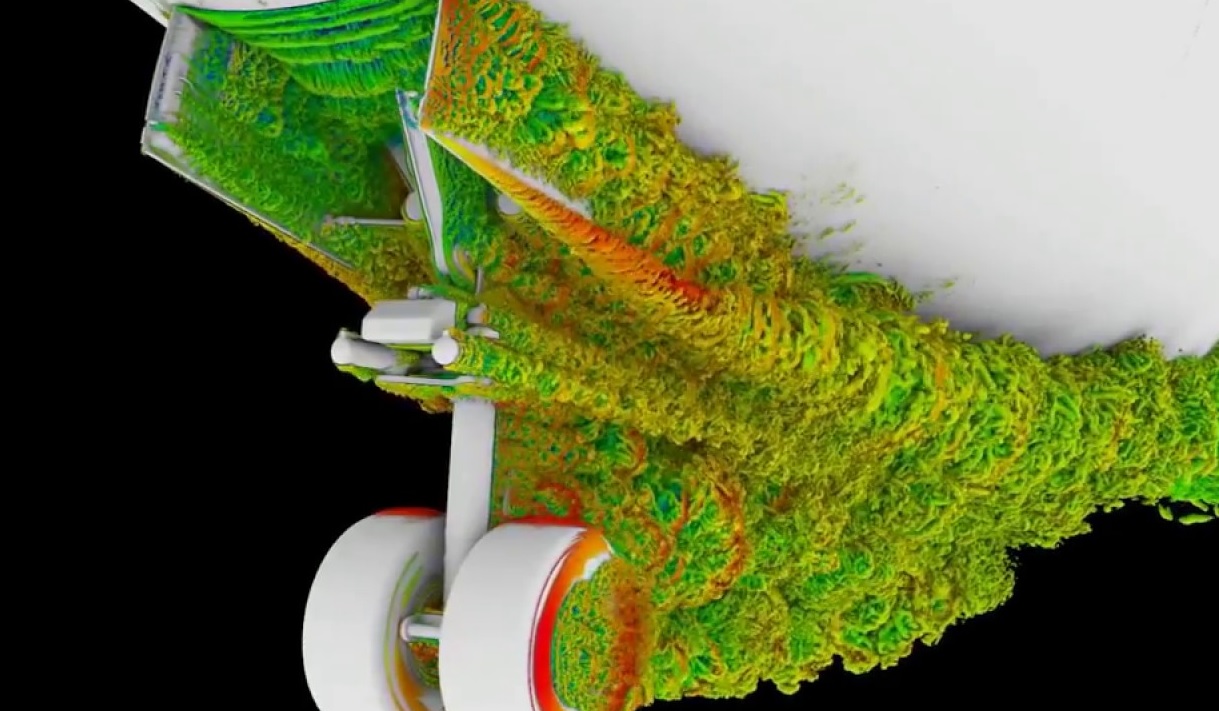 Acoustics in Aerospace Engineering
Aero-acoustics is becoming increasingly important in the aerospace industry due to the growing concern over the noise generated by various engineering applications, …
Open capability
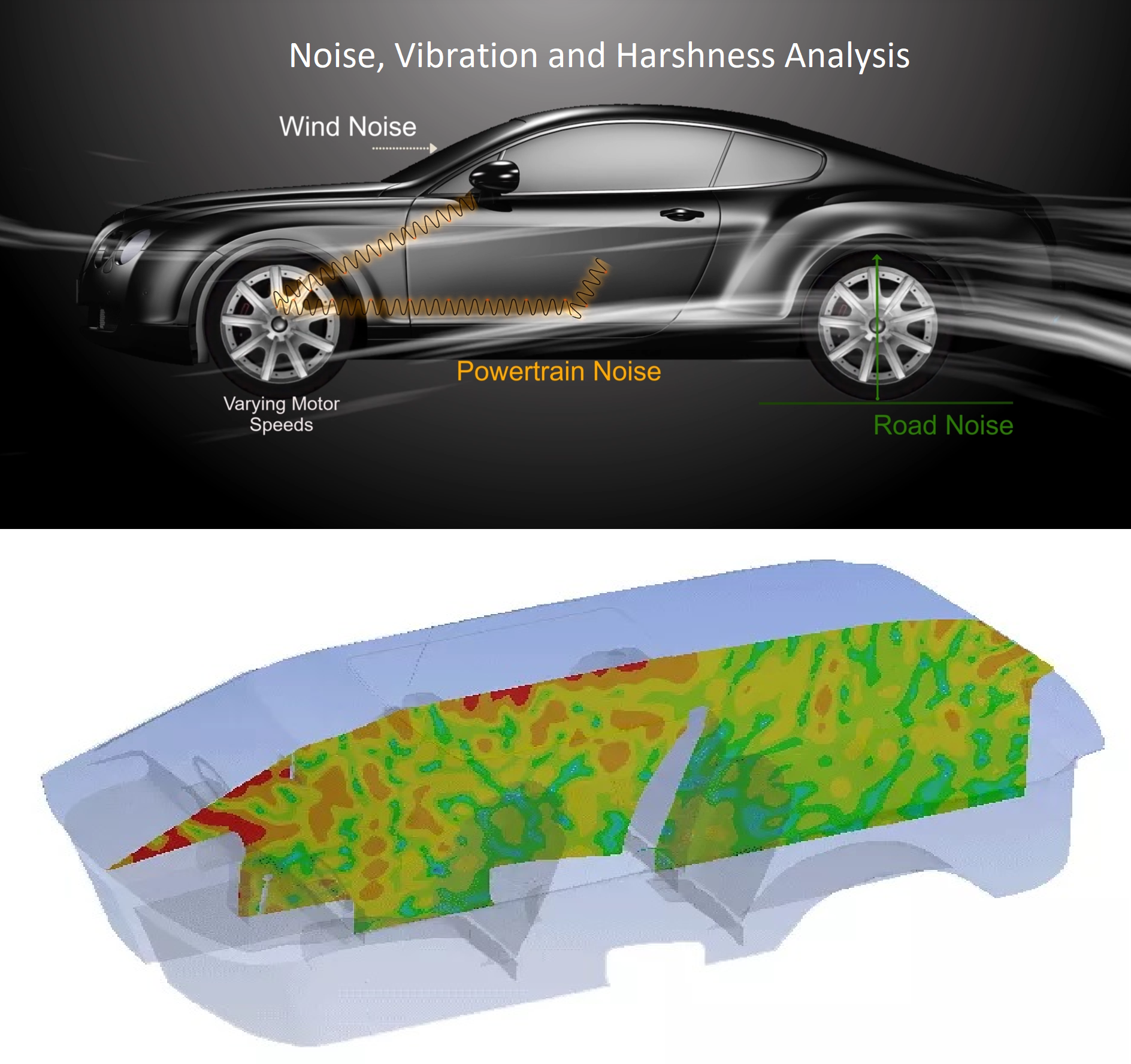 Acoustics in Automotive Industry
The noise generated by turbulent flows can come from various sources, including air conditioning systems, rotating fans, and other devices that create …
Open capability
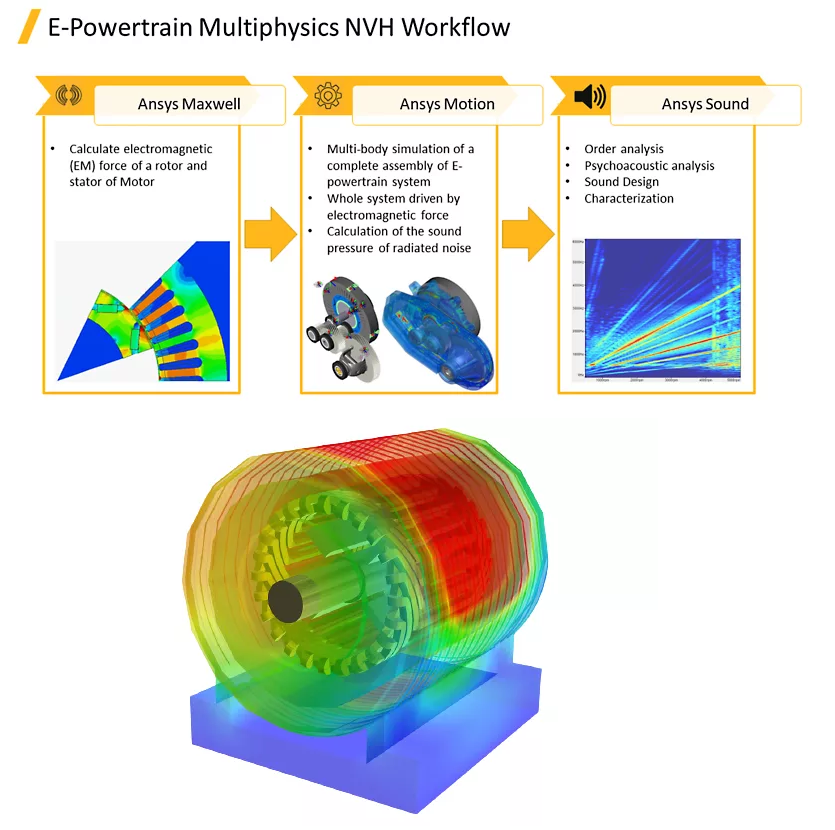 NVH for Hybrid & Electric Vehicles
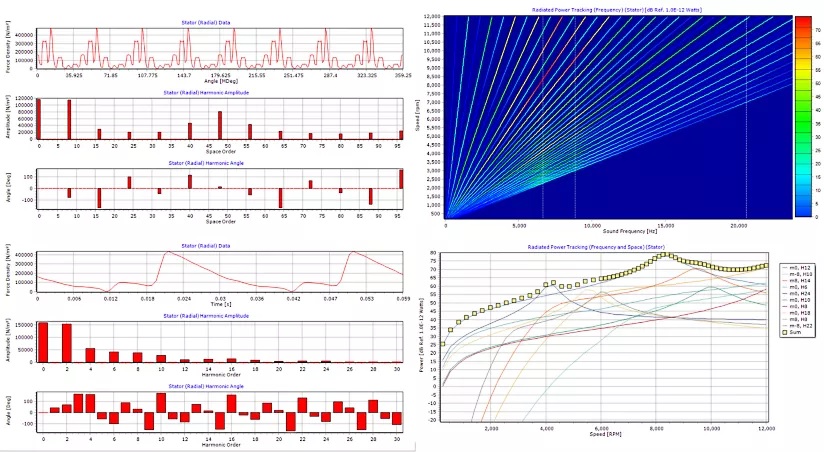
Our engineers provide solutions to optimize electric motor noise behavior while leaving electromagnetic performance unchanged. This involves analyzing the acoustic and vibration …
Open capability
Across Finite Element
Other Simulation Area
Additive Manufacturing
Powder Bed Fusion
Powder Bed Fusion (PBF) is an additive manufacturing technique that uses a heat source, typically a laser or …
Blast, Explosion & Fire
Arbitrary Lagrangian-Eulerian (ALE)
The Arbitrary Lagrangian-Eulerian (ALE) method is a numerical technique that combines the advantages of both the Lagrangian and …
Composite Materials
Hard Metal
Hard metals, also known as cemented carbides, are composite materials that are made up of a metal matrix …
Crash Test Simulation
Small Overlap - Oblique Crash Test FEA Simulation
The small overlap or oblique crash test is a type of crash test that is designed to simulate …
Durability & Fatigue Life
Vibration Fatigue Simulation
structural vibration can lead to various issues in products, such as fatigue and durability problems, adverse reactions to …
Metal Forming Simulation
Sheet Metal Forming
Advanced finite element analysis (FEA) tools such as Ansys, LS-Dyna and Abaqus can be used for sheet metal …
Multibody Dynamics
Vehicle MultiBody Dynamics Simulation: Car Ride, Driveline, Engine and Tire MBD
Multi-body dynamic (MBD) simulation is a powerful tool for analyzing and optimizing the performance of different subsystems within …
Thermal Analysis
Stress Relief Heat Treatment
Stress relieving is a heat treatment process that reduces residual stresses in an assembly after welding. This process …
Welding Simulation
Resistance Spot Welding
Resistance Spot Welding (RSW) is a pressure welding process used to join two metal sheets together. In RSW, …
VTOL, eVTOL & UAM
NVH Analysis for eVTOL & Electro-Motors
FEA-based simulation in electromagnetic multiphysics environments delivers critical insights for Noise, Vibration & Harshness (NVH) analysis of electrical …
Working on shipbuilding noise engineering?
Tell us the geometry, the physics and the decision it has to support.
Talk to an engineer