

Finite Element Blast, Explosion & Fire
Arbitrary Lagrangian-Eulerian (ALE)
Blast, Explosion & Fire: Finite Element & CFD Based Simulation
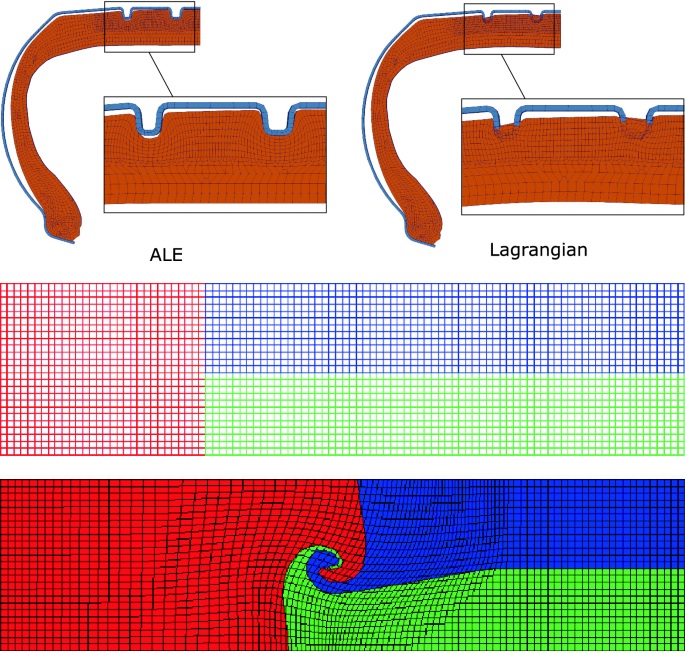
The Arbitrary Lagrangian-Eulerian (ALE) method is a numerical technique that combines the advantages of both the Lagrangian and Eulerian methods to solve problems involving fluid-structure interactions, such as blast and explosion simulations. The ALE method is particularly useful for modeling the interaction between the fluid and the structure during a blast or explosion event.
In ALE, the computational domain is discretized into a mesh, which can be either structured or unstructured. The Lagrangian method is used to describe the motion of the structure, while the Eulerian method is used to describe the motion of the fluid. The mesh is allowed to move and deform with the structure, which enables the method to accurately capture the deformation and movement of the structure during the blast event.
The ALE method is well-suited for modeling blast and explosion events because it can accurately capture the propagation of the blast wave and its interaction with the structure. Additionally, the method can be used to model the behavior of different materials, such as concrete, steel, and composite materials.
One of the challenges of using the ALE method for blast and explosion simulations is the computational cost. The method requires a large number of computational cells, which can be computationally expensive, especially for large-scale simulations. However, recent advancements in computational hardware and software have made it possible to use the ALE method for more complex and larger scale simulations.
The wider discipline
Blast, Explosion & Fire
OLTRION engineers simulate the Blast and Explosion with innovative CAE and virtual prototyping available in the non-linear structural codes LS-DYNA, Ansys Autodyn, and ABAQUS. OLTRION Engineers can simulate any type of Blast and Explosion such as air blast, Underwater explosion (UNDEX) and Fragmentation due to blast to survey structural integrity in High Rate Loading Condition. Some key aspects of these numerical simulation for blast, explosion, and fire include:
Material modeling: Accurately modeling the behavior of materials under extreme loading conditions is crucial for blast, explosion, and fire simulation. Advanced material …
Material modeling: Accurately modeling the behavior of materials under extreme loading conditions is crucial for blast, explosion, and fire simulation. Advanced material …
More in Blast, Explosion & Fire
View the section →
Capabilities that sit beside this one
 Engineering simulation FEA & CFD software packages for Blast, Explosion and Fire Simulation
There are several engineering simulation software packages that can be used for blast and explosion simulations. These packages can capture high-speed impact …
Open capability
 Design procedures for Blast and Explosion FEA & CFD analysis
Designing structures to withstand blast and explosion loads requires a rigorous and systematic approach. Key steps in the design procedure for blast …
Open capability
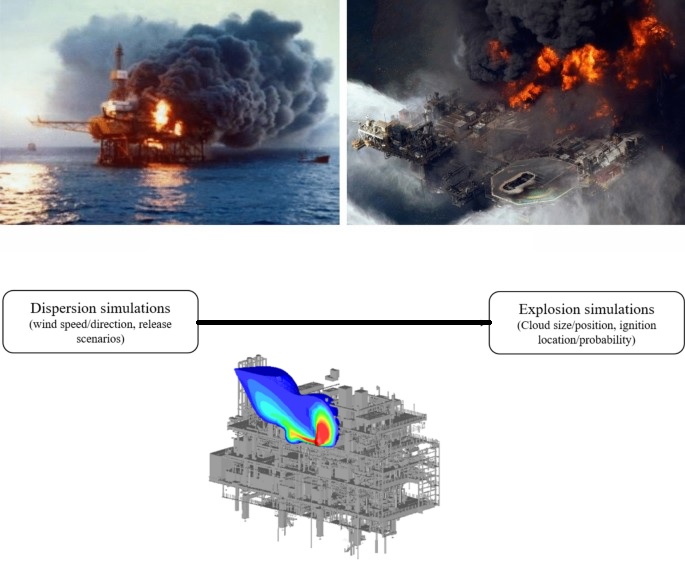 Applications of blast and explosion FEA & CFD simulation in the Chemical, Petrochemical, Oil & Gas industry
Applications of blast and explosion simulation: ▶ Explosion Modeling: Numerical simulation can be used to model the behavior of explosions in chemical …
Open capability
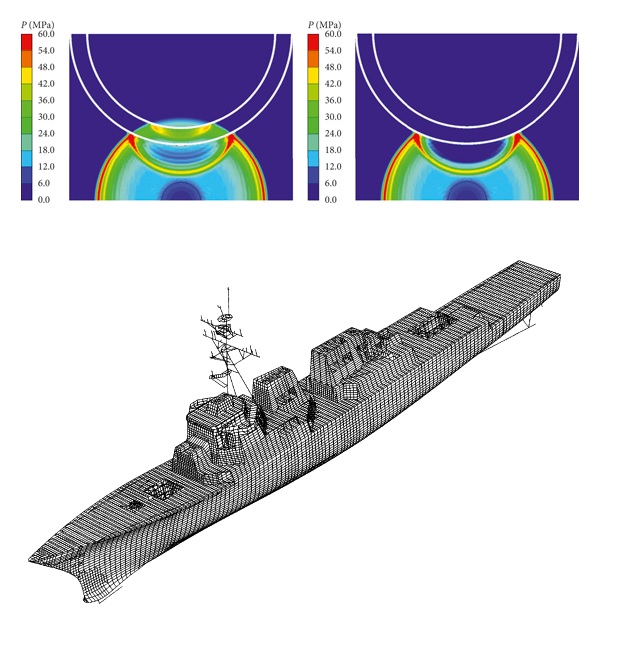 Applications of blast and explosion simulation in the Defense and Military industry
Applications of blast and explosion simulation: ▶ Armor optimization: Blast and explosion simulation using FEA can be used to optimize the design …
Open capability
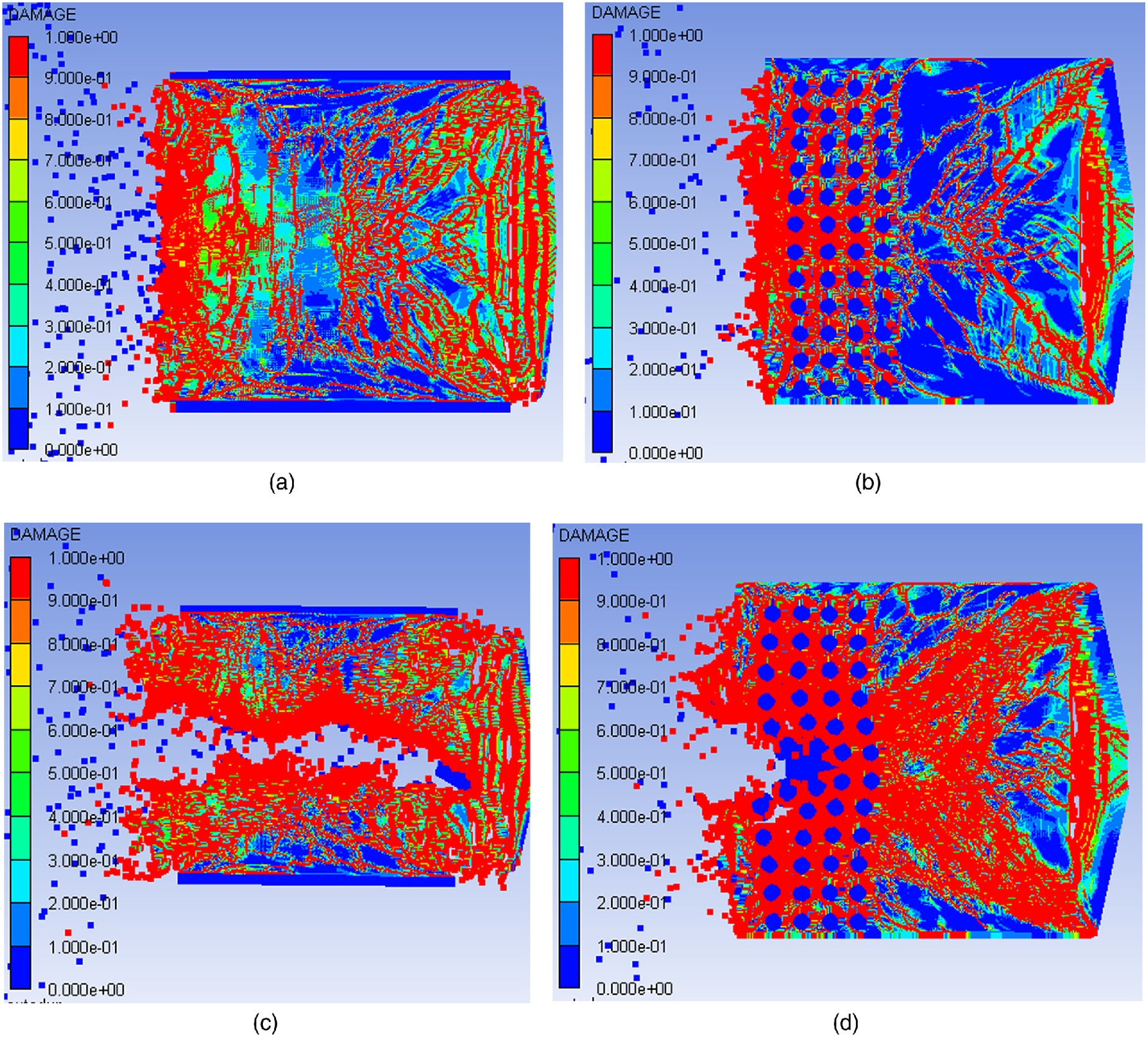 What is the best numerical method for blast, explosion and fire simulation?
The choice of the best numerical model for blast, explosion and fire simulation depends on various factors such as the type of …
Open capability
Across Finite Element
Other Simulation Area
Acoustics and Vibration
Shipbuilding Noise Engineering
Accurate noise prediction models are crucial for designing marine applications that meet customer expectations for on-board noise levels. …
Additive Manufacturing
Powder Bed Fusion
Powder Bed Fusion (PBF) is an additive manufacturing technique that uses a heat source, typically a laser or …
Composite Materials
Hard Metal
Hard metals, also known as cemented carbides, are composite materials that are made up of a metal matrix …
Crash Test Simulation
Small Overlap - Oblique Crash Test FEA Simulation
The small overlap or oblique crash test is a type of crash test that is designed to simulate …
Durability & Fatigue Life
Vibration Fatigue Simulation
structural vibration can lead to various issues in products, such as fatigue and durability problems, adverse reactions to …
Metal Forming Simulation
Sheet Metal Forming
Advanced finite element analysis (FEA) tools such as Ansys, LS-Dyna and Abaqus can be used for sheet metal …
Multibody Dynamics
Vehicle MultiBody Dynamics Simulation: Car Ride, Driveline, Engine and Tire MBD
Multi-body dynamic (MBD) simulation is a powerful tool for analyzing and optimizing the performance of different subsystems within …
Thermal Analysis
Stress Relief Heat Treatment
Stress relieving is a heat treatment process that reduces residual stresses in an assembly after welding. This process …
Welding Simulation
Resistance Spot Welding
Resistance Spot Welding (RSW) is a pressure welding process used to join two metal sheets together. In RSW, …
VTOL, eVTOL & UAM
NVH Analysis for eVTOL & Electro-Motors
FEA-based simulation in electromagnetic multiphysics environments delivers critical insights for Noise, Vibration & Harshness (NVH) analysis of electrical …
Working on arbitrary lagrangian-eulerian (ale)?
Tell us the geometry, the physics and the decision it has to support.
Talk to an engineer