

Finite Element Thermal Analysis
Thermal Management in Buildings: HVAC and Climate Control
Heat Transfer and Thermal Analysis: Fluid-Structure Interaction with Coupled CFD and Finite Element Based Simulation
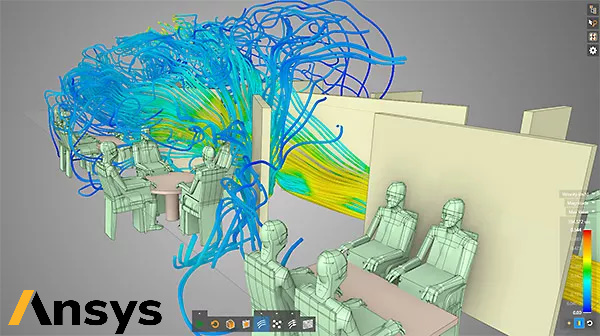
Thermal management is crucial in the design of buildings, as it affects the comfort of occupants and the energy efficiency of the building. Building designers need to consider heat and moisture variations in building components to ensure that the building performs optimally in terms of energy consumption and occupant comfort.
Heat transfer analysis is an important tool used by engineers to analyze thermal management in building components such as wooden frames, window frames, and porous building materials. By simulating heat transfer in these components, engineers can optimize the design of the building to ensure that heat is effectively transferred in and out of the building and that the building remains thermally stable.
In addition to heat transfer, OLTRION engineering team also analyzes water condensation and evaporation on building surfaces, heat and moisture storage, latent heat effects, as well as diffusion and convective transport of moisture. These factors can affect the durability and performance of building components, as well as the comfort of occupants.
By using advanced thermal management analysis techniques, engineers can optimize the design of buildings to ensure that they are energy efficient, thermally stable, and comfortable for occupants. This can help to reduce energy consumption, improve occupant comfort, and increase the overall lifespan of the building.
The wider discipline
Thermal Analysis
The effects of heat and thermal management of structures is more and more critical as performance limits are pushed further by the need to have lighter, smaller and more efficient designs. Convection, radiation and conduction loads are obvious, but the need to include the effect of power losses and thermal energy from friction and external sources such as pipe flows means that analysts need to have more tools at their disposal to simulate thermal models accurately.
To accurately simulate thermal models and manage heat effectively, analysts must have access to …
To accurately simulate thermal models and manage heat effectively, analysts must have access to …
More in Thermal Analysis
View the section →
Capabilities that sit beside this one
 Thermal Stress Simulation
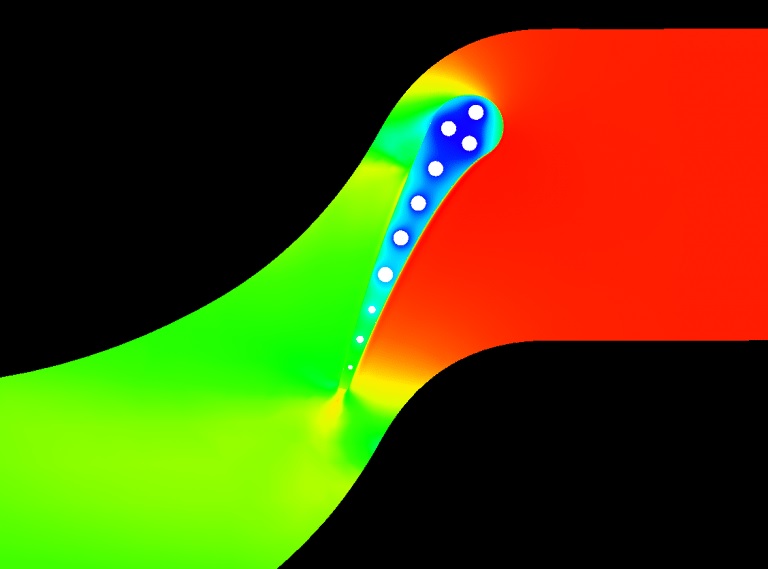
Thermal expansion is a common phenomenon that can lead to high levels of thermal stress, which can have both positive and negative …
Open capability
 Vehicle Thermal Management Simulation
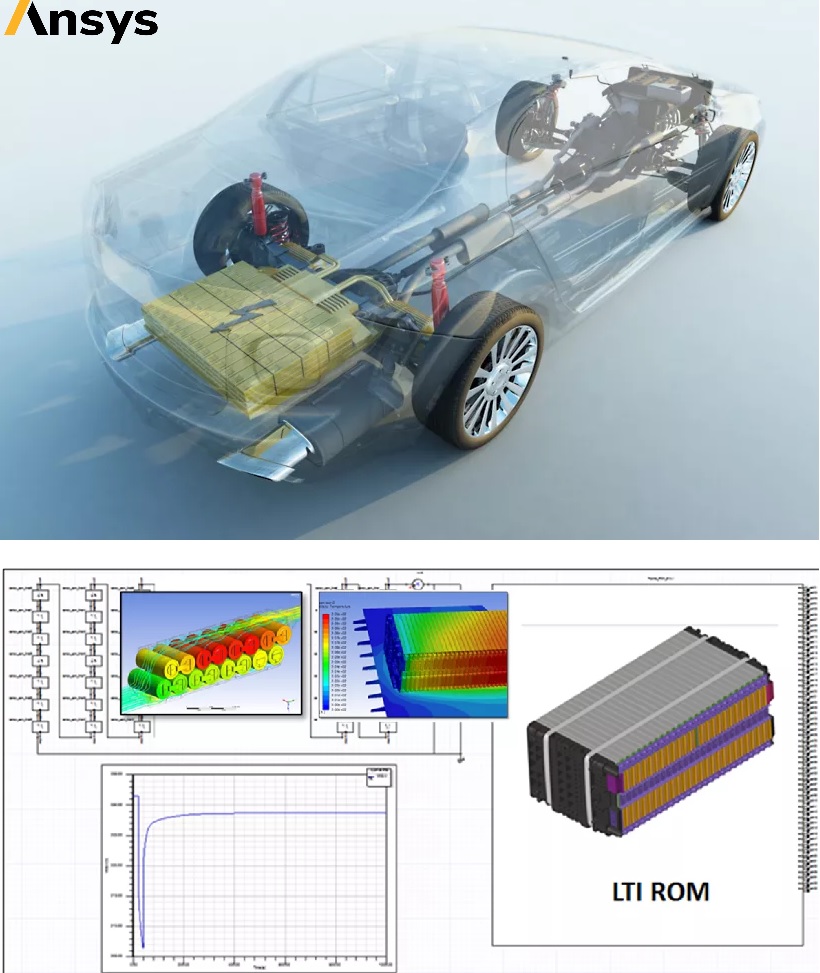
Extending from steady-state to transient simulation is essential in investigating the real conditions of vehicle driving cycles. This enables engineers to accurately …
Open capability
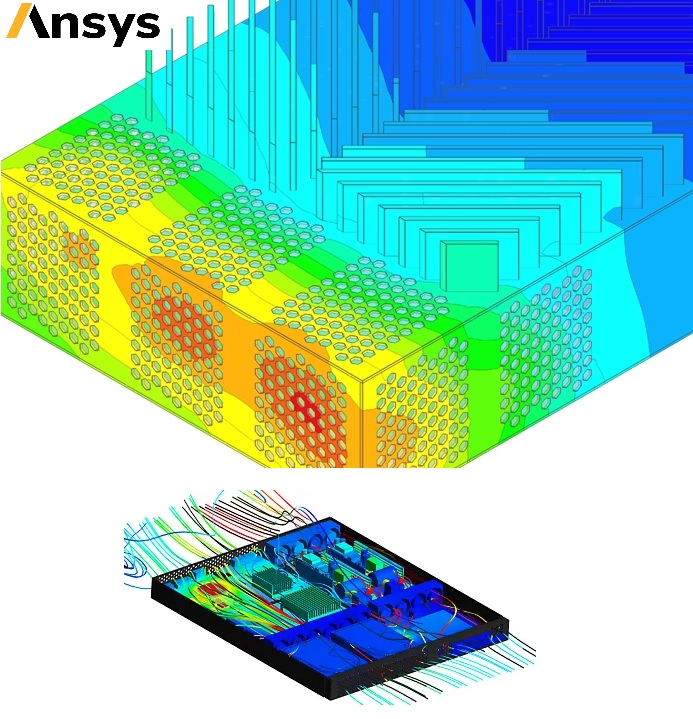 Electronic Systems Cooling & Heating
In the design phase of electronic devices, CFD and FEA based heat transfer software can be used to analyze the cooling capacity …
Open capability
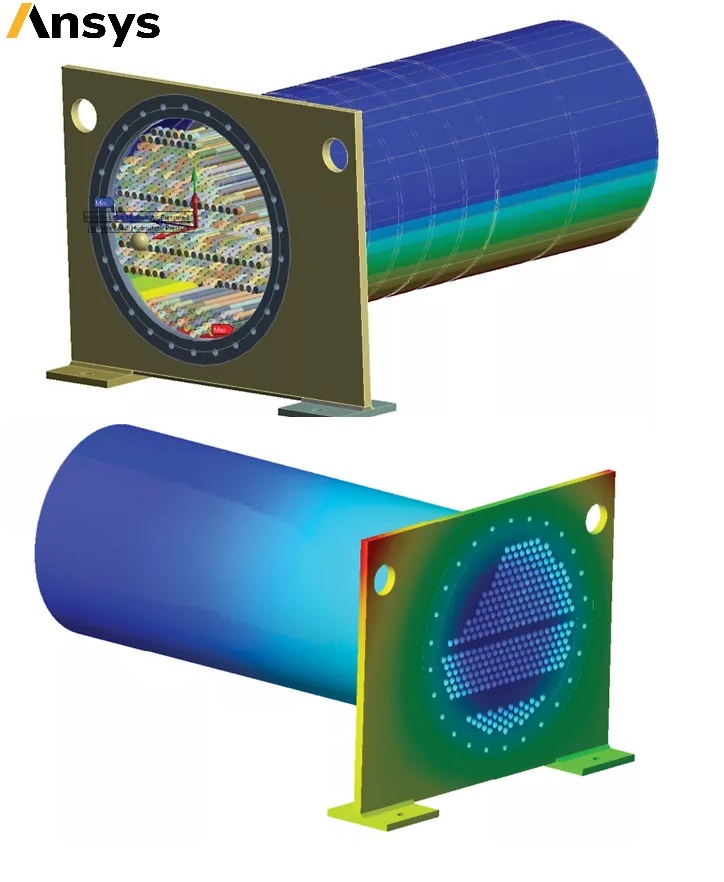 Heat Exchangers
Heat exchangers are involved in a variety of application areas, such as water treatment, resource refinery, nuclear power, food and beverage production, …
Open capability
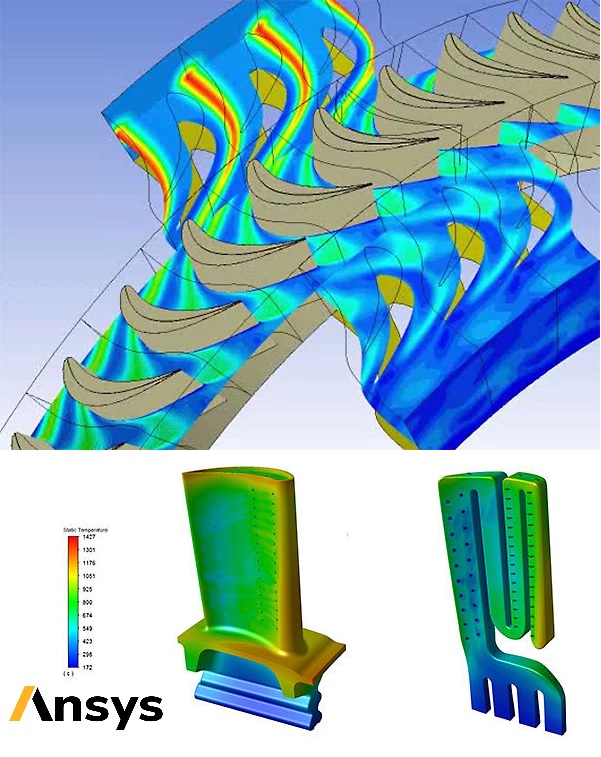 Heat Transfer Simulations for Turbomachinery Systems
Most machines, especially those that operate under high-heat conditions such as turbines, boilers, and combustors, require strict control of thermal stresses and …
Open capability
 Passenger Thermal Comfort
The thermal and acoustic comfort of passengers is a critical design criterion for the air-conditioning and customization of a cabin. Engineers must …
Open capability
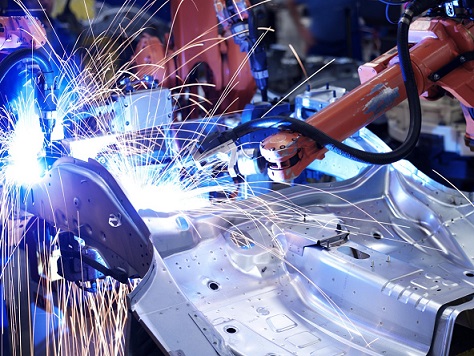 Stress Relief Heat Treatment
Stress relieving is a heat treatment process that reduces residual stresses in an assembly after welding. This process is important because residual …
Open capability
Across Finite Element
Other Simulation Area
Acoustics and Vibration
Audio & Consumer Electronic Device Design
The engineering process of audio devices is unique because the complete audio system must be tested, taking into …
Additive Manufacturing
Generative Design & Lattice Structures: Topology, Shape and Bead Optimization
Generative Design is an innovative approach to product design that leverages topology optimization, artificial intelligence, and advanced simulation …
Blast, Explosion & Fire
Engineering simulation FEA & CFD software packages for Blast, Explosion and Fire Simulation
There are several engineering simulation software packages that can be used for blast and explosion simulations. These packages …
Composite Materials
Plastic materials
Designing plastic materials reinforced with glass and/or carbon fibers is a complex process that requires consideration of many …
Crash Test Simulation
Occupant Restraint Systems
Occupant Restraint Systems (ORS) are an essential component of automobile safety. They are designed to keep the occupants …
Durability & Fatigue Life
Composites Fatigue Simulation
The Composite Analysis allows us to evaluate the strength of a structure against industry standard composite failure criteria. …
Metal Forming Simulation
Cold Forming
Regarding cold forming, it is true that it is restricted to easily formable materials, or materials that can …
Multibody Dynamics
Complicated Machinery & Mechanical Drive Systems
MBD simulation, or multi-body dynamics simulation, is a powerful tool used by engineers to simulate and analyze the …
Welding Simulation
Welding Stress Relief Heat Treatment
Stress relieving is a heat treatment process that is commonly used after welding to reduce residual stresses in …
VTOL, eVTOL & UAM
VTOL Cabin Thermal Comfort CFD
Passenger thermal comfort is a critical design criterion for VTOL/eVTOL cabins. Traditional mock-up tests are costly and time-intensive, …
Working on thermal management in buildings: hvac and climate control?
Tell us the geometry, the physics and the decision it has to support.
Talk to an engineer